Racial profiling isn't an abstract policy debate anymore in Montreal. It's personal, it's public, and it has finally forced the city's leadership to demand a hard stop to the status quo.
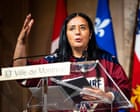
When Montreal Mayor Soraya Martinez Ferrada stood before reporters to call for an immediate moratorium on random police checks, she didn't just lean on standard political talking points. She dropped a personal bombshell. Her own husband, who is Black, was pulled over by local police five separate times within the last year for absolutely no reason while driving.
If the husband of the city's top official can't drive through his own community without being targeted, what hope does the average racialized citizen have?
This isn't an isolated political skirmish. The mayor's call to halt street checks follows an unprecedented, late-night admission from Montreal Police Chief Fady Dagher that 16 officers from a night patrol unit in the Montréal-Nord borough are under investigation for appalling acts of racism and discrimination. The unit has been completely disbanded, two officers are suspended and face potential criminal charges, and 14 others have been stripped of public-facing duties.
The details emerging from Station 39 are genuinely stomach-turning. Investigators are looking into allegations that these officers targeted Black and Arab residents, handed out arbitrary fines based entirely on ethnicity, and even went so far as to cut off pieces of citizens' dreadlocks to keep as "trophies."
The Myth of the Few Bad Apples
Quebec Premier Christine Fréchette quickly stepped in to downplay the systemic nature of the crisis. She claimed that because this involved a small group of 16 officers, it doesn't represent systemic racism. To her, "systemic" implies something on a massive, organized scale, rather than the isolated actions of a few rogue actors.
Honestly, that argument holds no water anymore.
The officers under investigation are young, mostly men, with fewer than five years on the force. They didn't learn these behaviors in a vacuum. They entered an organizational culture that permitted, if not enabled, this kind of egregious misconduct. When rookie officers think they can harvest hair from citizens without immediate consequences, the problem isn't just the individuals. It's the entire ecosystem.
Chief Dagher himself seemed shell-shocked during his press conference, admitting he didn't think this level of overt racism was possible in 2026. He confessed that the actions deeply hurt him and tarnished the uniform. But the public is tired of shock and disappointment. They want systemic structural change.
A Documented History of Denial
We've been here before, and the paper trail proves it. The city has spent years trying to audit and policy-manage its way out of a culture crisis instead of implementing actual bans on discriminatory practices.
- In 2019, an independent report explicitly showed that Black, Indigenous, and Arab Montrealers were four to five times more likely to be stopped by police than white residents.
- In 2020, the Office de consultation publique de Montréal released a damning report outlining 38 recommendations, finding that the city had completely neglected the fight against institutional racism.
- In 2024, a Quebec Superior Court judge ordered the city to pay damages in a major class-action lawsuit, ruling that systemic racial profiling directly characterized many police stops and arrests in Montreal.
Despite these clear warning signs, the police service continuously defended random street checks, calling them an important operational tool to track missing persons or identify suspects. But when a tool is disproportionately weaponized against specific racial groups, it stops being a tool for public safety. It becomes an instrument of state-sanctioned harassment.
What Needs to Happen Right Now
A moratorium on random checks is a necessary first step, but it won't fix a broken culture on its own. It's a temporary band-aid on a deep, infected wound.
To actually rebuild trust with an outraged community, the city and the province must follow through on concrete operational changes immediately.
First, expedite the rollout of body cameras. The city already has $40 million sitting in its budget specifically earmarked for body-worn cameras, but provincial red tape has delayed full deployment. Premier Fréchette needs to greenlight this immediately to ensure every single interaction between a Station 39 officer—and every other unit—is recorded and auditable.
Second, the province must appoint an independent public inquiry. Premier Fréchette has hinted that "everything is on the table" but wants to wait for the internal investigation to wrap up. Waiting is a mistake. The community has zero faith in police investigating police, especially when the allegations involve trophy-hunting behaviors. An independent, outside observer must oversee this process to guarantee the full truth comes out.
Finally, scrap the concept of random stops permanently. In 2022, a Quebec court ruled that random traffic stops under the province's Highway Safety Code were unconstitutional because they provided an open gateway for racial profiling. It's time to codify that reality into absolute police policy. Officers should only interact with, stop, or question citizens when they have objective, verifiable, and observable facts linking that individual to a specific infraction. No exceptions, no "hunches," and absolutely no random checks.