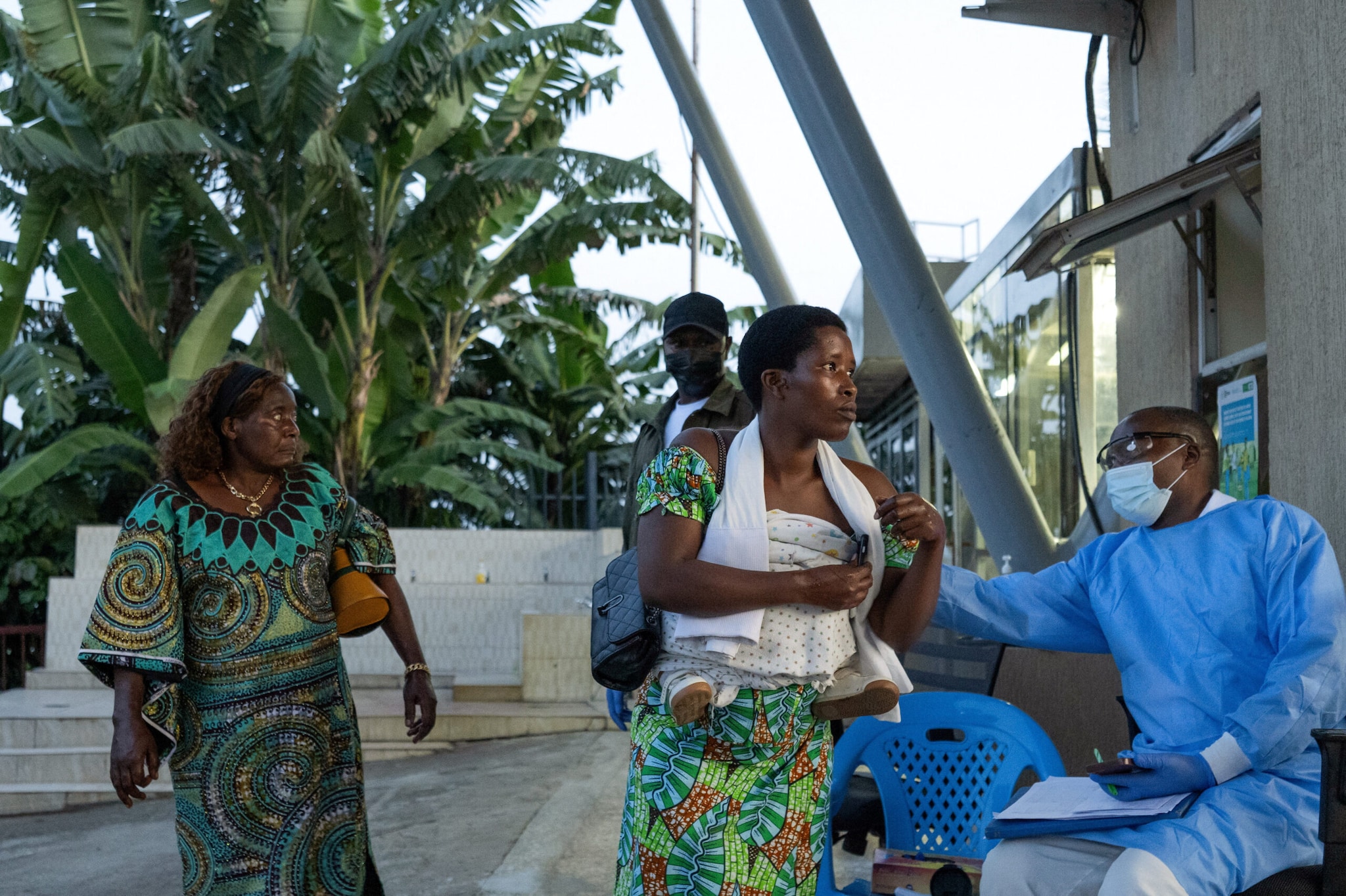
The air inside the isolation ward does not move. It smells heavily of chlorine, a sharp, chemical sting that burns the back of the throat and fails utterly to mask the scent of human fear. Outside, the tropical heat presses against the plastic sheeting. Inside, a doctor stares at a digital monitor, watching numbers climb.
Data points on a screen are cold. They are sterile. But when the World Health Organization issues a warning about the scale and speed of an Ebola outbreak, those numbers translate directly into a terrifying reality on the ground.
We often treat outbreaks as statistics. We read about fifty cases, then a hundred, then five hundred. The mind numbs. But an epidemic is not a math problem. It is a clock ticking in reverse.
The Anatomy of Momentum
To understand why health officials are panicking right now, you have to understand how a virus moves. It does not march. It sprints.
Imagine a single spark landing on dry leaves. If you catch it in the first few seconds, a cup of water snuffs it out. If you wait five minutes, you need a fire truck. If you wait an hour, the entire forest burns, and no amount of water can stop it. Ebola is that spark. The current crisis is terrifying not just because of what the virus does to the human body, but because the window for containment is slamming shut.
The World Health Organization chief recently broke through diplomatic protocol to express deep, visceral concern over the current trajectory. When global health leaders use words like "unprecedented velocity," they are trying to shake a complacent world awake. They see the math before the graves are dug.
The transmission dynamics of this specific strain are outrunning the logistics of response teams. By the time a case is identified, isolated, and contact-traced, that individual has already crossed paths with dozens of others. In densely populated areas, or regions where people must travel across borders for work and survival, the virus hitches a ride on the necessity of human movement.
Consider a hypothetical market day in a border town. We will call the vendor Amara. She does not feel sick yet. She just has a mild headache, the kind you brush off after a poor night's sleep. She sells her produce, handles cash, shakes hands with neighbors, and hugs a relative who has traveled from two districts away. By nightfall, the fever hits. By the next morning, the virus has already broken containment, traveling down dirt roads and across rivers in the bodies of people who have no idea they are carrying a death sentence.
This is the speed that keeps epidemiologists awake at night. It is a invisible chain reaction.
The Breakdown of Trust
Fighting a viral outbreak requires medicine, but more than that, it requires trust. When a community is told that their traditional burial practices—which often involve washing and kissing the deceased—are now lethal, the reaction is not always compliance. It is often grief, anger, and deep suspicion.
Imagine being told you cannot touch your dying child. Imagine men in white, faceless biohazard suits arriving in a truck to take a loved one away, never to be seen alive again.
When fear takes over, people hide their sick. They avoid clinics. They treat the medical response teams not as saviors, but as executioners. This behavioral shift is where the true acceleration happens. When an outbreak goes underground, the official case counts become useless. The spreadsheet says ten new cases, but reality dictates there are a hundred spreading in the shadows.
The response infrastructure is buckling under this weight. It is easy to say "deploy more resources," but the logistics are staggering.
- Personal protective equipment (PPE) must be flown in by the ton.
- Specialized treatment centers must be built from scratch in remote areas.
- Clean water supply chains must be established.
- Dozens of languages and cultural nuances must be navigated by contact tracers.
If any one of these links breaks, the virus wins ground that takes months to recover.
The Global Blindspot
There is a dangerous pattern in how the international community responds to health crises. We ignore the smoke until the flames reach our own backyards.
The warning signs are rarely subtle. They arrive in desperate dispatches from field doctors, in sudden spikes of unexplained mortality, and eventually, in formal declarations from global health bodies. Yet, the machinery of international aid moves with a bureaucratic slowness that contrasts sharply with the biological agility of the disease.
Funding arrives in cycles. Approvals take weeks. Debates occur in air-conditioned rooms thousands of miles away from the chlorine-soaked wards. Meanwhile, a virus multiplies every few hours.
The scary truth is that our global health security is only as strong as the most fragile healthcare system on earth. When a localized clinic lacks basic gloves, clean needles, or running water, that vulnerability is not local. It is global.
We look at maps and see borders, neat lines drawn in ink. A virus sees only hosts. It does not recognize passports, sovereignty, or economic status. The speed of modern travel means an outbreak in a remote village is only a few plane rides away from any major metropolis on the planet.
The Human Cost of Delay
Behind every percentage point increase in the WHO reports is a family permanently shattered.
The true horror of Ebola is how it weaponizes human empathy. It spreads through caregiving. The mother who wipes the sweat from her child’s brow, the husband who holds his wife’s hand as she vomits, the sister who prepares a body for the grave—these are the people the virus targets. It turns love into a vector transmission.
Right now, in the centers of the outbreak, health workers are operating under impossible psychological pressure. They watch colleagues fall ill. They work twelve-hour shifts inside suffocating plastic suits, dripping with sweat, knowing that a single tear in a glove, a single accidental touch of the face during doffing, means they become the next patient.
The scale of the current epidemic is forcing agonizing choices. When beds run out, who gets admitted? When experimental treatments are scarce, who receives the dose? These are not academic ethical dilemmas. They are decisions made by exhausted clinicians by the light of a flashlight in the dead of night.
The trajectory will not change until the speed of the intervention matches the speed of the transmission. That means moving past declarations of concern and shifting into aggressive, unconditional mobilization. It means floodlighting the shadows where the virus hides, rebuilding the shattered trust of communities, and flooding the zone with the unglamorous, expensive resources required to fight a biological war.
The monitor in the isolation ward continues to beep. Outside, the sun begins to set, casting long shadows across the dust. The clock is still ticking backward, and the monster is still running.