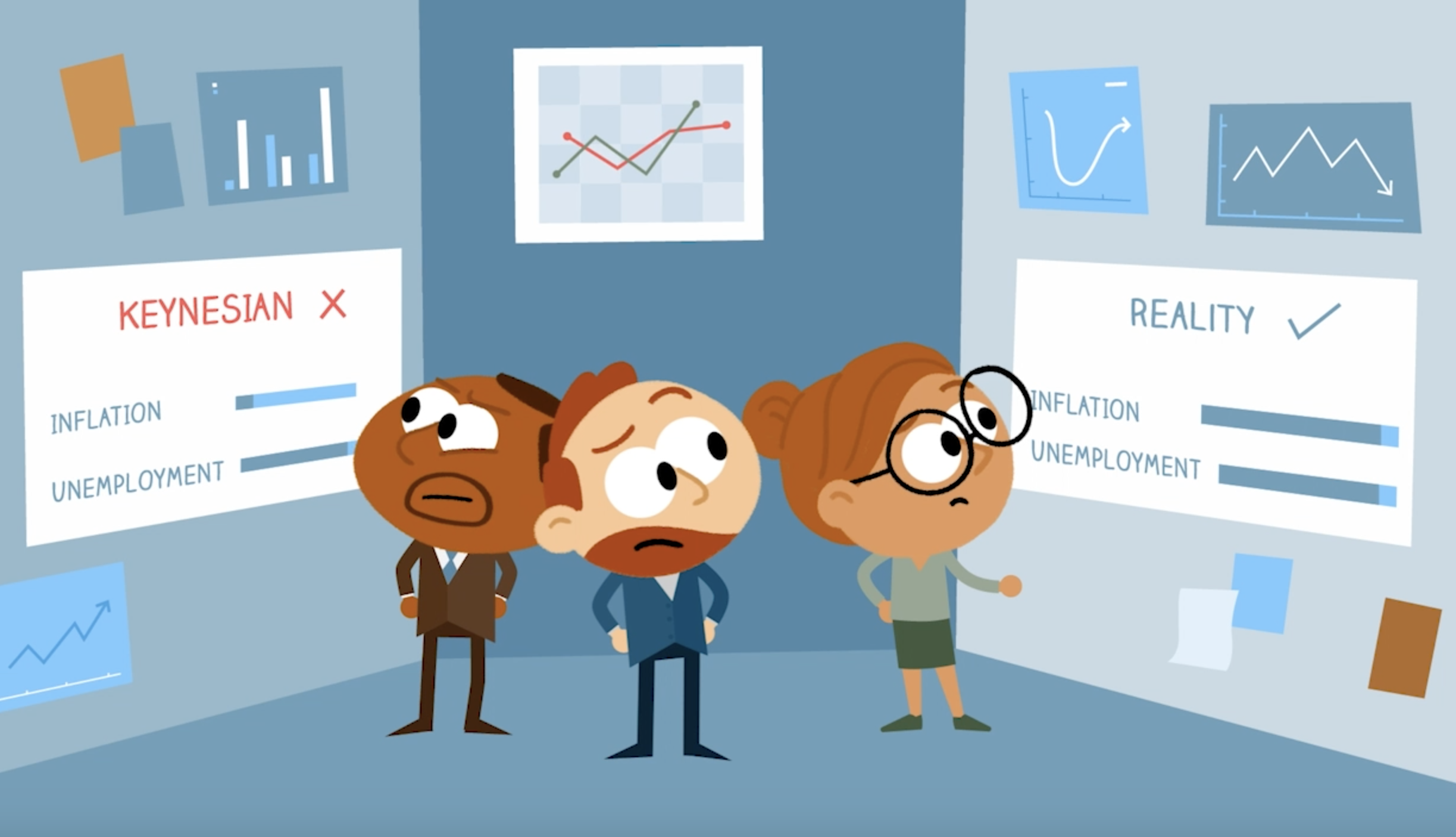
The European Central Bank (ECB) and the Bank of England (BoE) currently operate within a narrow corridor defined by decelerating industrial output and stubborn services inflation. The fundamental tension is no longer about the direction of rates, but the velocity of terminal rate maintenance versus the risk of structural economic scarring. While standard market commentary focuses on "higher for longer," the actual mechanic at play is the Asymmetric Risk of Premature Easing, where the cost of a secondary inflation spike far outweighs the marginal GDP gain of a 25-basis-point cut.
The Trilemma of European Monetary Policy
European central bankers are currently attempting to solve for three conflicting variables simultaneously. This "Trilemma" dictates every policy move made in Frankfurt and London this week:
- Price Stability (The 2% Target): Headline inflation has cooled due to energy base effects, but "sticky" core inflation—driven by nominal wage growth—remains well above the mandate.
- Growth Preservation: The Eurozone, particularly the German industrial core, is flirting with a technical recession. Higher rates increase the cost of debt servicing for a corporate sector already reeling from high energy costs.
- Financial Stability: High interest rates exert pressure on sovereign debt spreads and commercial real estate (CRE) valuations, creating potential systemic cracks in the banking sector.
The failure to balance these leads to stagflation—a period where the central bank loses its primary tool (interest rates) because raising them crushes growth, while lowering them de-anchors inflation expectations.
The Transmission Mechanism Breakdown
The primary concern for the ECB this week is the "lag effect." Monetary policy typically takes 12 to 18 months to fully filter through the real economy. We are currently in the peak impact window of the hikes initiated a year ago.
The Credit Impulse Contraction
The ECB’s Bank Lending Survey indicates a sharp tightening in credit standards. This is not merely a policy choice but a defensive reaction by private banks to rising non-performing loan (NPL) risks. When credit availability drops faster than the central bank intends, it creates a Liquidity Vacuum.
- Fact: Small and Medium Enterprises (SMEs) in Southern Europe are seeing the highest borrowing costs since the sovereign debt crisis.
- Hypothesis: If the ECB holds rates at these levels through Q4, the risk of a "credit crunch" outweighs the benefit of further inflation suppression.
Wage-Price Persistence
In the UK and the Eurozone, labor markets remain tighter than historical norms despite slowing growth. This creates a floor for inflation. Workers are demanding "catch-up" raises to regain purchasing power lost in 2022-2023. As long as unit labor costs rise, the BoE and ECB cannot claim victory over inflation, regardless of what happens to Brent Crude prices.
The Cost Function of the Stagflation Threat
Stagflation is often discussed as a vague "mood," but it can be quantified through the Misery Index (Unemployment Rate + Inflation Rate) and the Output Gap.
The current stagflationary threat is driven by a supply-side shock. Unlike a demand-side boom, which central banks can cool effectively, a supply-side shock (energy, labor, supply chains) makes interest rates a blunt and inefficient instrument. If the ECB raises rates to combat inflation caused by high gas prices, it does nothing to lower gas prices; it only makes it harder for companies to invest in energy-efficient alternatives.
Identifying the Bottlenecks
- Energy Transition Costs: Europe’s shift away from Russian gas is structurally inflationary. Green energy requires massive upfront CapEx, which is now more expensive due to higher rates.
- Demographic Drag: A shrinking workforce in Germany and Italy keeps labor scarce, preventing the "slack" in the labor market that central banks usually rely on to cool wage growth.
Strategic Divergence: ECB vs. BoE
While the headlines group "Europe" together, the underlying mechanics of the UK and the Eurozone are diverging.
The Bank of England’s Solvency Risk
The UK faces a unique "mortgage time bomb." Unlike the US, where 30-year fixed mortgages are standard, the UK relies on shorter-fixed terms. Millions of households are rolling off 2% rates onto 5.5% or 6% rates this year. This represents a direct extraction of disposable income, acting as a "shadow rate hike" that the BoE must account for.
The ECB’s Fragmented Transmission
The ECB must manage 20 different economies with one interest rate. While Germany needs lower rates to jumpstart its manufacturing sector, Spain and Greece are seeing stronger service-led growth and could theoretically handle higher rates. This Sovereign Spread Risk is why the ECB developed the Transmission Protection Instrument (TPI)—to prevent Italian bond yields from de-linking from German Bunds.
Quantifying the "Higher for Longer" Logic
The market is pricing in a "pivot," but central bank rhetoric remains hawkish. This is a deliberate strategy of Expectations Management. If the market believes cuts are coming, financial conditions loosen prematurely (bond yields fall, stocks rise), which itself is inflationary.
To maintain the current restrictive environment without actually raising rates further, the ECB must use "Open Mouth Operations"—the threat of higher rates—to keep the market in check.
The Real Interest Rate Equation
The effectiveness of policy is measured by the Real Interest Rate ($r$):
$$r = i - \pi^e$$
Where $i$ is the nominal policy rate and $\pi^e$ is expected inflation. As inflation ($\pi^e$) falls, the real interest rate ($r$) effectively rises even if the nominal rate stays the same. This means the ECB is "tightening" every month that inflation drops while they hold rates steady.
The Structural Pivot: From Inflation Targeting to Growth Management
The pivot point will not be triggered by inflation hitting 2.0%. It will be triggered by a "Non-Linear Break" in the labor market. Central banks are willing to tolerate low growth, but they are terrified of a rapid spike in unemployment.
Indicators of the Breakpoint
- Manufacturing PMI below 45: Sustained contraction in the Purchasing Managers' Index suggests a decline in industrial capacity that may be permanent.
- Corporate Insolvency Rates: A 20% year-on-year increase in bankruptcy filings would signal that the "Zombie Firms" kept alive by zero-interest-rate policy (ZIRP) are finally collapsing.
- The Yield Curve De-inversion: Historically, the recession doesn't start when the yield curve inverts, but when it begins to "un-invert" as markets price in emergency cuts.
Strategic Recommendation for Market Participants
The era of "cheap money" is structurally over, regardless of whether the ECB cuts by 25 basis points this quarter or the next. The focus for capital allocators must shift from liquidity-driven gains to operational efficiency.
The Tactical Play:
- For Corporate Debtors: Lock in long-term financing during any temporary "dovish" market rallies. Do not wait for a return to 1% base rates; the Neutral Rate ($R^*$) has likely shifted higher due to deglobalization and defense spending.
- For Investors: Prioritize companies with high "Pricing Power"—those that can pass on unit labor cost increases to consumers without losing volume. In a stagflationary environment, margin compression is the primary killer of equity value.
- For Policy Watchers: Ignore the headline "Pause." Watch the ECB's balance sheet reduction (Quantitative Tightening). The removal of liquidity via the balance sheet is currently more significant for long-term yields than the overnight policy rate.
The central banks are trapped between a mandate they cannot abandon and an economic reality they cannot control. The most likely path is a "Hawkish Hold" that persists until the data shows a definitive crack in the labor market, at which point the transition to cuts will be rapid, reactive, and potentially too late to avoid a hard landing.