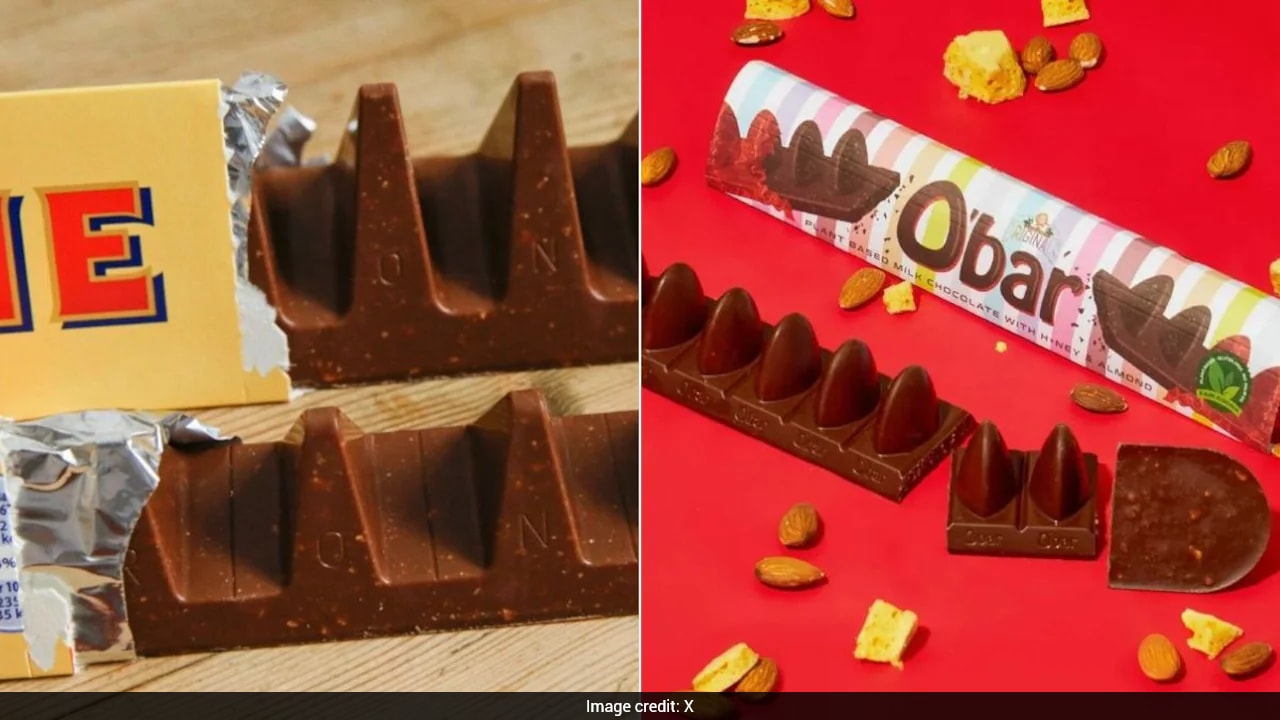
Mondelez International’s legal action against a challenger vegan confectionery brand over triangular chocolate geometry is not a petty dispute over candy aesthetics; it is a calculated defense of a structural monopoly. When a multinational food conglomerate enforces a three-dimensional (3D) shape trademark, it is protecting the physical mechanism that eliminates price elasticity at the retail shelf. Without absolute exclusivity over the segmented prism silhouette, Toblerone loses its primary non-price differentiator, exposing a legacy dairy asset to rapid margin erosion from plant-based disruptors.
The Structural Economics of Shape Monopolies
In fast-moving consumer goods (FMCG), visual recognition within the first 1.5 seconds of shelf scanning determines conversion rates. Most confectionery brands rely on two-dimensional trade dress—color palettes, typography, and logos—to trigger brand recall. Toblerone operates differently. Its foundational equity resides in the physical product architecture: a continuous row of triangular prisms designed for single-piece snapping.
Under intellectual property law, specifically the European Union Intellectual Property Office (EUIPO) and the UK Intellectual Property Office (UKIPO) frameworks, registering a 3D shape as a trademark is notoriously difficult. Regulators routinely reject shape marks on the grounds of technical functionality or lack of inherent distinctiveness. A shape cannot be monopolized if it is necessary to obtain a technical result or if it gives substantial value to the goods independent of brand origin.
Mondelez holds a rare regulatory asset: acquired distinctiveness. Through decades of capital expenditure in global advertising and duty-free retail dominance, the triangular prism bar has become legally synonymous with the Toblerone origin in the mind of the average consumer.
The Three Pillars of Trade Dress Enforcement
To understand why Mondelez triggers litigation against smaller vegan entrants rather than ignoring them as niche anomalies, one must examine the mechanics of trademark maintenance.
- Prevention of Genericide and Dilution: Trademark rights are not self-sustaining; they require active policing. If Mondelez permits a plant-based brand to sell segmented triangular bars without opposition, it establishes a precedent of market tolerance. Subsequent competitors—including private-label supermarket chains with massive distribution scale—could then point to the unchallenged vegan bar as evidence that the shape has become generic for specialty chocolate.
- Elimination of Category Parasitism: Vegan confectionery is currently experiencing higher compound annual growth rates than traditional dairy chocolate, driven by shifting demographic preferences and retailer ESG mandates. A challenger brand adopting the Toblerone silhouette bypasses the multi-million-dollar customer acquisition cost (CAC) required to educate consumers on a new form factor. They draft behind Mondelez’s historical brand-building expenditure while capturing a market segment (dairy-free) where traditional Toblerone cannot natively compete without cannibalizing its core heritage recipe.
- Protection of Asymmetric Pricing Power: Standard rectangular chocolate bars trade largely on weight-to-price ratios, making them vulnerable to commodity cocoa inflation and private-label substitution. The triangular prism design creates negative space within the packaging, altering consumer perception of volume and structural value. This geometry supports a price-per-gram premium that collapses if consumers view the shape as an interchangeable commodity format rather than a proprietary luxury architecture.
Legal Mechanics Distinctiveness Versus Functionality
When Mondelez initiates infringement proceedings—as it previously executed against Poundland’s "Twin Peaks" bar in the United Kingdom—the legal battleground centers on two specific statutory tests: likelihood of confusion and unfair advantage.
In traditional trademark disputes, the plaintiff must prove that a consumer will mistakenly purchase Product B believing it is Product A. In the case of a vegan challenger, the defendant typically argues that explicit packaging callouts ("100% Plant-Based," "Dairy-Free," distinct brand names, and contrasting color schemes) eliminate point-of-sale confusion. A consumer actively seeking vegan chocolate is hyper-vigilant about ingredient decks and front-of-pack certifications; they are rarely tricked into buying a legacy dairy brand, nor do they mistake a niche vegan startup for a Swiss multinational.
Mondelez’s legal strategy bypasses the confusion test entirely by relying on the reputation and unfair advantage doctrine (codified under Article 9(2)(c) of the EU Trade Mark Regulation and Section 10(3) of the UK Trade Marks Act 1994). Under this framework, the trademark owner does not need to prove that the consumer is confused. They only need to demonstrate that the challenger’s use of a similar sign—the 3D prism shape—creates a mental "link" with the famous mark, thereby transferring the prestige, quality associations, and commercial magnetism of Toblerone to the vegan product without financial compensation.
The Counter-Attack Invalidity and Technical Function
Every enforcement action carries severe downside risk for the plaintiff. By suing a smaller competitor, Mondelez invites a counterclaim for trademark invalidity. In intellectual property litigation, the standard defense for a challenger accused of shape infringement is to attack the validity of the underlying registration itself.
A vegan challenger’s legal counsel will systematically attempt to dismantle Mondelez’s 3D mark using three arguments:
- Technical Necessity: The defendant will argue that the triangular prism with spaced gaps is not an arbitrary aesthetic choice, but an engineering solution designed to allow consumers to break off individual bite-sized portions using simple downward thumb pressure. Under strict trademark doctrine, shapes dictated by ergonomic or mechanical function belong in the realm of expired utility patents, not perpetual trademarks.
- Loss of Distinctiveness via Product Modification: Mondelez itself altered the geometry of Toblerone in the UK in 2016 to manage cocoa commodity costs, widening the gaps between the peaks before eventually reverting the design after consumer backlash. Challengers use such historical alterations to argue that the exact geometric ratio is fluid and therefore lacks the rigid consistency required for a valid 3D mark.
- The Dairy-Free Market Segmentation Defense: The challenger will assert that because Mondelez’s registered reputation is inextricably tied to Swiss milk chocolate with honey and almond nougat, the mental link does not automatically transfer to a fundamentally different chemical formulation (e.g., oat milk or hazelnut paste bases).
The Operational Reality of Asymmetric Litigation
Analyzing this dispute purely through legal theory misses the primary operational driver: capital asymmetry. Intellectual property litigation in European and UK courts functions as a war of attrition governed by cash reserves and legal burn rates.
A multinational enterprise like Mondelez maintains an internal IP legal department and retains top-tier external litigation firms on annualized budgets. For Mondelez, a €250,000 to €500,000 legal expenditure is a routine operational expense allocated to brand equity preservation—a negligible fraction of Toblerone’s global revenue.
Conversely, an independent vegan confectionery startup operates on venture capital, angel investment, or tight retained earnings. For a challenger brand generating under €5 million in annual revenue, a multi-jurisdictional trademark battle represents an existential liquidity crisis.
The Cost Function of Challenger Defense
- Direct Legal Burn: Defending a High Court or EUIPO invalidity and infringement action requires specialized IP barristers, consumer survey evidence to disprove mental linkage, and extensive discovery. Legal fees rapidly consume capital earmarked for inventory production, trade marketing, and retail listing fees.
- Supply Chain Freeze: Confectionery manufacturing requires custom-molded polycarbonate trays for tempering and cooling chocolate. If a court grants a preliminary injunction, the challenger’s existing mold infrastructure becomes legally unusable overnight. Replacing industrial molding lines and redesigning secondary packaging requires 6 to 12 months of lead time and substantial capital expenditure.
- Retailer Delisting Risk: Major supermarket buyers operate on strict risk-aversion protocols. When a supplier is served with an infringement notice by a tier-one vendor like Mondelez, category managers frequently freeze purchase orders to avoid becoming entangled in secondary liability or dealing with sudden stockouts. The threat of litigation achieves Mondelez’s commercial objective—shelf removal—months before a judge ever rules on the merits of the case.
Strategic Implications for Consumer Packaged Goods
The friction between legacy food conglomerates and plant-based insurgents is shifting from ingredient innovation to structural design. As alternative dairy formulations achieve parity in taste and melt profile with traditional milk chocolate, challenger brands naturally gravitate toward familiar, nostalgic formats to accelerate consumer adoption. Consumers want the emotional comfort of classic confectionery shapes without the animal-derived inputs.
However, replicating iconic silhouettes triggers immediate defensive mechanisms from incumbents. While Mondelez has introduced plant-based iterations across other portfolio brands like Cadbury, delaying a direct vegan line extension for a flagship asset like Toblerone creates a temporary market vacuum. Challengers step into that vacuum, only to collide with the legal perimeter Mondelez built around the physical form factor.
Limitations of the Aggressive Enforcement Model
Mondelez’s litigation strategy is effective at suppressing immediate threats, yet it carries distinct operational limitations:
- The Streisand Effect in Ethical Consumer Segments: Vegan and eco-conscious demographics exhibit high sensitivity to corporate power dynamics. Publicized legal battles between a multi-billion-dollar conglomerate and a small plant-based business generate earned media for the challenger while framing the incumbent as anti-innovation. While this backlash rarely dents Toblerone’s core duty-free sales, it complicates Mondelez’s future entry into the plant-based premium segment.
- Settlement Compromises Dilute the Perimeter: High-profile shape disputes frequently end in confidential out-of-court settlements rather than definitive judicial rulings. As seen in the historical resolution between Mondelez and Poundland, settlements often result in the challenger altering the angle of the peaks or introducing asymmetrical ridges. Each negotiated compromise slightly narrows the visual buffer zone around Toblerone, creating a blueprint for the next wave of fast-followers to design just outside the enforceable boundary.
The Tactical Playbook for Market Entrants and Incumbents
To navigate the intersection of product design and intellectual property in confectionery, both sides must abandon reactive tactics in favor of disciplined structural positioning.
For Challenger Brands: Never build a unit-economic model or commit capital to custom manufacturing molds based on a silhouette protected by a registered 3D trademark. Conduct a comprehensive Freedom to Operate (FTO) clearance across all target jurisdictions before finalizing industrial design. Instead of mimicking protected geometry to signal category familiarity, invert the structural mechanics: engineer a proprietary, functional shape—such as interlocking tessellations, hollow acoustic chambers, or variable-thickness snapping grids—and immediately file design patents and 3D trademark applications to build your own defensible moat.
For Legacy Incumbents: Litigation alone cannot permanently secure adjacent growth categories. If a brand’s physical architecture is valuable enough to defend in court, the incumbent must neutralize the market vacuum by deploying its own line extensions—such as a certified plant-based Toblerone SKU—before independent challengers establish retail distribution. Pair aggressive trademark policing with rapid product-line defense; use legal injunctions strictly as a temporary tactical delay to buy your internal R&D and supply chain teams the 12 months required to capture the emerging shelf space directly.