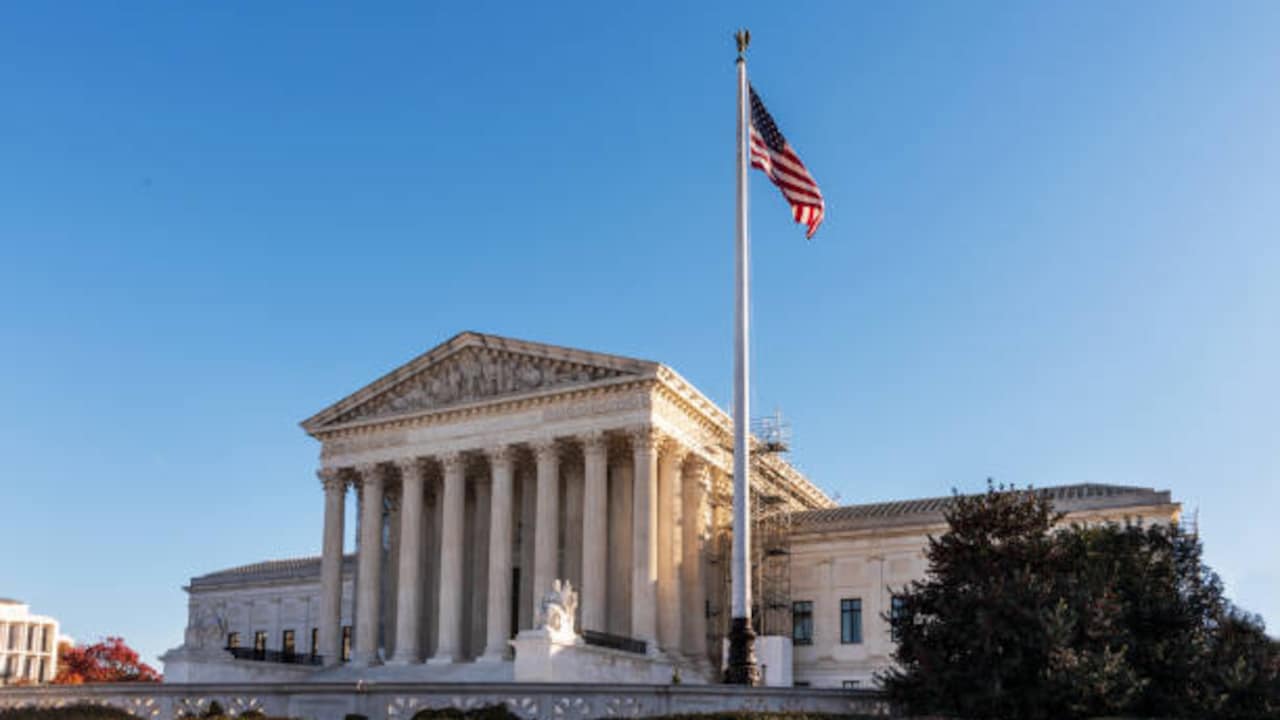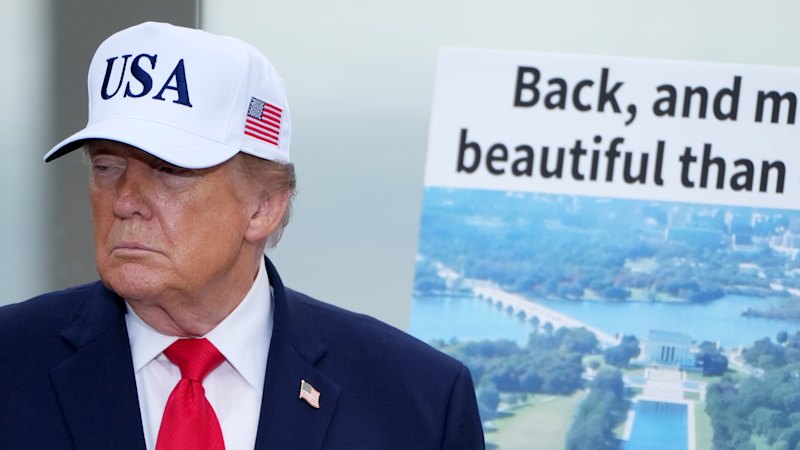
The beltway press corps loves a predictable narrative. When Donald Trump closed out his campaign trail messaging by obsessing over a literal physical makeover of Washington, D.C.—complaining about potholes, crumbling facades, graffiti, and calling for neoclassical architectural mandates—pundits immediately declared him out of touch. Their consensus is lazy, predictable, and completely wrong.
They argue that voters staring down grocery inflation, housing shortages, and global instability do not care about marble columns or clean sidewalks in the nation's capital. On the surface, that sounds like basic political common sense. Kitchen-table economics always beats civic aesthetics.
Except it doesn't. Not when aesthetics are used as a proxy for competence.
I have spent two decades watching political strategists and corporate brands burn millions of dollars on hyper-rational, policy-heavy messaging that falls completely flat with actual human beings. Strategists live in spreadsheets; voters live in the physical world. When commentators mock the focus on D.C.’s physical state, they are revealing their own professional blind spot: an inability to understand how symbolic politics actually operates in the minds of undecided voters.
The Broken Windows Theory of Executive Competence
To understand why talking about graffiti and crumbling concrete in Washington works outside the Beltway, you have to look at signal processing in low-information environments.
Most voters do not read 900-page legislative bills. They do not track Federal Reserve dot plots or parse the granular details of tariff schedules. Instead, they rely on cognitive shortcuts—heuristics—to judge whether the people in charge know what they are doing. In behavioral economics, this is known as attribute substitution: when faced with a complex question ("Is the federal government competently managing the country?"), the brain substitutes an easier one ("Does the capital city look like it is falling apart?").
In 1982, social scientists James Q. Wilson and George L. Kelling introduced the Broken Windows theory, arguing that visible signs of disorder—broken windows, litter, fare evasion—create an environment that encourages further disorder and signals that no one is in control. While criminologists have spent forty years debating its exact statistical impact on street crime, its psychological impact on public perception is undeniable.
When a tourist from Ohio or a small business owner from Pennsylvania visits Washington, D.C., they aren't attending think-tank panels. They are walking past boarded-up storefronts near downtown corridors, stepping over trash, and seeing monuments covered in spray paint. When a candidate stands on a stage and says, "They can't even keep the capital clean, how can they run the country?", that isn't a distraction from the economy. It is the argument about the economy, translated into visceral, undeniable physical terms.
The pundits claiming this "misreads the mood of Americans" are making a classic category error. They think Trump is pitching urban renewal to D.C. residents—a demographic that votes overwhelmingly Democratic and has zero interest in his architectural tastes. He isn't talking to D.C. He is using D.C. as a stage prop for swing-state voters in Michigan, Wisconsin, and Arizona.
Why Voters Actually Care About Concrete and Marble
If you want to dismantle the mainstream media's take, look at the questions voters are actually asking—even if they aren't phrasing them in the way pollsters expect.
Isn't focusing on architecture and city cleanups elitist when people can't afford rent?
This question assumes voters view civic pride and personal finances as a zero-sum game. They don't. Working-class voters, in particular, tend to place high value on order, cleanliness, and visible pride in public spaces. Think about the difference between a well-maintained factory floor and a neglected one. Anyone who has worked in manufacturing, construction, or hospitality knows that when management lets the physical plant go to rot, the books are usually a mess, too.
Calling for classical architecture—like the 2020 executive order promoting traditional civic buildings over brutalist concrete blocks—taps into a deep, widespread resentment against modern institutional design. You don't need an art history degree to dislike brutalism. Most regular people look at mid-century concrete federal buildings and see cold, oppressive, bureaucratic fortresses. Tying the physical ugliness of federal buildings to the perceived arrogance of the federal bureaucracy is a devastatingly effective rhetorical move.
Doesn't this alienate suburban swing voters who want policy solutions?
Suburban swing voters are notoriously risk-averse. They don't necessarily want ideological crusades; they want normalcy, safety, and competence. During periods of high anxiety, "restoration" is a far more comforting word than "revolution."
A campaign message centered on fixing roads, removing encampments, polishing monuments, and restoring grand civic spaces projects an image of a hands-on executive—a builder, a property manager, someone who notices the details. It frames the opposition not as evil masterminds, but as negligent landlords who let the property go into foreclosure. For a suburban voter tired of feeling like everything in society is slightly broken—from supply chains to customer service to local downtowns—the promise of basic physical order is deeply seductive.
The Trap of the "Rational Voter" Fallacy
Political journalists suffer from what we might call the Rational Voter Fallacy. Because they spend all day analyzing policy white papers, polling crosstabs, and legislative mechanics, they assume voters make decisions by weighing policy proposals on a scale.
Let's run a quick thought experiment. Imagine a scenario where two candidates are debating healthcare reform. Candidate A presents a meticulous, fully funded, three-tier subsidy adjustment plan backed by Nobel-winning economists. Candidate B points out that the website for the current healthcare portal crashes every ten minutes and looks like it was designed in 1998, then promises to hire the best engineers to make it fast and clean.
In the press room, Candidate A wins in a landslide. In the voting booth, Candidate B cleans up.
Why? Because voters know that promises about complex macroeconomic outcomes are largely beyond any single president's control. Presidents don't have a magic dial on their desk for gas prices or mortgage rates. Voters know this, even subconsciously. What a president can control—or at least strongly influence—is the execution of visible, tangible projects.
When a politician talks about repaving roads, cleaning parks, and rebuilding monuments, they are making a promise that is falsifiable. You can look at a photograph six months later and see if the graffiti is gone. You can walk down the street and see if the potholes are filled. In an era of profound institutional distrust, a small, visible, falsifiable promise carries more weight than a massive, abstract, unverifiable one.
The Blind Spots of the Aesthetic Play
Now, let's be honest about the risks. Taking an aesthetic, order-obsessed closing message into the final stretch of a campaign is not a guaranteed silver bullet. It has glaring vulnerabilities that can backfire if executed poorly.
First, it invites immediate counter-examples. If you run as the master builder who will restore physical greatness, your own track record on physical projects becomes fair game. Critics will immediately point to unfinished infrastructure promises from a previous term, stalled private developments, or bankruptcies. When you make competence visible, incompetence becomes visible too.
Second, it can cross the line from populist to petty. There is a razor-thin margin between sounding like a tough-minded executive who demands high standards and sounding like a grumpy country club member complaining about the landscaping. When the critique gets bogged down in personal grievances about specific journalists, local politicians, or minor aesthetic details, the broader symbolic power evaporates. Swing voters want a builder; they tune out a whiner.
Third, it ignores the real pain of inflation if not anchored properly. If a candidate talks only about marble columns while voters are putting groceries back on the shelf at Walmart, the message curdles into Marie Antoinette territory. The aesthetic argument only works as a symptom of a broader disease—government mismanagement—never as a substitute for addressing the cost of living.
How to Weaponize Tangible Proof in High-Stakes Messaging
Whether you are running a national political campaign, leading a turnaround at a Fortune 500 company, or pitching a skeptical board of directors, the lesson here is identical. Stop trying to win arguments with abstract data when your audience is starving for tangible proof.
- Audit your visible surfaces. Before you launch a grand vision statement, look at what people actually touch and see first. In business, that’s your onboarding flow, your lobby, your customer support response times. In politics, it’s the physical state of the public square. Fix the broken windows before you write the manifesto.
- Translate systemic failure into physical metaphors. Nobody gets angry about "regulatory inefficiency." Everyone gets angry about a bridge that has been under construction for six years with zero progress. Find the physical manifestation of your opponent's failure and hammer it relentlessly.
- Make falsifiable promises. Stop promising things that take ten years to measure. Commit to immediate, visible wins that prove operational competence within the first ninety days.
- Ignore the press box. The people who critique your messaging for a living are rarely your target audience. Journalists reward novelty, complexity, and ideological purity. Regular people reward clarity, order, and execution.
The commentators mocking the focus on D.C.’s physical state are looking at the literal words and missing the psychological frequency. They hear a rant about potholes and neoclassical columns. Millions of voters hear something entirely different: someone finally noticing that the house is falling apart, and offering to pick up a hammer.
Stop analyzing politics like a seminar and start looking at it like a contractor—because the voters already are.