The asphalt on a rural Texas road in July does not just heat up; it vibrates. If you are stuck on the shoulder of Route 287, forty miles from the nearest trauma center, that shimmering heat wave is the only thing moving.
Imagine a clock ticking in an empty room. Now speed it up.
When a human body enters severe hemorrhagic shock, the universe shrinks to a window of roughly sixty minutes. Doctors call it the golden hour. It is a clinical term for a brutal reality: if blood or specific clotting agents do not enter the patient’s veins within those sixty ticks of the clock, the organs begin to shut down, one by one, like lights extinguishing in an office building at night.
The real tragedy of modern medicine is not that we lack the tools to save people. We have the blood. We have the anti-venom. We have the specialized pediatric medication. The tragedy is that these life-saving liquids are sitting in a sterile refrigerator in a major metroplex, and the person dying is lying in a ditch surrounded by bluebonnets and dry brush.
Trucks are too slow. Traffic is too thick. Helicopters cost thousands of dollars just to start the rotors, assuming one is even available and the weather behaves.
That is the gap where people slip through.
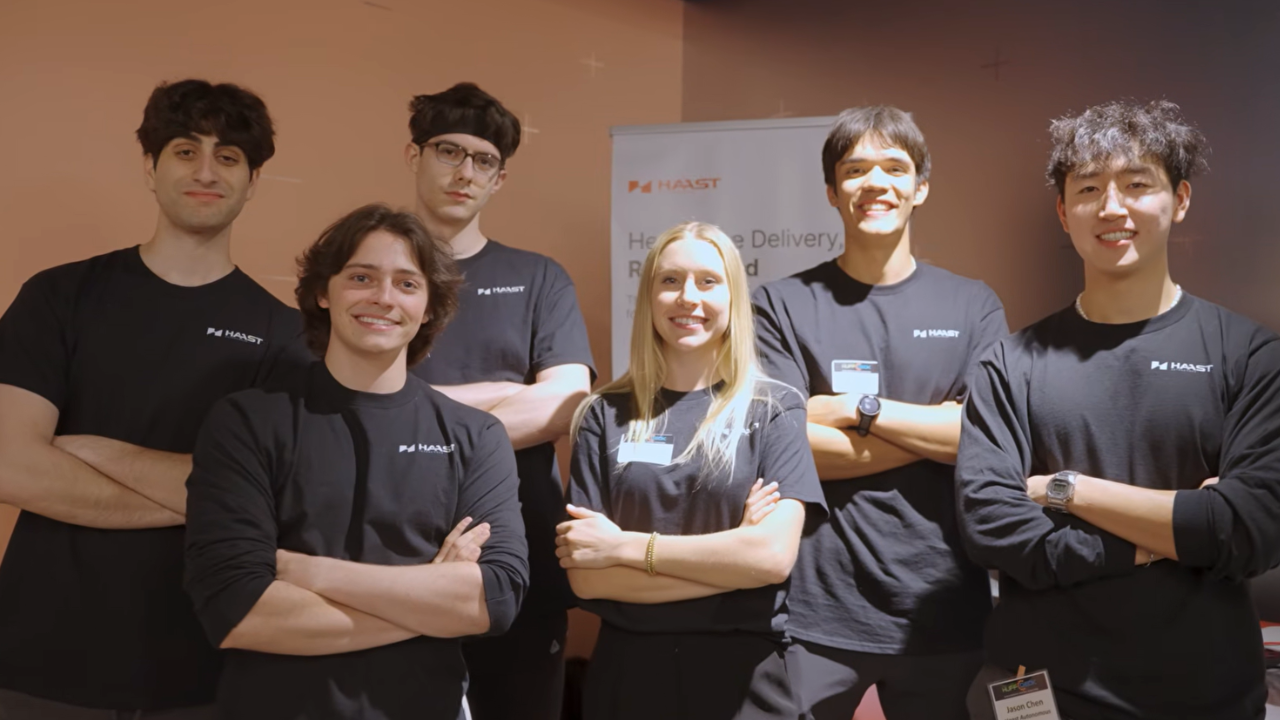
A few years ago, a group of college students in Texas looked at this exact map of distance and death. They did not see an insoluble geographic curse. They saw a logistical problem that could be solved with carbon fiber, electric motors, and a bit of unreasoning optimism.
They started a medical cargo drone company. Recently, they crossed a threshold that turns an academic project into a permanent fixture of the sky: they raised $1.85 million.
Money in the tech sector usually chases things that make affluent people slightly more comfortable. It funds apps that deliver groceries three minutes faster or algorithms that keep eyes glued to a screen. Raising nearly two million dollars for a startup dedicated entirely to moving heavy, highly regulated medical cargo through rural airspace is a different kind of fight. It requires convincing people that the sky above our heads is underutilized infrastructure.
To understand why this matters, you have to look at how blood banks actually operate. Blood is alive. It expires. You cannot simply stock every small-town clinic with deep reserves of rare blood types or expensive, low-shelf-life therapeutics. It makes no economic or medical sense. So, we centralize. We pool resources in massive hubs like Dallas, Houston, or Austin.
The system works beautifully until a local hospital faces an anomaly—a victim of a major farm equipment accident or a mother experiencing postpartum hemorrhaging. Suddenly, that local hospital needs three units of O-negative blood, and they need it before the sun sets.
The traditional response is a courier. A courier drives a car. A car is bound by speed limits, construction zones, and the erratic behavior of every other driver on the interstate.
A drone does not care about gridlock.
The aircraft these students are building do not look like the quadcopters you see buzzing around suburban parks on a Sunday afternoon. Those are toys. These are rugged, fixed-wing autonomous vehicles designed to fight the brutal, unpredictable crosswinds of the Texas plains. They take off vertically, like a helicopter, using dedicated rotors to lift off from a hospital roof or a parking lot. Once they reach cruising altitude, they transition to forward flight, using a traditional wing to glide efficiently through the air at speeds that make a highway speed limit look like a crawl.
The engineering hurdles are immense. It is easy to make something fly when the weather is perfect. It is exceptionally difficult to guarantee that a drone carrying a fragile, temperature-sensitive payload of plasma can fly through a sudden thunderstorm without crashing or overheating. The blood must remain chilled within a precise margin. If it drops or rises even a few degrees, the proteins denature, rendering the payload useless. The cargo hold is essentially a flying refrigerator, insulated against ambient temperatures that can top one hundred degrees on a Texas summer day.
There is a deeper skepticism that these young founders had to confront. People are inherently uncomfortable with the idea of autonomous machines carrying critical cargo over their homes. We trust a tired courier behind the wheel of a delivery van more than we trust an algorithm piloting a wing through empty space, despite the statistical reality that human error causes the vast majority of transport accidents.
The $1.85 million investment is more than capital; it is validation that the regulatory and cultural tides are shifting. The Federal Aviation Administration has historically guarded the national airspace with fierce, understandable jealousy. Introducing thousands of uncrewed aircraft into the same sky occupied by commercial airliners and medical helicopters requires rigorous safety redundancy. Every system on these delivery drones has a backup. If a motor fails, another takes over. If communication cuts out, the drone knows how to return home or find a pre-designated safe landing spot without human intervention.
The future of rural healthcare depends on this transition. Across the country, small rural hospitals are closing at an alarming rate, forcing residents to travel further for basic emergency care. We cannot easily build new hospitals in every county, but we can extend the reach of the facilities we already have.
A medical drone network turns a distant trauma center into an immediate neighbor. It means the difference between a doctor desperately trying to stabilize a patient with inadequate supplies and that same doctor receiving the exact medical tools required, dropped safely into a designated zone behind the clinic within twenty minutes of a call.
The students who began this work are no longer just playing with prototypes in a university lab. They are managing a capital-backed enterprise that is preparing to deploy real aircraft into real communities. The money will go toward manufacturing, expanding their testing footprint, and proving to the world that the sky can be a conduit for survival.
The next time you look up at a clear sky, remember that the emptiness above us is not empty at all. It is a path. And somewhere down a long, quiet highway, someone is waiting for a machine they cannot see to bring them the one thing that will keep their heart beating for another hour.