The crisp, mechanical thud of a printing press is the heartbeat of a nation's identity. For over a century and a half, that pulse has remained remarkably steady, rhythmic, and, above all, anonymous regarding the occupant of the Oval Office. When you pull a ten-dollar bill from your wallet, you aren't looking at a campaign poster. You are looking at a promise backed by the Treasury, signed by civil servants whose names rarely ring a bell in a crowded room.
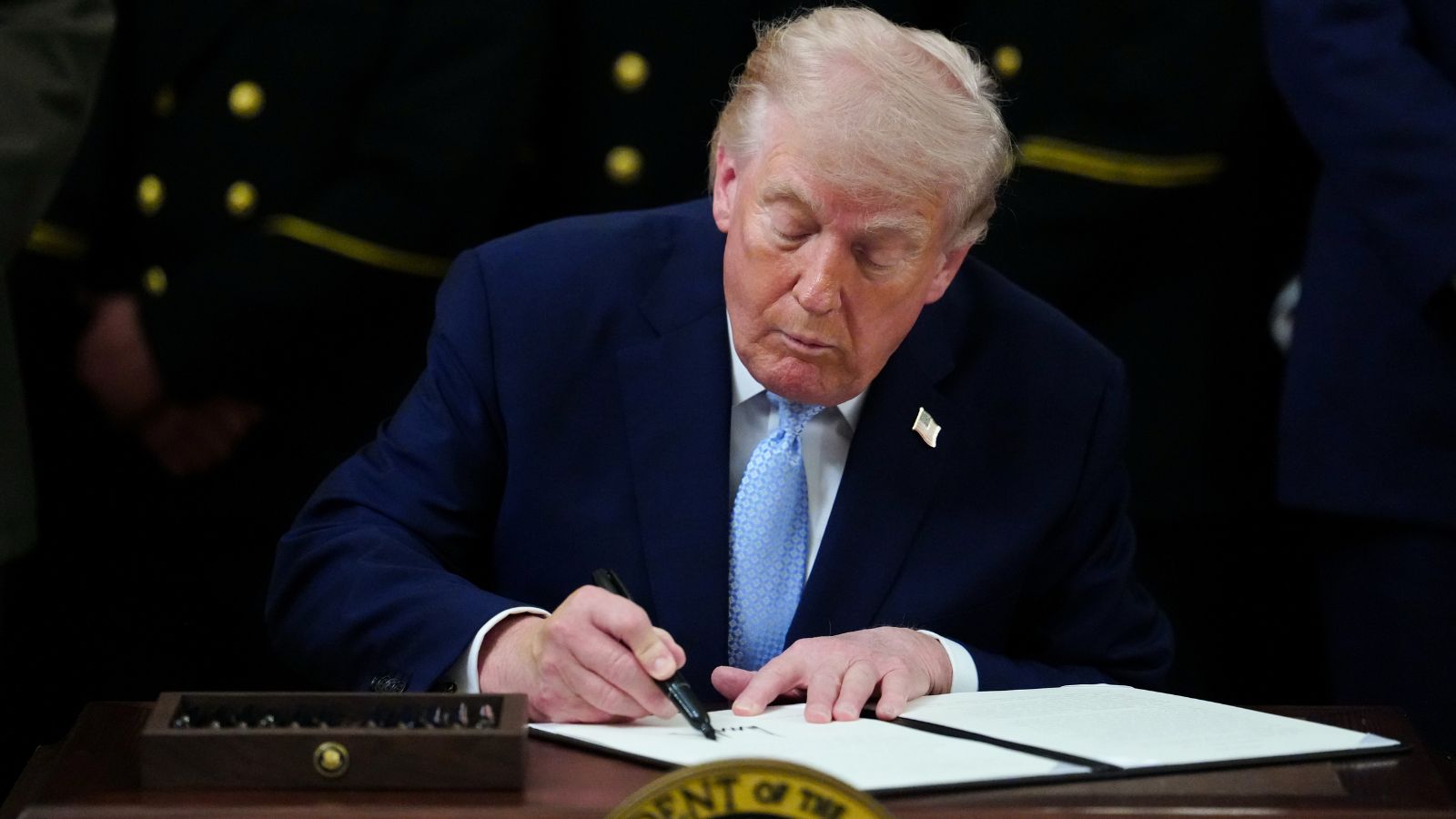
That changed with a stroke of a pen that felt less like a clerical update and more like a seismic shift in how America brands its sovereignty.
For 165 years, a peculiar tradition held firm: sitting presidents stayed off the currency. It was a rule born of a young republic’s allergy to kings. We put our heroes on the front, but the living, breathing political figures of the day stayed behind the velvet rope of history. Then came the order that broke the silence. For the first time in the history of the modern greenback, a sitting president’s signature began appearing on the legal tender of the United States.
It wasn't just a change in ink. It was a change in the air.
The Weight of a Name
Consider a hypothetical shopkeeper in a small town, let’s call him Elias. Elias has handled thousands of bills over forty years. To him, money is a tool, a cold utility. He recognizes the face of Hamilton or Lincoln, but the signatures at the bottom are usually just elegant, illegible scrawls—the bureaucratic shorthand of the Treasurer and the Secretary of the Treasury. These names represent the "how" of the money, the technical assurance that the paper isn't just paper.
When Elias first slides a bill across the counter and sees "Donald J. Trump" emblazoned where a career technician’s name used to be, the transaction changes. It is no longer just a trade of value for goods. It is a brush with the person at the top. The currency becomes a medium for a message.
Historically, the signature of the Treasurer was a safeguard. It signaled that the money belonged to the institutions of the state, not the whims of a person. By inserting the presidential name into that space, the line between the office and the individual began to blur.
A Break From the Civil War Era
To understand why this feels so jarring to historians, we have to look back to the mid-19th century. The tradition of keeping the president’s name off the bills wasn't just a quirk of fashion. It was a deliberate choice to ensure the dollar remained a symbol of national stability rather than a political scoreboard. During the height of the Civil War, when the country was literally tearing itself apart, the currency had to be the one thing everyone could trust, regardless of which side of the Mason-Dixon line they stood on.
In those days, the Treasury was the temple of the "unseen hand." The people signing the bills were meant to be invisible stewards. They were the grist in the mill of democracy.
The shift to include a sitting president's signature upends that invisibility. It turns a piece of paper that survives for years—passing through the hands of enemies, friends, and strangers—into a portable monument. Most monuments are made of stone and stay in one place. This one fits in your pocket. It travels to the grocery store. It pays for a child’s first bicycle. It sits in a tip jar at a late-night diner.
The Psychology of the Pocketbook
Money is the most intimate connection we have with our government. We might never visit Washington D.C., and we might never see a federal agent, but we touch the Treasury every single day.
When a name as polarizing and potent as a sitting president’s appears on that paper, the psychological impact is profound. For supporters, it is a badge of pride, a literal validation of their choice every time they open their wallet. For detractors, it is a constant, unavoidable reminder of an administration they may despise, tucked into the very fabric of their daily survival.
This isn't just about ego. It is about the definition of what is "public."
In the past, the dollar bill was a neutral zone. It was the one place in American life where politics stopped. You didn’t care who the Secretary of the Treasury was when you were buying milk. Now, the act of spending money has been infused with the electricity of the current news cycle.
The Logistics of a Legacy
The technical process of changing a bill is grueling. It involves master engravers, high-security ink formulations, and months of calibration. Usually, these changes are made to thwart counterfeiters—adding a holographic strip here, a color-shifting ink there. Those changes are defensive. They are meant to protect the value of the dollar.
This change, however, was symbolic. It required the machinery of the state to pivot toward the personality of the leader.
There is a subtle irony in the fact that the very thing meant to represent "value" is now so closely tied to the "valuation" of a political brand. In the world of business, a signature is a guarantee. In the world of politics, a signature is a claim. By placing that claim on the currency, the presidency moved from the white house on Pennsylvania Avenue into the cash registers of every gas station in the country.
Beyond the Ink
What happens when the next person takes office? What happens to the bills already in circulation?
America is now entering an era where our currency might become a rolling archive of whoever held the keys to the kingdom at the moment the ink was wet. We are moving away from the "Eternal Dollar" and toward the "Epochal Dollar."
If you look closely at the bills in your hand tonight, you aren't just looking at currency. You are looking at the end of a long, quiet era of modesty. You are seeing the moment the presidency decided it didn't want to just lead the country, but wanted to sign the receipt for it, too.
The paper feels the same. The weight hasn't changed. But the silence of the 165-year tradition has been replaced by a name that demands to be seen, ensuring that even the simplest purchase is now an act of remembrance for an administration that refused to stay in the background.
The ink is dry now. The bills are moving. They are in ATMs, in birthday cards, and in the hands of people who haven't yet noticed that the rules of the game have shifted beneath their thumbs. The tradition is dead, but the currency lives on, carrying a signature that will circulate long after the pens are put away and the lights in the Oval Office are dimmed for the night.