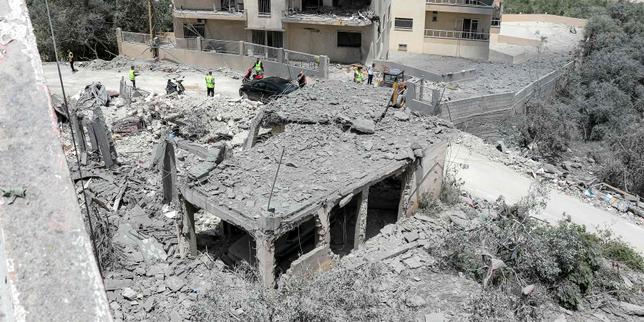
Diplomats in Washington love to celebrate paperwork. They sign an agreement, shake hands, and announce a 45-day extension to a fragile ceasefire. Then reality hits the ground in Lebanon. Less than 48 hours after US officials applauded the renewal of the April 17 truce, Israeli missiles tore through residential neighborhoods. Seven people are dead. Among them are two children and a 17-year-old girl killed alongside her father.
If you think this ceasefire is actually stopping the violence, you're looking at the wrong map. This isn't peace. It's a war being fought in the margins of a diplomatic agreement, and it's getting bloodier by the day.
The Baalbek Strike and the Deadlock Over Disarmament
The most high-profile casualty of Sunday's airstrikes was Wael Abdul Halim. He was a prominent commander in the Palestinian Islamic Jihad group, an ally of Hezbollah. An Israeli missile blasted directly into an apartment on the outskirts of the eastern city of Baalbek. The explosion killed Halim and his 17-year-old daughter, Rama. Rescue teams spent hours digging through the pulverized concrete trying to find survivors.
This wasn't a random accident. Israel knew exactly who it was targeting.
But look at the bigger picture. Baalbek sits deep within the eastern Bekaa Valley. It's miles away from the southern border where Israeli ground forces are currently dug in. By striking deep inside Lebanese territory, Israel is sending a blunt message. They'll hit their targets whenever and wherever they want, regardless of any truce negotiated in Washington.
Meanwhile, the diplomatic track is stalling out completely. While Lebanese and Israeli envoys sit in American conference rooms, Hezbollah isn't even at the table. They completely reject the talks. Hezbollah lawmaker Hussein Hajj Hassan called the direct negotiations a dead-end path that will only force Lebanon into making one concession after another.
The core issue stalling everything? Disarmament. Israel wants Hezbollah disarmed and pushed back. Hezbollah says absolutely not. Until someone blinks on that issue, these ceasefire papers aren't worth the ink used to sign them.
The Quiet Slaughter in the South
While the strike in Baalbek grabbed the headlines because of the political status of Wael Abdul Halim, the southern villages took a brutal beating on the exact same day. The Lebanese Health Ministry confirmed a series of strikes across southern towns that killed five more people.
The geography of the casualties tells a grim story.
- Tayr Felsay: Three people killed, including a child.
- Tayr Debba: Two people killed, including another child.
- Injuries: At least 15 others wounded across multiple southern villages.
The Israeli military had issued evacuation orders for these areas, telling residents to leave villages located tens of kilometers away from the border. Think about what that actually means for a local family. You're told to leave your home for a ceasefire that you were promised would protect you. If you stay, you risk a missile coming through your roof. If you leave, you join the 1.6 million displaced Lebanese citizens who have nowhere left to go.
The numbers are staggering. Since March 2, Israeli attacks have killed nearly 3,000 people in Lebanon. Over 9,000 are injured. A fifth of the country’s entire population is homeless. Even since this current truce technically began on April 17, more than 400 people have been killed. That's not a ceasefire. That's a managed conflict with a body count.
Drones, Fiber Optics, and the New Rules of Engagement
Why is Israel keeping up the pressure despite the immense international pressure to make the truce stick? Follow the technology.
Israeli Prime Minister Benjamin Netanyahu didn't mince words at his weekly cabinet meeting on Sunday. He explicitly talked about protecting Israeli communities but shifted heavily into the changing tactical realities on the ground. Specifically, he focused on a new headache for the Israeli military: FPV drones.
Hezbollah has been aggressively deploying low-cost, First-Person View (FPV) drones to target Israeli troops occupying parts of southern Lebanon. What makes these specific drones a nightmare for Israeli air defenses is that they utilize fiber-optic tethers.
Standard electronic warfare jamming relies on disrupting radio frequencies between the pilot and the drone. If there's a physical fiber-optic cable connecting the drone to the operator, jamming is completely useless. Netanyahu admitted that neutralizing these cheap, un-jammable fiber-optic drones is one of the military's biggest current challenges.
Israel is using its air power to hunt down the infrastructure and the fighters operating these systems before they can launch. This explains why the Israeli military confirmed it hit five villages on Saturday and Sunday, claiming they were targeting Hezbollah infrastructure. Every time a new technological threat pops up on the border, the ceasefire takes a backseat to military necessity.
Moving Beyond the Paper Ceasefire
It's easy to get lost in the diplomatic statements coming out of Washington, but the reality on the ground in Lebanon is that the truce is a fiction. If you're trying to understand where this conflict goes next, ignore the 45-day extensions. Watch the deep strikes in the Bekaa Valley and watch how Israel reacts to Hezbollah’s evolving drone tactics in the south.
For the average citizen in places like Tayr Felsay or Baalbek, the immediate next step isn't waiting for a peace deal. It's survival. Monitor local evacuation warnings, understand that the presence of any political or militant figures makes entire apartment blocks a target, and don't trust that a diplomat's handshake in America will stop a drone strike in southern Lebanon. The war hasn't paused; it has just changed its rhythm.