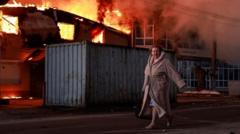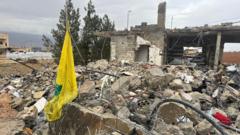
The pundits are salivating over a predictable script. They claim Vladimir Putin is the puppet master behind Middle Eastern instability, rubbing his hands together as oil prices climb and Western focus shifts away from the Donbas. They tell you that a war involving Iran is a "gift" to the Kremlin.
They are dead wrong.
This lazy consensus ignores the structural reality of the Russian-Iranian alliance and the fragility of the Russian economy. Putin doesn't want a "Great Iranian War." He wants a controlled, low-boil tension that keeps energy prices stable and the West distracted. A full-scale explosion in the Levant and the Gulf would be a strategic catastrophe for Moscow.
If you think Putin benefits from a burning Middle East, you aren't paying attention to the logistics.
The Mirage of High Oil Prices
The most common argument is that war equals expensive oil, and expensive oil equals a flush Kremlin. This is high school level economics.
Russia's current economic model under sanctions relies on a stable, predictable flow of "gray market" tankers. A major war involving Iran—specifically one that threatens the Strait of Hormuz—doesn't just raise the price of Brent; it shatters the global shipping logistics that Russia uses to bypass Western price caps.
If the Strait closes or becomes a kinetic combat zone, the "shadow fleet" Russia spent billions to assemble becomes a collection of floating targets or stuck assets. Insurance premiums for non-Western vessels would skyrocket beyond the point of profitability. Putin doesn't need $150 oil if he can’t physically move his product to India and China because the global maritime insurance market has suffered a nervous breakdown.
Furthermore, China—Russia’s only remaining high-volume customer—is the world’s largest net importer of oil. A massive spike in energy costs would tank the Chinese manufacturing sector. When Beijing’s economy catches a cold, Moscow gets pneumonia. Putin cannot afford to let his primary patron face a massive energy-induced recession.
Iran is a Supplier, Not Just a Proxy
The "distraction" theory posits that every bullet fired in the Middle East is a bullet not fired in Ukraine. This is a fundamental misunderstanding of the current military-industrial pipeline.
Russia is currently dependent on Iranian military technology. From the Shahed-136 loitering munitions to ballistic missile transfers, Tehran has become the Kremlin's "back-end" armory.
If Iran enters a high-intensity conflict with Israel or the United States, that supply chain vanishes overnight. Tehran isn't going to ship drones to the Russian frontline when it needs every single airframe to defend its own infrastructure. Putin has spent two years integrating Iranian tech into his "Special Military Operation." A war in the Middle East forces Russia to compete for the same resources it currently buys on credit or barter.
Imagine a scenario where the Russian offensive stalls because the "supplier" had to pivot to its own existential fight. That isn't a win for Putin; it’s a logistics nightmare that leaves him vulnerable.
The Myth of the Diverted West
The argument that Washington cannot walk and chew gum at the same time is a comfort blanket for Moscow, but it’s based on a false premise. The hardware required for a Middle Eastern naval or air conflict is almost entirely different from the hardware required for a land war in Eastern Europe.
- Ukraine needs: 155mm artillery shells, de-mining equipment, main battle tanks, and short-range air defense.
- A Middle East conflict needs: Carrier strike groups, Tomahawk missiles, F-35 sorties, and Aegis-class missile interceptors.
The U.S. doesn't stop producing artillery shells because it’s firing interceptors at Iranian drones. In fact, a Middle East war would likely accelerate the expansion of the American defense industrial base, which is the last thing Putin wants. He benefits from a slow-moving, bureaucratic West, not a West that has been forced into a total-war production footing.
The Caucasus Vulnerability
When Iran is distracted, the power vacuum in the South Caucasus widens. Russia has already lost its grip on Armenia, which is now looking toward the West for security after Moscow failed to intervene in Nagorno-Karabakh.
A weakened or war-torn Iran leaves the door wide open for Turkey to expand its influence. Putin and Erdogan have a "frenemy" relationship that relies on a delicate balance. If Iran—the third pillar of that regional power dynamic—is removed or neutralized, Russia is left alone to deal with a resurgent, NATO-aligned Turkey in its own backyard.
The Nuclear Escalation Trap
Moscow’s greatest leverage is its status as a nuclear superpower. It uses this "escalation dominance" to keep NATO at bay. However, a war between Israel and Iran moves the needle toward a nuclear-armed Tehran.
If Iran feels its regime survival is at stake, it will sprint for a nuclear device. This puts Russia in an impossible position. Russia does not want a nuclear-armed Iran. A nuclear-armed Tehran would be unpredictable, less dependent on Moscow, and would trigger a massive wave of proliferation across the Saudi peninsula.
Putin wants a junior partner, not a nuclear competitor on his southern border.
The Ruble's Real Enemy
The Russian internal market is already red-lining. The Central Bank of Russia has been forced to keep interest rates sky-high to combat inflation. While oil revenue is important, the stability of the Russian domestic front depends on the availability of cheap Chinese imports.
A global maritime crisis sparked by an Iranian war would make those imports more expensive and harder to source. Putin’s social contract with the Russian people—"you stay out of politics, and I’ll keep the economy stable enough"—is already under immense strain. He cannot afford a supply-chain shock that rivals the 2020 lockdowns.
Stop Asking if Putin Benefits
The question is wrong. The question shouldn't be "Does Putin benefit from the war?" but rather "Can Putin survive the chaos?"
The Kremlin is a conservative, risk-averse entity when it comes to global shocks. They prefer the "managed crisis." A war in Iran is an unmanaged crisis. It threatens the shadow fleet, kills the Iranian arms pipeline, empowers Turkey, and risks a global recession that would leave Russia’s main customer, China, unable to pay the bills.
Putin is not a chaos agent; he is a status-quo predator. He likes the world exactly as it is right now: messy enough to be a headache for Biden, but stable enough to keep the tankers moving.
If the Middle East goes up in flames, the fire will eventually reach the Kremlin's curtains.
Go look at the trade data between Moscow and Tehran. Look at the volume of the shadow fleet passing through the Suez. Then tell me with a straight face that Putin wants those routes to become a graveyard. He doesn't. He's terrified of it.
Stop reading the headlines and start following the tankers. Would you gamble your entire economy on a war that targets your only reliable supplier? Neither would he.
Stop looking for the master plan where there is only a desperate attempt to keep the wheels from falling off.
Would you like me to analyze the specific impact of a Strait of Hormuz closure on Russia's Urals crude pricing?