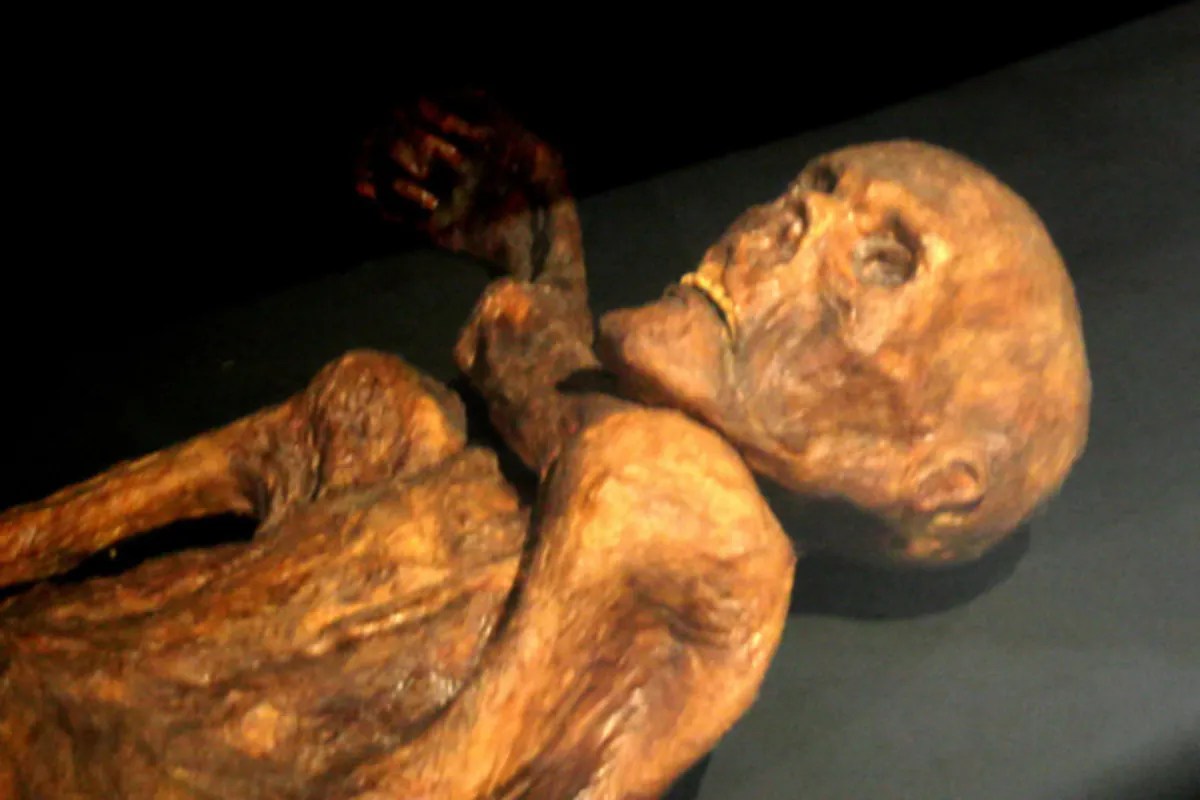
The discovery of viable or structurally intact microorganisms in Ötzi, the 5,300-year-old copper-age mummy discovered in the Ötztal Alps, challenges fundamental assumptions in paleomicrobiology regarding the long-term survival limits of cellular life. While mainstream reporting frames this as a shocking anomaly, an analysis of the environmental mechanics reveals a predictable, albeit rare, convergence of taphonomic factors. The preservation of this ancient microbiome provides a blueprint for understanding microbial dormancy, metabolic arrest, and the boundaries of genetic degradation under extreme cryospheric conditions.
To evaluate the validity and implications of these microbial findings, the phenomenon must be deconstructed into three operational vectors: the cryo-preservation environment, the localized tissue microenvironment, and the technical limitations of differentiating viable cells from ancient cellular debris.
The Tri-Centric Preservation Framework
The survival or structural conservation of microbes over five millennia requires an environment that halts both biological decay and chemical weathering. In the case of Ötzi, this was achieved through a specific sequence of physical events that created a natural biorepository.
1. Rapid Sub-Zero Dehydration (The Desiccation Phase)
Before the mummy was encased in glacial ice, katabatic winds across the alpine ridge accelerated the sublimation of moisture from the soft tissues. This rapid loss of water lowered the intracellular water activity ($a_w$) below the threshold required for metabolic function ($a_w < 0.60$). By stripping the environment of free water, the enzymatic pathways responsible for autolysis—the self-destruction of cells—were entirely neutralized.
2. Anoxic Cryo-Encapsulation
Once buried beneath the glacier, the specimen was isolated from atmospheric oxygen. This created an anaerobic microclimate, halting the proliferation of obligate aerobic bacteria and fungi that typically drive the decomposition of organic matter. The stable, sub-zero temperature served as a thermal barrier, slowing chemical kinetics to a negligible rate.
3. Hydrostatic Pressure Stabilization
The positioning of the mummy within a rocky hollow protected the structural integrity of both the human tissue and the associated microbial cells from the destructive shearing forces of moving glacial ice. The localized pressure profile remained static, preventing the mechanical crushing of cell walls.
Microbial Dormancy vs. Necro-Signatures: The Diagnostic Challenge
A critical point of confusion in paleomicrobiological analysis is the distinction between viable, dormant microorganisms (such as bacterial endospores) and well-preserved molecular fragments. When media outlets report "living" microbes, analytical rigor demands a deeper look at the specific state of those organisms.
[Viable/Dormant State] ---> Spores/Metabolic Arrest ---> Inducible via Resuscitation
[Necro-Signature State] --> Intact Cell Wall + Damaged DNA -> Non-Viable, Morphologically Intact
The microbial profile found within and upon Ötzi primarily falls into two distinct categories, each requiring a different analytical approach.
Endospore-Forming Extremophiles
Certain bacterial phyla, particularly Firmicutes (such as Bacillus and Clostridium species), possess the genetic machinery to transition into endospores when subjected to nutritional deprivation or extreme thermal stress. In this state, the cell condenses its DNA, wraps it in protective, proteinaceous coats, and replaces intracellular water with dipicolinic acid.
These spores exhibit zero measurable metabolic activity but remain structurally viable. When extracted and introduced to nutrient-rich, temperate environments in a laboratory setting, these ancient spores can successfully germinate. This is not active survival over 5,300 years; it is an extended state of cryptobiosis.
Non-Spore-Forming Pathogens and Commensals
The discovery of Helicobacter pylori genetic material in Ötzi's gastrointestinal tract represents a different preservation mechanism. H. pylori does not form endospores. Therefore, the detection of this organism relies heavily on recovering its genomic blueprint rather than culturing live cells.
The low temperature and absence of UV radiation prevented the rapid hydrolytic and oxidative damage that typically breaks down DNA strands into unreadable fragments. Scientists did not revive living H. pylori; they reconstructed its genome from preserved paleofecal matter because the rate of chemical decay was chemically suppressed.
Methodological Bottlenecks in Paleomicrobiology
Validating the presence of ancient microbes requires navigating significant technical challenges. The primary obstacle is distinguishing between genuine 5,300-year-old biological entities and modern environmental contamination introduced during excavation, transport, or laboratory analysis.
The Contamination Matrix
Because the mummy was exposed to the modern atmosphere during its extraction in 1991, surface samples are highly compromised. Modern alpine bacteria, human skin flora from researchers, and airborne fungal spores readily colonize the specimen if environmental controls fail. To bypass this, researchers must utilize deep-tissue biopsies—such as sampling the stomach lining or bone marrow—under strict sterile conditions.
DNA Fragmentation Indexing
To verify that a recovered microbial sequence is truly ancient, scientists analyze the patterns of post-mortem DNA decay. Over millennia, cytosine bases within DNA undergo spontaneous deamination, converting them into uracil. This damage occurs predominantly at the ends of the DNA fragments.
By sequencing the microbial DNA and mapping these specific terminal deamination patterns, informatics pipelines can statistically separate authentic ancient microbial DNA from pristine, non-degraded modern contaminants. If a microbial sample lacks these specific terminal damage signatures, it must be discarded as modern noise.
Bioprospecting and Strategic Implications
The successful extraction and analysis of the Iceman’s microbiome shifts our understanding of evolutionary biology and pharmacology. This data provides concrete utility across two primary vectors.
Mapping Pathogen Evolution
By sequencing the Helicobacter pylori strain from Ötzi, geneticists mapped the migration patterns of ancient human populations. The strain carried by the Iceman shared close ancestry with ancient Asian variants rather than modern European strains. This indicates that the genetic structure of European gastric pathogens was fundamentally reshaped by human migrations that occurred after Ötzi's death. Accessing these pristine, ancient strains allows researchers to track the exact mutation rate of virulence factors over thousands of years, aiding in the prediction of future pathogenic adaptations.
Unlocking Ancient Secondary Metabolites
Microbes preserved in extreme, isolated conditions often yield unique biochemical compounds. The selective pressures of the copper-age environment may have driven these organisms to produce specific antimicrobial peptides or enzymes that have since been lost in modern lineages. Isolating and analyzing the metabolic pathways of these ancient extremophiles provides structural templates for synthetic biology to develop novel antibiotics, bypassing the resistance mechanisms developed by modern pathogens against current pharmacological options.
Operational Imperatives for Future Cryospheric Discoveries
As global temperatures rise and alpine glaciers rapidly retreat, more cryopreserved archaeological assets will emerge from the ice. To prevent the immediate degradation of invaluable paleomicrobiological data upon exposure to the modern atmosphere, excavation teams must transition from traditional archaeological recovery to a specialized biochemical containment protocol.
The preservation strategy must prioritize immediate thermal and chemical stabilization at the point of extraction. The specimen must be maintained at or below $-6^\circ\text{C}$ within a nitrogen-purged, transportable containment chamber to prevent both ice recrystallization and immediate aerobic microbial proliferation. Field teams must be equipped with real-time metagenomic sequencing tools to establish a baseline contamination index directly at the high-altitude site before transport.
Without these structural modifications to field workflows, the sudden shift in temperature, humidity, and oxygen exposure will trigger rapid enzymatic activation and modern fungal overgrowth, irreversibly destroying the fragile ancient microbial ecosystems before they can be documented.