Silence.
That is the thing nobody tells you about election night until you have stood on the sticky ballroom carpet of a downtown hotel, nursing a warm bottle of water while the cable news chyrons shift from bright, pulsing uncertainty to a single, unforgiving checkmark. For months, a campaign is pure kinetic noise—diesel engines idling behind high school gymnasiums, the sharp crackle of portable PA systems in the damp morning air of the Mahoning Valley, the endless, breathless cadence of a candidate who treats every stump speech like a sprint against time itself.
Then, around ten o'clock on a Tuesday night in November, the projections drop. And suddenly, the loudest room in Ohio goes quiet enough to hear the ice melting in the plastic cups.
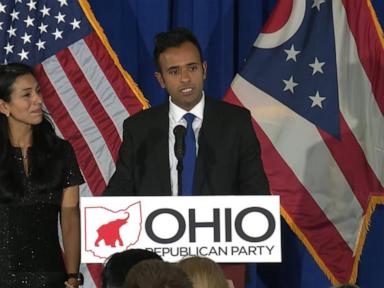
In Columbus, following projections in the 2026 Ohio governor's race, Vivek Ramaswamy stepped up to a podium that had been built for a victory party and delivered the hardest speech in American politics. According to initial broadcast reports covering his election night remarks, Ramaswamy addressed a crowd of supporters, volunteers, and family members after major outlets projected his defeat in the gubernatorial contest—a race that had drawn national attention as a high-stakes test of whether an outsider populist message, forged in the crucible of a presidential primary and national political commentary, could translate into executive power in the industrial Midwest.
To understand what happened in that ballroom—and why the aftermath matters far beyond one candidate's political future—you have to look past the box score. You have to look at the people standing ten rows back from the stage, the ones who took unpaid shifts off from machine shops in Lorain County or stayed up past midnight stuffing envelopes in suburban Delaware County basements.
The Anatomy of a Modern Populist Bid
Politics, at its core, is an exercise in translation. You take a sprawling, chaotic set of economic anxieties and cultural frustrations and try to compress them into a single human voice.
When Ramaswamy entered the race to succeed term-limited Republican Governor Mike DeWine, the pitch was unmistakable. Having risen to national prominence during the 2024 presidential cycle as a biotech entrepreneur turned anti-establishment firebrand, Ramaswamy framed his candidacy around sweeping institutional reform, aggressive deregulation, and a sharp break from traditional Columbus politics. Supporters saw in him a relentless communicator willing to take ideological arguments directly into skeptical venues—a candidate who didn't read from teleprompters and didn't apologize for disrupting party orthodoxy.
Critics, meanwhile, questioned whether a campaign built on national media visibility and broad ideological disruption could solve the granular, unglamorous problems that actually decide statehouse elections. Ohio voters, historically, have a pragmatic streak that runs deeper than partisan labels. You can talk about reshaping federal bureaucracies all afternoon in a television studio, but on a rainy Tuesday in Toledo or Dayton, people want to know who is going to keep property taxes from pricing them out of their homes, who is going to fix the bridge over the river, and whether the plant down the road will still be hiring five years from now.
Think of a gubernatorial campaign like trying to steer a loaded freighter through a narrow river channel. A national media campaign is like a speedboat—fast, loud, capable of throwing up an impressive wake that everybody on the shore notices. A statehouse race is the freighter. It moves slowly, it requires an intimate knowledge of every hidden sandbar beneath the surface, and if you miscalculate the current by even a few degrees, the hull scrapes bottom long before you reach the harbor.
Inside the Room Where Expectations Collide With Reality
Consider a composite voter—let's call her Diane, a hypothetical small-business owner from Stark County whose story mirrors the real-world tensions documented across Ohio's electorate throughout the 2026 cycle.
Diane didn't come to political rallies for the spectacle. She came because her supply costs had climbed for three straight years, her municipal taxes felt disconnected from the services her neighborhood received, and she wanted someone in Columbus who sounded angry enough to break the inertia. When she listened to Ramaswamy speak at a town hall earlier in the fall, she felt heard. His rapid-fire diagnosis of institutional stagnation matched what she saw every time she tried to navigate state permitting rules.
Yet Diane also had a neighbor—a retired union machinist—who listened to the exact same speech and heard something entirely different. To him, sweeping promises to dismantle agencies sounded less like liberation and more like abandonment, a threat to the public pensions, infrastructure funding, and regulatory guardrails his family relied upon.
That friction played out across eighty-eight counties. From the Appalachian foothills along the Ohio River to the lakefront precincts of Cuyahoga County, the race became a referendum not just on policy, but on governing temperament. As political analysts and local journalists noted throughout the campaign, Ohio's political terrain had shifted rightward over the previous decade, yet statewide general elections still demanded a coalition capable of bridging rural populist enthusiasm with suburban pragmatism.
When the returns began rolling in on election night, that bridge proved narrower than the campaign had hoped.
What Happens When the Projection Hits the Screen
Anyone who has ever covered or worked a losing campaign knows the exact physical sensation of that moment. Your stomach drops, not all at once, but in stages, as precinct totals from bellwether counties tick upward on a laptop screen. First you tell yourself the rural boxes haven't reported yet. Then you check the suburban margins and realize the deficit is real. Finally, the television networks put the checkmark next to the opponent's name, and the math becomes irreversible.
When Ramaswamy took the stage in Columbus after those projections were called, the emotional temperature in the room was raw. Supporters who had invested months of belief—and, in many cases, their own money and reputations—stood waiting to see how their candidate would absorb the blow.
In his remarks to the crowd, Ramaswamy thanked his volunteers, his family, and the voters who had backed his movement across the state, framing the campaign not as a conventional bid for office, but as an ongoing effort to challenge entrenched political norms. Rather than disappearing quietly behind a backstage curtain, he leaned into the microphone to rally his supporters, urging them to stay engaged in civic life and insisting that the ideas driving the campaign would outlast a single election cycle.
It was a revealing moment, stripped of the rehearsed perfection of mid-campaign rallies. In defeat, a politician's instincts show clearly. Some candidates turn bitter, blaming voters or staffers for failing to execute a flawless vision. Others retreat into stiff, legalistic boilerplate written by communications directors ten minutes before walking out the doors. Ramaswamy chose defiance mixed with gratitude—the posture of a movement leader trying to keep a coalition from scattering the moment the campaign signs come down.
The Invisible Stakes of a Concession Night
Why should anyone outside Ohio—or anyone who didn't cast a ballot in that race—care about a speech delivered after a projected loss?
Because how a movement handles defeat tells you far more about its durability than how it celebrates victory.
History is full of insurgent campaigns that burned bright for eighteen months and vanished without a trace the morning after election day. In American politics, losing a governor's race often triggers an immediate identity crisis for the coalition behind the candidate. Donors pack up their checkbooks and look for the next viable vehicle. Local organizers burn out, wondering whether their door-knocking in the October chill mattered at all. The candidate faces a stark choice between returning to private life, pivoting back to media commentary, or doing the slow, unglamorous work of building lasting political infrastructure from the ground up.
At the same time, the winner inherits the very real problems that fueled the challenger's rise in the first place. A projected victory does not magically lower grocery bills, resolve housing shortages, or modernize an aging electrical grid. If the incoming administration in Columbus ignores the frustrations that drew thousands of Ohioans to Ramaswamy's rallies, those grievances will simply wait, gathering pressure beneath the surface until the next election cycle.
And for the voters themselves—the real-life equivalents of Diane in Stark County—the morning after election day brings a quieter, more personal reckoning. The yard signs come out of the lawn. The text messages asking for five-dollar donations stop buzzing on the kitchen counter. You still have to unlock the shop door at seven in the morning, balance the ledger, and figure out how to make the numbers work regardless of who sits behind the desk at the Ohio Statehouse.
The Long Walk Out to the Parking Lot
By midnight in Columbus, the ballroom cameras had folded their tripods and wheeled their gear toward the freight elevators. Hotel staff in black vests moved quietly between the rows of empty folding chairs, gathering discarded campaign placards and half-empty water bottles into rolling bins.
Outside on the sidewalk, the November air had turned sharp. Small groups of supporters lingered near the doors, hands tucked deep into their coat pockets, trading phone numbers and replaying key moments from the fall—the rally in Cincinnati where the crowd spilled out the doors, the late-night diner stop in Lima, the arguments at family dinner tables that never quite resolved.
Nobody in that circle had gotten the outcome they came for. Yet as they walked toward the parking garages, stepping over damp leaves pasted to the concrete, there was no mistaking the energy still humming beneath their disappointment—the stubborn, distinctly American conviction that the argument wasn't over just because the ballots had been counted.
A campaign ends when the lights go up in the ballroom, the microphones go dead, and the podium is wheeled back into storage, leaving only the cold night air and the long drive home.


