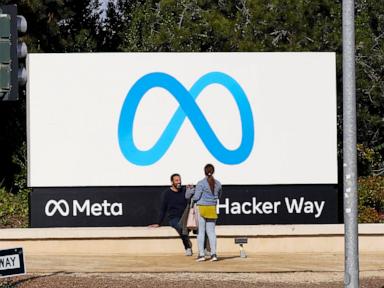
Forty-two state attorneys general want two hundred billion dollars from Meta. The narrative reads like a moral panic straight out of a cheap paperback. Big Tech engineered a digital narcotic. Innocent children got hooked. Silicon Valley executives laughed behind closed doors while childhoods dissolved into blue-light glow.
It is a clean story. It is a comforting story. And it is entirely engineered to hide a much darker, much more boring truth: adults simply do not want to parent anymore, and suing Mark Zuckerberg is cheaper than setting boundaries at the dinner table.
I have spent the last fifteen years watching the tech industry build products, break distribution models, and navigate regulatory crosshairs. I have seen panicked executives write massive checks to make compliance headaches disappear, and I have watched politicians weaponize public outrage whenever election season demands a convenient villain.
Let us dismantle the lazy consensus. The argument that social media causes an unavoidable epidemic of adolescent addiction relies on a fundamental misunderstanding of human psychology, technological adoption, and personal accountability.
The Myth of the Chemical Hook in Software
Every mainstream legal filing and media report leans heavily on drug analogies. They call algorithms "dealers." They call feeds "slots." They talk about dopamine hits as if a teenager scrolling through TikTok is the operational equivalent of an intravenous heroin user.
This comparison is insulting to actual addiction medicine and intellectually lazy.
Chemical dependencies alter brain chemistry through neurochemical inundation that overrides homeostatic regulation. Social media does not do that. Social media is a communication medium wrapped in a distribution engine. Kids do not use Instagram because an algorithm hacked their brain stem; they use Instagram because that is where their friends are.
When you strip away the courtroom theater, the core complaint of these state lawsuits is that products are designed to be engaging. Of course they are. Every product ever manufactured in a capitalist economy is designed to be engaging. A novel is designed to hold your attention. A skateboard is designed to be fun. A soccer ball is engineered to bounce predictably.
If engagement equals addiction, then the printing press was the greatest public health crisis in human history. We do not sue publishers because a teenager stays up until three in the morning reading fantasy novels under the covers with a flashlight. We recognize that reading is a neutral activity that requires parental supervision and time management.
Yet the moment pixels replace paper, personal responsibility vanishes into thin air.
Where the Data Actually Points
If algorithms were the sole architect of adolescent despair, we would see a uniform, global spike in youth mental health crises that perfectly correlates with platform rollouts across every demographic.
The data does not support this deterministic panic.
Independent researchers analyzing large-scale adolescent cohorts consistently find that the correlation between social media use and severe mental health decline is remarkably weak—often hovering around the same statistical impact as wearing glasses or eating potatoes. Jonathan Haidt and other modern moral crusaders point to hockey-stick graphs of teen anxiety starting around 2012, matching the rise of the smartphone.
Correlation is not causation. In 2012, the world was still crawling out of a brutal global financial crisis. Economic instability at home trickles down directly to children. Academic pressures skyrocketed. Post-pandemic disruptions altered socialization patterns in ways we are only beginning to quantify.
Blaming an algorithm for adolescent angst is simply easier than fixing broken school systems, underfunded mental health infrastructure, and fractured family units. It gives politicians a headline and gives parents an excuse.
The Convenient Absolution of Adults
Let us look at the anatomy of a modern household.
We hand children supercomputers with unfiltered access to global communication channels by the time they reach middle school. We do this because it is convenient. A phone acts as an electronic babysitter, a digital pacifier, and a tether of constant surveillance rolled into one sleek glass rectangle.
Then, when those same children exhibit signs of distraction, anxiety, or antisocial behavior, we act shocked. We act as though Mark Zuckerberg personally broke into the house at midnight and pried the child's eyelids open to force-feed them reels.
I have watched parents hand their toddlers iPads at restaurants to maintain adult conversation, then turn around and scream at tech companies for destroying their teenagers' attention spans. You cannot outsource the difficult, grinding work of raising a human being to a Silicon Valley corporation for twelve years and then sue them when the kid turns out distracted.
The two hundred billion dollar demand is not a rescue mission for children. It is a massive financial shakedown designed to extract settlement funds into state general accounts, where the money will vanish into bureaucratic bloat instead of funding a single therapist or after-school program.
The Uncomfortable Reality of Frictionless Life
Technology companies built frictionless systems because consumers demanded them. We hated waiting for things. We hated friction. We wanted instant connection, immediate validation, and infinite entertainment on demand.
We got what we wished for.
The byproduct of a frictionless world is that it removes natural stopping cues. Books end. Television broadcasts stop for the night. Traditional social gatherings break up because people have to go home. Digital feeds do not have natural stopping cues.
Recognizing this does not require a lawsuit; it requires basic institutional boundaries.
Instead of waiting for a court settlement that will never materialize—or will simply result in cosmetic privacy prompts that no one reads—adults need to reclaim their authority.
Here is what actual intervention looks like:
- Ban smartphones in schools entirely. No exceptions, no lockers where phones buzz silently, no "educational use" loopholes. Classrooms are for focused instruction.
- Implement hardware-level householding. Use router-level controls to shut down internet access to specific devices at specific hours. Take the hardware out of the bedroom at night.
- Stop buying smartphones for pre-teens. A basic talk-and-text device fulfills safety needs without opening the firehose of algorithmic validation loops.
These measures cost nothing. They require zero litigation, zero legislative grandstanding, and zero payouts to state attorneys general.
They simply require adults to act like adults.
If we continue down the path of blaming algorithms for human behavior, we forfeit the very agency that makes us human. The next time a politician stands behind a podium demanding billions from tech executives for child safety, ask them what they are doing to support parents who actually set rules in their own homes.
Usually, the answer is silence. Because responsibility does not poll well.