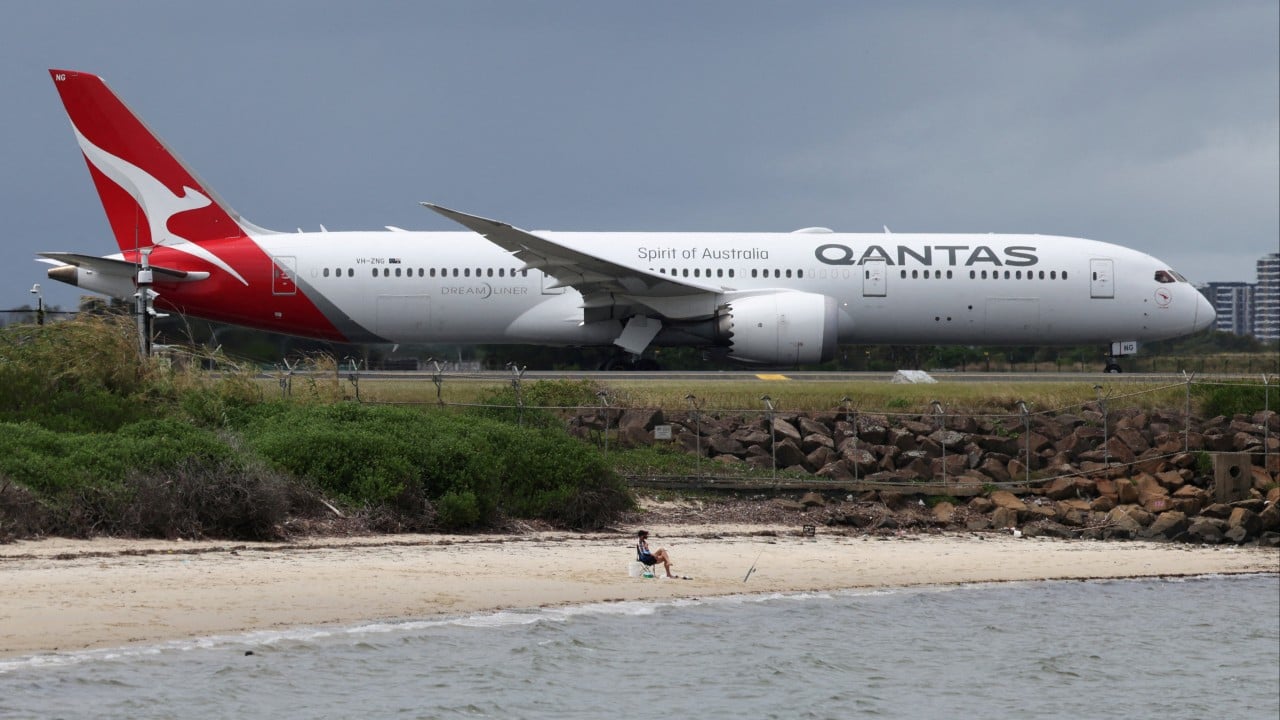
The headlines are predictable. They focus on the bite. They focus on the mid-air chaos. They treat the diversion of Qantas Flight QF93 as an isolated incident of human depravity—a freak occurrence that "just happened" 30,000 feet above the Pacific. This narrative is comfortable for airlines because it shifts the blame entirely onto the individual.
It is also wrong.
Stop looking at the passenger’s teeth and start looking at the cabin pressure, the seat pitch, and the psychological meat-grinder that is ultra-long-haul travel. When a man bites a crew member on a 14-hour trek from Melbourne to Los Angeles, it isn't just a police matter. It is a design failure. We are treating symptoms while the industry ignores the systemic rot that turns otherwise civilized humans into cornered animals.
The Myth of the Isolated Outlier
The "lazy consensus" among travel pundits is that unruly passenger incidents are spikes in a graph of declining social decorum. They blame alcohol. They blame "entitlement." They point to the 37% increase in unruly passenger reports cited by IATA and say, "People have lost their minds."
But I’ve spent twenty years navigating the logistics of international transit, and I can tell you: the environment dictates the behavior. We have engineered the modern flight experience to be a physiological stress test.
Air travel used to be an event. Now, it is a high-density extraction process. We cram bodies into 17-inch wide seats with a 30-inch pitch, dehydrate them with recycled air, disrupt their circadian rhythms, and then express shock when someone snaps. This isn't an excuse for violence; it’s a biological reality. Under extreme stress, the human brain reverts to its lizard state. Fight or flight. But on a Qantas Dreamliner over the ocean, there is no flight. Only fight.
The Physiology of the Mid-Air Meltdown
Let’s talk about what actually happens to the human body during a flight like QF93:
- Hypoxia-Lite: Even at pressurized altitudes, your blood oxygen levels drop. This leads to impaired judgment and increased irritability.
- Sensory Overload: The constant 80-decibel hum of the engines acts as a low-grade stressor on the nervous system.
- Territorial Aggression: When personal space is violated for more than six hours, the amygdala—the brain's fear center—becomes hyper-reactive.
When the media reports that a passenger "suddenly" became aggressive, they are ignoring the twelve hours of cumulative physiological degradation that preceded the bite. The diversion to Noumea wasn't just a detour; it was a $500,000 admission that the industry has no idea how to manage the human element of the ultra-long-haul era.
The $500,000 Bite: The Economics of Diversion
Every time a flight like QF93 diverts, the airline loses a fortune. Fuel dumping, landing fees, passenger re-accommodation, and crew timing out—it’s a logistical nightmare.
The industry’s solution? More "training" for flight attendants on how to de-escalate. That is like giving a Band-Aid to a man with a severed limb. The airlines are doubling down on the very business model that causes the friction.
They sell "Basic Economy" to the masses while shrinking the space between rows, creating a pressure cooker environment. Then, they spend millions on security and diversions when the pressure cooker inevitably blows its lid. It is bad business. It is inefficient. And yet, no one in the C-suite is asking if the "cattle car" model has reached its mathematical limit of human endurance.
The Failure of the "No-Fly" List Deterrent
The "People Also Ask" sections of the internet are currently flooded with: "Will he be banned for life?"
The answer is yes, and it doesn't matter.
The threat of a no-fly list is a rational deterrent for a rational actor. The person biting a crew member over the South Pacific is not a rational actor. They are in a state of acute psychological or chemical distress. You cannot legislate away a nervous breakdown. By the time the handcuffs come out, the system has already failed.
The focus on punishment after the fact is a distraction from the lack of prevention at the gate. We have high-tech scanners for liquids and gels, but we have zero meaningful screening for the psychological fitness of passengers boarding a 14-hour metal tube. If you can’t bring a bottle of water through security, why can you board a flight while visibly vibrating with agitation or mid-episode?
Why "De-escalation" is a Corporate Myth
Airlines love the word de-escalation. It sounds professional. It suggests there is a magic sequence of words that can stop a manic episode.
I have spoken with veteran crew members who have had to restrain grown men with zip ties. They aren't "de-escalating"; they are surviving. Expecting a flight attendant—who is also dehydrated, sleep-deprived, and underpaid—to act as a psychiatric nurse while balancing a beverage cart is the height of corporate delusion.
The Qantas incident shows the limit of the "customer service" veneer. When things go south at 40,000 feet, the flight attendant is no longer a host; they are a first responder in a high-risk environment without the proper equipment or support.
The Counter-Intuitive Fix
If we actually wanted to stop these diversions, we’d stop talking about "behavior" and start talking about "biology."
- Mandatory Space Minimums: This isn't about comfort; it's about cortisol. Reducing density reduces the frequency of "air rage."
- Point-of-Entry Psychological Screening: If you look like you’re having a breakdown at the gate, you don't fly. Period. The "right to travel" does not supersede the safety of 300 other people.
- Active Air Quality Management: High-flow oxygen and better humidity levels aren't luxury features; they are safety requirements.
The Industry’s Dangerous Gamble
Qantas prides itself on its safety record. It is the gold standard. But safety isn't just about engine maintenance. It’s about the human-machine interface.
The QF93 diversion is a warning shot. As we push toward "Project Sunrise"—flights lasting 20+ hours—the physical and mental toll on passengers will only increase. If we can't handle a man on a flight from Melbourne to LA without him resorting to animalistic violence, how are we going to handle a 22-hour haul from Sydney to London?
The current strategy is to wait for the police to meet the plane, issue a press release about "zero tolerance," and move on. It’s a reactive, cowardly approach that ignores the underlying physics of human behavior.
The airline isn't the victim here. They are the architects of the environment that made the incident possible. They built the cage; they shouldn't be surprised when the inhabitants start biting.
Stop blaming the "unruly passenger" and start holding the boardrooms accountable for the psychological toll of their profit margins. Until the space inside the cabin is treated with the same engineering rigor as the engines under the wings, these diversions will continue to be the cost of doing business.
The bite wasn't the problem. The flight was.
Fix the environment or keep dumping fuel over the ocean. Your move, Qantas.


