Saying an executive left a company over a year ago sounds like a clean break until you look at the timeline of federal investigations.
On November 15, 2026, Singapore-based cloud computing firm Megaspeed International finally broke its silence on the scandal engulfing Nvidia. In an emailed statement signed by chairman and CEO Tan Yong Pong, the company confirmed that Chinese businesswoman Alice Huang officially departed on August 30, 2025, and currently holds no role with the firm. Megaspeed also announced it had hired outside legal counsel to run an internal probe, conduct a comprehensive inventory of its graphics processing units, and audit its export-control compliance. Don't miss our recent post on this related article.
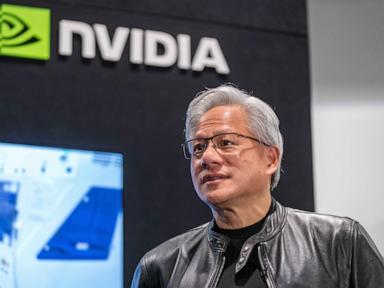
The announcement landed just three days after Nvidia CEO Jensen Huang abruptly resigned on November 12 following revelations of his extramarital affair with Alice Huang—a scandal that briefly erased hundreds of billions in market value before Nvidia's board reinstated him on November 23.
If you only read the surface-level wire reports, Megaspeed's statement looks like standard crisis PR. Look closer at the regulatory calendar in Washington and Singapore, though, and that August 2025 departure date tells a completely different story. To read more about the history of this, Wired provides an excellent summary.
Why the August 2025 Departure Date Matters
Corporate statements rarely pick dates at random. When Megaspeed emphasized that Alice Huang exited on August 30, 2025, it wasn't just updating a LinkedIn bio—it was drawing a legal firewall.
By November 2026, the fallout around Megaspeed had evolved far beyond a Silicon Valley boardroom gossip story. Federal authorities in the United States and police in Singapore were actively probing whether advanced Nvidia AI processors purchased by Megaspeed had been illegally diverted to restricted entities in China. Even more explosively, U.S. intelligence officials had scrutinized Alice Huang's contacts with an officer from China's Ministry of State Security stretching from the spring of 2025 into 2026.
Here is why August 30, 2025, is the pivotal boundary line in Megaspeed's defense strategy:
- June 2025 site inspection: U.S. investigators interviewed Alice Huang directly during an on-site compliance check in Singapore in June 2025, and Nvidia quietly placed Megaspeed on its internal "no sell" list that same month.
- Late summer exit: Huang's official departure at the end of August 2025 occurred two months after American inspectors showed up on the ground, allowing Megaspeed to argue that whatever scrutiny followed her personal conduct happened after she was already out the door.
- October 2025 congressional pressure: By October 2025, U.S. Senator Tom Cotton had already written to Commerce Secretary Howard Lutnick flagging Megaspeed's procurement patterns as Malaysia and neighboring jurisdictions tightened rules on AI server shipments.
By anchoring her exit to August 2025, Megaspeed is attempting to separate the company's ongoing hardware operations from its former chief executive's personal life and alleged intelligence contacts. Whether regulators buy that separation is another question entirely.
Inside Megaspeed's Internal Probe and GPU Audit
When a tech company announces an internal investigation led by outside lawyers, skeptics rightfully roll their eyes. Most corporate self-audits are designed to contain liability rather than expose wrongdoing.
In Megaspeed's case, however, the specific scope of the probe reveals exactly where regulators are applying pressure. According to Tan Yong Pong's statement, the outside law firm isn't just reviewing emails or HR files. It is tasked with two concrete deliverables:
- Conducting a physical and digital inventory of all graphics processing units under Megaspeed's control.
- Independently verifying end-to-end export control compliance across its data center operations.
Anyone who has worked around enterprise data center infrastructure knows why a physical GPU inventory is so difficult—and so revealing. High-end AI accelerators like Nvidia's Hopper and Blackwell series aren't loose consumer graphics cards sitting in boxes. They are serialized, welded into multi-GPU server racks, bound to specific network MAC addresses, and tied to telemetry logs that ping Nvidia's software stack whenever firmware updates run.
If Megaspeed actually possesses every single chip it bought before Nvidia cut off sales in June 2025, an independent law firm can verify those serial numbers against purchase orders in a matter of weeks. If racks were quietly relocated across borders into Malaysia or Indonesia—or if compute capacity was leased out via shell intermediaries to Chinese AI labs—a real audit will expose those gaps immediately.
Honestly, Megaspeed had almost no choice but to launch this audit. One day after Megaspeed issued its statement, the U.S. Commerce Department and Justice Department confirmed the depth of federal scrutiny, and Washington subsequently added Megaspeed to the Commerce Department's Entity List. Once you land on the Entity List, U.S. suppliers face a presumption of denial for everything from replacement cooling manifolds to basic software licenses. An aggressive, documented audit is the bare minimum required to petition for removal or avoid criminal indictment.
How a Rural Nurse Became the Center of an AI Geopolitical Storm
To understand why the Megaspeed Alice Huang story captivated both Wall Street and national security hawks, you have to look at how unlikely her trajectory was.
Reporting from outlets including The New York Times traced Huang's background far from Singapore's glass office towers. Born in Nanzhushan—a fading industrial town in China's Hunan province where she lived in an apartment in Patriotic Village No. 5—she originally trained at a nursing school in nearby Xiangtan before earning a master's degree in media management at Hong Kong Baptist University in 2006.
By the mid-2010s, she had pivoted into China's booming cloud and data center sector in Shanghai. Her business relied heavily on securing high-performance American processors, which naturally put her in direct orbit with Nvidia's regional sales teams. By 2022, Nvidia's own sales organization was introducing her to major cloud buyers like Alibaba.
That timeline exposes an uncomfortable truth that Nvidia's board would rather forget. Long before any personal relationship made headlines, Nvidia's commercial engine actively cultivated middlemen and regional cloud builders across Asia to move billions of dollars in silicon.
Megaspeed itself grew out of that exact ecosystem. Marketing itself as a core Nvidia cloud partner in the Asia-Pacific region, the Singapore-registered entity scaled rapidly during the 2023–2024 generative AI boom, purchasing massive clusters of advanced chips while corporate filings showed shifting ownership structures tied to entities like Huang Le Ltd.
What Most Coverage Misses About the Singapore Chip Bottleneck
Media coverage of the Nvidia fallout has obsessed over the salacious details—the extramarital affair, Jensen Huang's twelve-day ouster and dramatic reinstatement, and spy-thriller headlines. While those details drive clicks, they obscure the structural supply-chain breakdown that Megaspeed represents.
For two years, Washington's export control strategy relied on a simple premise: ban direct shipments of top-tier AI chips to China, while allowing unrestricted sales to friendly hubs like Singapore, Malaysia, and Thailand.
Megaspeed proved how easily that containment wall leaks. Look at the physical reality of Southeast Asian cloud hubs:
- Singapore's accounting footprint vs. physical deployment: Dozens of AI infrastructure firms incorporate in Singapore for tax and legal protection while deploying their actual server racks across the Causeway in Johor, Malaysia, or in Batam, Indonesia, where land and electrical grid capacity are cheaper.
- Remote compute access: You don't even have to smuggle a physical server across a border to violate the spirit of U.S. export rules. A company sitting in Singapore can legally house Nvidia clusters in Malaysia and sell remote API or bare-metal training time to an entity in Beijing.
- Corporate shell agility: When Singapore's Accounting and Corporate Regulatory Authority (ACRA) filings were examined in November 2026, reporters found that Megaspeed's corporate secretary, Khloe Ng Wei Shi, had stepped down on November 10—just days before the scandal erupted publicly. Meanwhile, Singapore's Ministry of Home Affairs noted that none of the seven subjects under active police investigation—Megaspeed and six individuals—were even inside Singapore when probes began.
That operational reality is why Nvidia abruptly instructed its manufacturing partners in late November 2026 to freeze AI server shipments to Singapore, Malaysia, Thailand, and Indonesia. It is also why Singaporean officials scrambled into emergency talks with Washington to preserve their country's access to advanced semiconductors.
Where the Investigations Go From Here
Even with Jensen Huang back in the CEO chair and U.S. intelligence officials finding no direct evidence that Beijing tasked Alice Huang to spy on him, the legal jeopardy surrounding Megaspeed is nowhere near over.
Three separate U.S. House committees have already scheduled closed-door, transcribed interviews with Jensen Huang on December 1 and Nvidia general counsel Tim Teter on December 2 to examine how Megaspeed acquired its hardware and what Nvidia's compliance team knew prior to June 2025. In Singapore, police investigations into Megaspeed and six individuals remain active under local fraud and export laws, while Alice Huang faces U.S. entry bans.
If you are watching this space as a tech investor, enterprise cloud buyer, or compliance officer, don't treat Megaspeed as an isolated soap opera. Treat it as a preview of how AI hardware governance is changing:
- Audit your regional cloud vendors immediately. If your company rents GPU clusters in Southeast Asia or the Middle East, verify the vendor's Entity List status and beneficial ownership before signing multi-year compute contracts. Entity List designations can freeze vendor support and void service-level agreements overnight.
- Expect mandatory hardware telemetry. Washington's next round of export rules will almost certainly require chipmakers to bake cryptographic location verification directly into server firmware, ending the era of honor-system end-user certificates.
- Watch the December congressional transcripts. When lawmakers release details from Jensen Huang's December 1 testimony, pay close attention to what Nvidia's sales team knew about Megaspeed's ultimate customers—because any systemic compliance failure at Nvidia will trigger tighter licensing across the entire semiconductor sector.
Megaspeed can distance itself from Alice Huang's August 2025 departure all it wants, but until outside auditors account for every serial number in its data centers, the company remains exhibit A in Washington's war over where American AI chips actually end up.