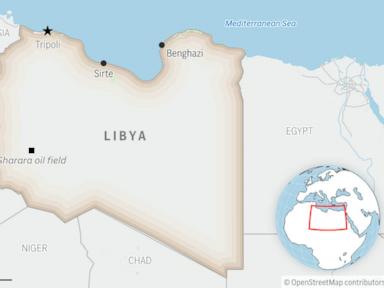
The maritime tragedy off the coast of Libya, where yet another overloaded vessel capsized leaving at least 50 human beings dead or missing, is not an accident. It is the predictable, systemic result of a deliberate European Union policy designed to outsource border enforcement to failing states. For years, Brussels has funneled tens of millions of euros into equipping and training the Libyan Coast Guard to intercept migrants before they reach international waters. By keeping these vessels within Libyan jurisdiction, European authorities technically avoid the legal obligation to process asylum claims. The cost of this legal loophole is paid in human lives.
This latest disaster highlights a grim reality that policymakers routinely ignore. When migrant vessels capsize in the Central Mediterranean—the deadliest migration route in the world—it triggers a well-rehearsed cycle of official regret, empty promises to target human traffickers, and a quiet return to the status quo.
To understand why these tragedies keep happening, we must look beyond the immediate horror of the shipwrecks and examine the financial and political architecture that sustains them.
The Outsourcing of Europe's Borders
The mechanism of deterrence is simple, cynical, and highly effective at shifting accountability. Under international maritime law, specifically the principle of non-refoulement, European vessels cannot return rescued migrants to places where they face torture, persecution, or death. Libya, fractured by civil conflict and notorious for its migrant detention centers, is universally classified as an unsafe port.
To bypass this restriction, European nations have deputized the Libyan Coast Guard.
When a migrant boat is spotted in the Mediterranean—often by European aerial surveillance assets—the coordinates are transmitted to Libyan authorities rather than European rescue vessels. The Libyans then intercept the boat, return the passengers to Libyan soil, and place them in detention centers run by various armed factions.
This is border enforcement by proxy. It allows European governments to maintain clean hands while achieving their political goal of reducing arrivals on northern shores. The money flows from Brussels to Tripoli, while the human cargo is pushed back into a cycle of exploitation.
The Economics of the Crossing
Human smuggling is not a rogue enterprise operating in the shadows of the Libyan state. It is a highly integrated sector of the war economy, deeply entwined with local militias, municipal authorities, and elements of the very coast guard tasked with stopping it.
Consider the financial dynamics of a single crossing.
- Ticket Prices: Smugglers charge anywhere from $1,500 to $4,000 per person for a spot on an unseaworthy inflatable dinghy or a decaying wooden fishing vessel.
- The Cargo: A single boat often carries between 100 and 150 people. This generates a gross revenue of up to $600,000 per voyage.
- Operating Expenses: The cost of the boat itself is negligible. Smugglers routinely use cheap, single-use rubber boats imported from Asia or old wooden hulls destined for the scrap heap. They are equipped with cheap, underpowered outboard motors and rarely carry enough fuel or water to reach Italy.
- The Profit Margin: Because the vessels are designed to be discarded, the overhead is minimal. Even if a boat capsizes or is intercepted, the smugglers have already secured their profit onshore.
The real tragedy is that the business model actively counts on rescue operations. Smugglers do not expect these boats to make the entire journey to Europe on their own. Instead, they equip the passengers with a satellite phone, instruct them to call for help once they enter international waters, and hope that either a merchant vessel, an NGO ship, or the Italian authorities will pick them up.
When those rescue assets are systematically blocked or delayed by European bureaucratic regulations, the boats simply drift until they break apart.
The Illusion of the NGO Pull Factor
One of the most persistent arguments used by European politicians to justify the withdrawal of state-funded search-and-rescue operations is the "pull factor." The theory suggests that the presence of humanitarian rescue ships near the Libyan coast encourages more migrants to attempt the crossing, thereby fueling the smuggling trade.
Academic studies and empirical data have repeatedly debunked this premise.
Whether NGO ships are active in the Mediterranean or detained in Italian ports by administrative decree, the flow of desperate people departing from Libya remains tied to domestic conditions in their home countries and the security situation in Libya itself—not the presence of rescue vessels.
When Italy shut down its highly effective military search-and-rescue operation, Mare Nostrum, in late 2014, the argument was that its termination would deter crossings. Instead, deaths at sea skyrocketed.
Desperation is a powerful motivator. People fleeing torture in Libyan detention centers, economic ruin in Bangladesh, or conflict in the Horn of Africa do not check maritime tracking websites to see if an NGO vessel is stationed 20 miles off the coast before they board a boat. They board because the alternative is intolerable.
The Detention Loop
What happens to those who survive the crossing only to be intercepted by the Libyan Coast Guard? They are returned to a network of formal and informal detention centers where abuse is systemic.
Independent United Nations investigations have repeatedly documented crimes against humanity committed against migrants in Libya. These include systematic torture, sexual violence, forced labor, and extortion.
The business model of detention is lucrative. Militias hold migrants hostage, forcing them to call their families back home to wire ransom money in exchange for their release. Once the ransom is paid, the migrant is released, only to be recaptured by a rival militia or sold back to smugglers to attempt the crossing once more.
[Migrant enters Libya] ──> [Attempted Crossing] ──> [Interception by Coast Guard]
         ▲                                                     │
         │                                                     ▼
 [Extortion/Ransom] <── [Forced Labor/Abuse] <─── [Militia Detention Center]
This loop generates millions of dollars for local armed groups, destabilizing the region further and ensuring that the demand for smuggling services remains constant. European funding intended to "manage migration" inevitably bleeds into this corrupt ecosystem, indirectly financing the very actors who perpetuate the crisis.
A Policy of Deliberate Neglect
The decrease in arrivals on European shores is frequently hailed as a success by center-right and populist politicians in Rome, Paris, and Brussels. But this metric ignores the rising mortality rate at sea.
By withdrawing state-led rescue assets, criminalizing humanitarian organizations, and relying on a dysfunctional Libyan proxy, European nations have created a zone of non-assistance in the Central Mediterranean. It is a policy of deterrence through death. The calculation is brutal but clear: if the journey is made dangerous enough, eventually, people will stop coming.
Decades of migration history show this calculation is false. Human mobility cannot be suppressed by militarizing borders; it is merely rerouted, making the journeys longer, more expensive, and far more lethal. Until legal, safe pathways for asylum seekers and economic migrants are established, and until the complicity with Libyan militias is severed, the Mediterranean will remain a mass grave disguised as a border.