Silence.
That is the heaviest sound in a hospital corridor at three in the morning, when the fluorescent lights hum like trapped wasps and a parent stands outside a closed door waiting for someone in a white coat to explain why a routine surgery turned into a tragedy.
For years, that silence hung over the story of Chow Tin-yu. In May 2020, the young girl underwent an operation in Hong Kong to treat rhabdomyosarcoma, a rare muscle cancer. Something went terribly wrong during the procedure. A delay in administering blood transfusions left her brain-damaged, trapped in a persistent vegetative state for nearly four years until her body finally gave out in March 2024. Her father, Chow Chi-shing, spent every waking hour of those years fighting not just grief, but an institutional wall that seemed engineered to outlast him.
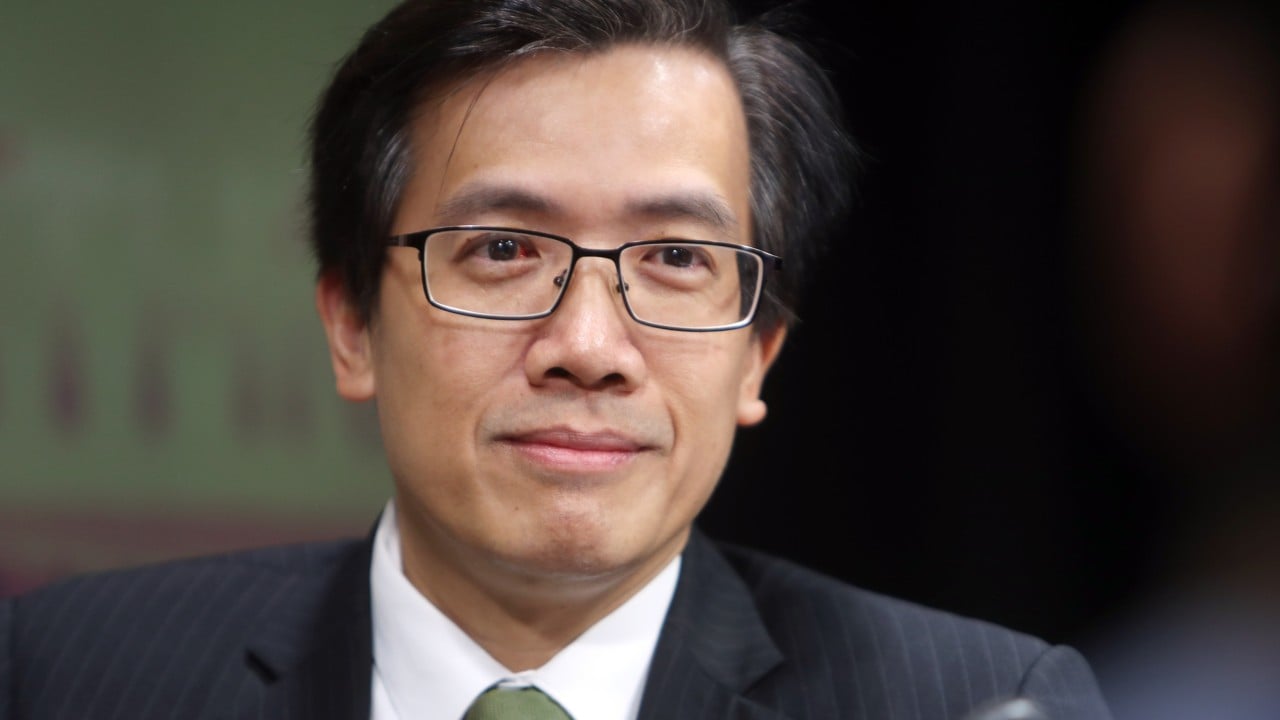
Then came a move nobody in the legal or medical establishment expected. A member of Hong Kong’s medical watchdog—the very body tasked with policing doctors and maintaining public trust—stepped down from their post to represent Tin-yu’s father at the upcoming death inquest.
On paper, this looks like a dry procedural update. A resignation letter filed, a conflict of interest avoided, a legal roster updated before a Coroner’s Court hearing. If you skim the headlines, you might nod, register the ethics of recusal, and scroll past.
You would miss the entire point.
Because when an insider leaves the room where decisions are made so they can stand in the courtroom beside a bereaved parent, something fundamental has shifted. It is a quiet indictment of how medical accountability works—and what happens when the people who write the rules realize the rules are not enough.
The Architecture of a Conflict
To understand why this resignation matters, you have to understand the invisible machinery of medical regulation.
Imagine, as a hypothetical way to picture the system, a gated neighborhood where the residents also serve as the security guards, the judges, and the homeowners association. Most of the time, they take their duties seriously. They inspect the fences, fine neighbors who break the rules, and insist that the community polices itself better than any outsider ever could. Until the day a resident’s negligence hurts a visitor from outside the gates. Suddenly, the security guard sitting on the review board realizes that if they truly want to help the visitor seek justice, they cannot keep wearing the neighborhood badge.
That is the exact tension inside medical watchdogs like the Medical Council of Hong Kong. These bodies exist to balance two competing instincts: protecting patients from harm and ensuring doctors are judged by peers who actually understand the split-second complexities of medicine.
When a watchdog member steps down to represent a grieving family at an inquest, they are acknowledging a harsh truth. You cannot sit on the referee’s bench and step onto the field at the same time. Even the faintest shadow of bias—the mere possibility that a regulator might have had access to internal complaints, whispered corridor conversations, or disciplinary files—could poison the legitimacy of the Coroner’s Court.
By quitting, the member preserved the integrity of the upcoming inquest. Yet the act itself asks a much sharper question: why did a guardian of the system feel compelled to leave it in order to fight for one little girl?
Four Years in the Waiting Room
I have sat across from families navigating medical negligence claims, and the exhaustion they carry is physical. It settles into their shoulders. It turns their kitchen tables into archives of ring-bound medical records, highlighted timestamps, and letters from hospital administrators written in the passive voice—where mistakes happen, protocols are reviewed, and nobody ever quite seems to hold the pen.
For Chow Chi-shing, the nightmare began on May 21, 2020. Tin-yu was supposed to have a tumor removed at Queen Mary Hospital. During the surgery, her heart stopped. She went without oxygen for minutes that stretched into eternity, suffering catastrophic brain injury.
What followed was a masterclass in institutional friction. At first, the Hospital Authority acknowledged a delay in blood transfusion—roughly forty-eight minutes lost while staff scrambled to locate matching blood products—but framed it around complex clinical circumstances. Tin-yu’s father refused to accept vague assurances. Diagnosed with cancer himself while caring for his bedridden daughter, he became a solitary fixture in the press and outside government offices, demanding raw surgical logs, unedited records, and a simple, human admission of what happened in that operating theater.
Consider what happens next when a parent refuses to go away quietly.
The system slows down. Committees convene. Inquiries are launched, paused, and reassessed. Every month that passes tests the stamina of an ordinary citizen against an institution with infinite time and salaried legal teams. When Tin-yu passed away in March 2024 at age eight, the criminal investigation and civil disputes were still tangled in red tape, leaving the death inquest as the ultimate stage where sworn testimony would finally force the truth into the open.
What a Death Inquest Actually Does
Many people confuse a Coroner’s Court inquest with a criminal trial, assuming it exists to throw negligent professionals behind bars. It does not. An inquest is a fact-finding mission, not a blame-assigning machine. Its job is to answer five deceptively simple questions: who died, when, where, how, and by what means.
Yet in cases of suspected medical blunders, the inquest becomes the single most powerful flashlight available to a grieving family.
In a standard hospital internal review, witnesses are interviewed behind closed doors and summaries are carefully edited before the public ever sees a word. Inside the Coroner’s Court, however, the rules change completely. Doctors, nurses, anesthesiologists, and blood bank technicians must take the witness stand under oath. They have to explain, minute by minute, why a syringe was delayed, why a monitor alarm went unanswered, or why an emergency protocol stalled.
Even more crucially, the coroner holds the power to issue formal recommendations to prevent similar deaths in the future. Those recommendations cannot bring back a child, nor do they automatically strip a doctor of their license, though they frequently trigger fresh disciplinary hearings before the medical watchdog itself.
That is precisely why having an advocate who knows the regulatory playbook from the inside out changes the entire geometry of the courtroom.
The Power of Insider Knowledge
Think about the asymmetry a normal family faces in a medical inquest.
On one side sits a father armed with grief, stubborn love, and whatever legal aid or pro bono counsel he can assemble. On the other side sit the Hospital Authority’s seasoned barristers, backed by clinical department heads, risk-management officers, and decades of institutional memory. When a witness uses dense clinical jargon to describe why a transfusion took nearly an hour, an ordinary lawyer might accept the explanation at face value, unsure which follow-up question will expose a crack in the timeline.
An advocate who has served on a medical watchdog speaks that language fluently. They know where hospital protocols hide behind ambiguity. They recognize the difference between an unavoidable surgical complication and a preventable breakdown in communication between the operating room and the blood bank. They have read hundreds of disciplinary transcripts and watched how practitioners defend indefensible delays.
By resigning from the watchdog to take on Chow Chi-shing’s representation, this former member traded institutional prestige for direct advocacy. In regulatory circles, stepping down from a statutory council is no small sacrifice. Those seats carry influence, professional standing, and proximity to policy. Walking away signals that, in this moment, representing one father in search of truth matters more than sitting at the head table.
When Self-Regulation Meets Public Doubt
I will be honest: the relationship between medical watchdogs and the public they claim to protect has always felt fragile to me. Anytime an industry polices its own, skepticism is not cynicism—it is common sense.
Across healthcare systems globally, from London to Hong Kong to New York, patients watching medical blunder cases unfold often share the same nagging fear. They worry that professional solidarity quietly outweighs public accountability. They see disciplinary hearings drag on for three, four, or five years, ending in gentle reprimands or suspended warnings while families are left emotionally and financially ruined.
History shows that trust in medical institutions rarely collapses from a single mistake. Doctors are human; surgery carries risk; tragedy happens even in the best hands. Public faith erodes when institutions circle the wagons afterward—when records go missing, explanations shift over time, and families have to become amateur investigators just to learn what happened to their own children.
That is why this resignation resonates far beyond one courtroom in Hong Kong. It breaks the illusion of a monolithic establishment. It shows the public that inside those regulatory boards are individuals who feel the moral weight of delayed justice—people willing to shed their official titles rather than hide behind procedural neutrality.
The Human Equation Behind the Legal Filing
Strip away the statutory clauses, the Coroner’s Ordinance, and the rules on conflict of interest, and what remains is strikingly simple.
A father is preparing to walk into a courtroom to listen to strangers dissect the final hours of his daughter’s conscious life. He is doing it while battling his own illness, carrying four years of accumulated sorrow, and knowing that no verdict on earth will ever fill the empty bed at home. For years, he stood largely alone in front of cameras, holding up photographs of Tin-yu before the surgery—a bright-eyed little girl smiling without a trace of fear.
Now, when he steps up to the bar in the Coroner’s Court, he will not be outgunned on technicalities. Beside him stands someone who once sat at the highest level of medical oversight, someone who looked at the rules of the watchdog, looked at the reality of Tin-yu’s case, and chose where they needed to stand.
In a world where institutions so often protect themselves first and explain themselves later, that choice cuts through the noise like a scalpel.
The fluorescent lights in the hospital corridor still hum at three in the morning, and somewhere another family is waiting behind a closed door for answers they pray they will never need. When that door finally opens, the measure of a healthcare system is not found in the thickness of its rulebooks or the prestige of its councils—it is found in who is willing to step across the line and stand beside the powerless when the truth comes due.


