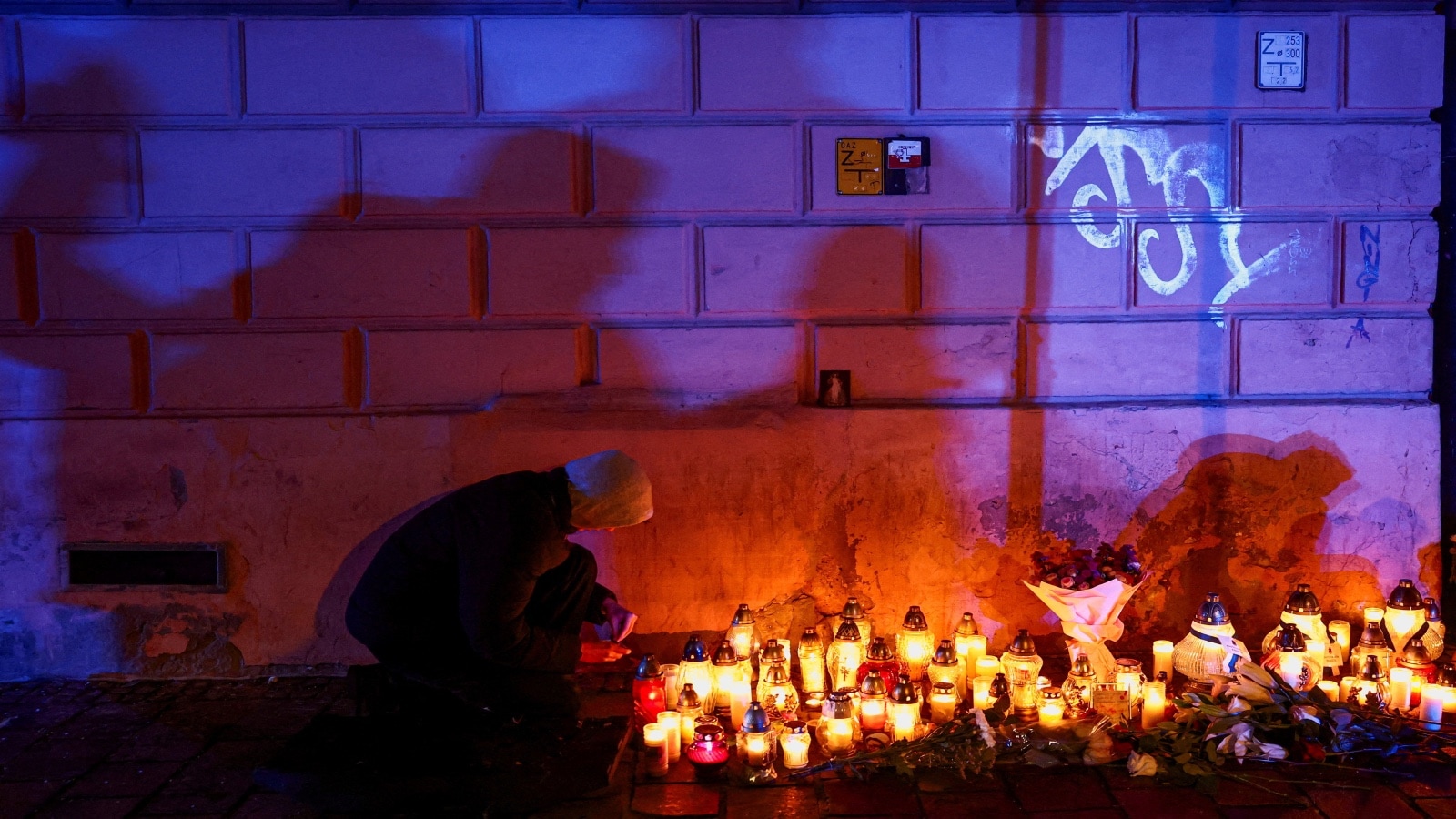
Mainstream travel journalism thrives on a single, predictable formula. Find a localized tragedy, interview three shaken bystanders outside a café, declare an entire nation "reeling," and watch the panic clicks roll in.
When outlets run breathless headlines about tourists and locals recounting a fatal shooting in Krakow, they are selling an emotional narrative disguised as risk analysis. They want you to believe that the cobblestones of Poland’s cultural capital have suddenly turned into a war zone, and that your upcoming European itinerary requires an immediate, fear-driven overhaul. Expanding on this idea, you can also read: What Most People Get Wrong About Iran Naval Threats and US Task Forces.
That narrative is lazy. Worse, it is statistically illiterate.
I have spent over a decade advising corporate security teams, international tour operators, and high-net-worth travelers on European threat assessments. Time and again, I watch organizations burn millions of dollars reacting to sensationalized wire stories while completely ignoring the actual mechanics of urban safety. When a rare violent crime hits a historically peaceful city, the press treats an outlier as a trend. They confuse shock with systemic danger. Experts at Al Jazeera have shared their thoughts on this situation.
If you are canceling a trip to Central Europe based on anecdotal trauma quotes from a single street corner, you are asking the wrong question entirely. You are asking whether a specific city is "safe" in the abstract, rather than understanding how base-rate probability, local gun legislation, and real-world urban threats actually operate.
The Anatomy of Media-Induced Threat Inflation
To understand why these panic pieces fail you, you have to look at how modern newsrooms operate. Eyewitness testimony is emotionally compelling, which makes it great for engagement metrics, and completely useless for risk modeling.
When a reporter asks a traumatized bystander what happened, the resulting quotes naturally sound apocalyptic. A single gunshot in a quiet historic district feels like the end of the world precisely because it almost never happens there. The shock value is high because the baseline violence is virtually non-existent.
Yet, standard journalism flips this logic upside down. Instead of using the shock of the locals as proof of how remarkably rare violent crime is in Poland, writers frame that shock as evidence of a fractured society. They take the exact data point that proves Krakow's safety—the sheer disbelief of its residents—and weaponize it to imply the city is falling apart.
In risk management, we call this the availability heuristic. Pioneered by psychologists Amos Tversky and Daniel Kahneman, this cognitive bias occurs when people evaluate the probability of an event based on how easily vivid examples come to mind. A dramatic headline with visceral quotes sticks in your brain. Dry statistical tables showing decades of declining violent crime do not.
News outlets exploit this psychological blind spot. They give you a magnifying glass aimed at a single tragic anomaly while hiding the binoculars that show you the rest of the country functioning in complete, boring tranquility.
Poland’s Firearm Reality vs. The Headline Panic
Let us look at the hard mechanics of gun ownership and violent crime in Poland, stripped of sensationalism.
If you read standard Western coverage of a shooting in Krakow, you might assume Poland suffers from the same gun violence dynamics as major American metropolitan areas. Nothing could be further from reality. Poland maintains some of the strictest firearm regulations in the European Union.
To legally own a firearm in Poland, an applicant must:
- Pass rigorous psychological and psychiatric evaluations.
- Undergo extensive background checks by the police.
- Prove a specific, legally recognized reason for ownership, such as certified sport shooting, hunting, or documented, ongoing personal threat verified by law enforcement.
- Pass both theoretical exams on Polish weapons law and practical marksmanship tests.
Because of these barriers, civilian gun ownership in Poland sits at roughly 2.5 firearms per 100 residents—one of the lowest rates in the developed world. According to data consistently tracked by the United Nations Office on Drugs and Crime (UNODC) and Eurostat, Poland’s intentional homicide rate hovers well below 1 per 100,000 inhabitants. Compare that to the United States, where the rate routinely exceeds 5 or 6 per 100,000, or even several Western European capitals that experience significantly higher rates of street-level violent crime.
When a shooting occurs in Krakow, it is not a symptom of a crumbling security apparatus or an armed populace running wild. It is a statistical black swan—usually tied to a targeted personal dispute, an isolated mental health crisis, or a rare criminal anomaly. Treating a black swan event as a travel advisory is like refusing to fly because you read an interview with a passenger who survived a bird strike.
What Actually Threatens Travelers in Central Europe
When I audit travel policies for executives heading to cities like Krakow, Warsaw, or Prague, I have to constantly redirect their focus. They want to talk about armed assailants, mass shootings, and geopolitical spillover from neighboring conflicts. They want tactical briefings on active shooter scenarios.
I tell them to put the tactical manuals away and look at the actual actuarial data.
If you are traveling to Krakow, violent gun crime does not even crack the top ten list of things likely to ruin your trip or put you in a hospital. The real threats to tourists in Central Europe are mundane, unsexy, and entirely preventable—which is precisely why the media ignores them.
Consider the actual risk hierarchy for a visitor in Krakow:
- Alcohol-Induced Misadventure and Petty Predation: Krakow’s Old Town (Stare Miasto) and Kazimierz district are massive draws for nightlife tourism. The overwhelming majority of police reports involving foreigners stem from excessive intoxication, leading to slip-and-fall injuries on uneven historic cobblestones, targeted pickpocketing, or extortion scams in unregulated strip clubs.
- Traffic and Pedestrian Collisions: Eastern and Central European road safety has improved drastically over the past twenty years, yet pedestrian-vehicle accidents remain infinitely more statistically lethal to tourists than violent crime. Looking the wrong way while crossing near tram tracks poses a measurably higher threat to your life than a firearm.
- Medical Preparedness Gaps: Travelers routinely obsess over terrorist attacks while ignoring basic cardiovascular risks, allergic reactions, or inadequate travel health insurance coverage. Navigating a foreign hospital system without proper documentation or translation support creates far more genuine trauma than any street crime.
- Digital and Financial Fraud: Skimmed credit cards at unregulated currency exchange booths (Kantors) or compromised public Wi-Fi networks drain millions from tourists every year without a single shot being fired.
Notice the pattern here. Every single high-probability threat requires personal accountability from the traveler. You have to watch where you step, moderate your drinking, check your bank statements, and buy insurance.
Mass shootings and random violence, conversely, absolve the traveler of responsibility. They are external monsters. By obsessing over them, tourists get to feel vigilant while ignoring the everyday habits that actually get them hurt.
Dismantling the "Is It Safe?" Fallacy
Whenever an incident hits the news cycle, search engines flood with variations of the same flawed queries: Is Krakow safe for tourists right now? Is violent crime rising in Poland? Should I cancel my trip to Eastern Europe?
These questions are fundamentally broken because they treat "safety" as a binary switch—either a place is 100% immune to human tragedy, or it is a dangerous wasteland. That binary does not exist anywhere on earth.
Let us run a quick thought experiment. Imagine a scenario where a city of nearly 800,000 residents, welcoming over 10 million visitors annually, experiences zero violent crimes for five consecutive years. Then, on a Tuesday afternoon, a single fatal shooting occurs. Did the fundamental infrastructure of that city change overnight? Did the local police force suddenly vanish? Did millions of peaceful residents abruptly turn violent?
Of course not. The risk profile of the city moved by a fraction of a decimal point.
Yet, if you ask a mainstream travel journalist whether that city is still safe, they will hedge. They will use weasel words like "on edge," "heightened alert," and "reeling." They do this to protect themselves from liability and to keep you reading.
Here is the brutal truth that no tourism board or mainstream news outlet will tell you plainly: Krakow remains significantly safer for a walking pedestrian at midnight than almost any major city in North America or Western Europe.
You are statistically safer walking through Krakow’s Planty Park alone than you are walking through downtown Chicago, central London, or the tourist corridors of Paris and Barcelona. In Western Europe, tourists routinely navigate aggressive street harassment, organized pickpocket rings, and frequent civil unrest. In Krakow, the primary annoyance is someone handing you a flyer for a boat tour on the Vistula River.
The Downside of the Contrarian View
Intellectual honesty requires admitting where a contrarian framework has blind spots. Relying purely on macro-statistics and base-rate probabilities works brilliantly for institutional planning, insurance underwriting, and broad itinerary decisions. However, cold statistics offer zero comfort if you happen to be standing on the exact street corner where an outlier event unfolds.
Furthermore, dismissing anecdotal reporting entirely can create a dangerous blind spot regarding emerging localized trends. Every major shift in urban crime starts as a series of isolated incidents before it registers in annual UNODC or Eurostat datasets. Official crime statistics are lagging indicators; they tell you what happened twelve to twenty-four months ago, not what is happening on the ground this week.
If a specific neighborhood experiences a sudden spike in targeted violence—even if the city-wide numbers remain low—ignoring street-level reports in favor of macro-data is foolish. Good risk management requires holding two opposing ideas in your head simultaneously: respecting the overwhelming statistical safety of the broader environment while maintaining sharp situational awareness in micro-environments.
How to Actually Assess Travel Risk Like an Insider
Stop outsourcing your threat assessment to sensationalist headlines. If you want to travel intelligently—whether to Krakow or anywhere else on the map—abandon the emotional consumption of breaking news and adopt a professional intelligence framework.
- Separate Targeted Crime from Random Crime: When an incident occurs, look past the screaming headline and find out who was involved. Was it an organized crime dispute? A domestic altercation? A targeted feud? Targeted violence poses almost zero threat to a passing tourist, provided you aren't standing directly in the crossfire. Random violence against strangers is the only metric that meaningfully alters a traveler's baseline risk.
- Check Lagging Data Against Leading Indicators: Do not rely solely on tourist blogs or breaking news. Cross-reference official government travel advisories (such as the UK Foreign, Commonwealth & Development Office or the US State Department) with local municipal crime maps. Notice how rarely an isolated domestic shooting changes a country's official advisory tier. Diplomats look at systemic stability, not news cycles.
- Audit Your Micro-Environment: Safety is hyper-local. Within any safe city, there are specific blocks, late-night transit hubs, or poorly lit alleys where risk spikes. Conversely, within high-crime cities, there are heavily patrolled districts that remain entirely secure. Focus on where you are standing, what time it is, and who is around you, rather than worrying about the reputation of the entire country.
- Ignore Emotional Proximity: Just because an incident happened near a famous landmark does not mean the landmark is cursed. Criminals, like tourists, gravitate toward central transit hubs and dense commercial zones. Proximity to a tourist site increases media coverage, not your personal probability of being targeted.
The next time a wire service blasts a story about a shocked crowd in a quiet European city, recognize the product being sold to you. They are selling adrenaline, not insight. Leave the panic to the armchair travelers who never leave their living rooms anyway, book your flight, watch your step on the cobblestones, and enjoy one of the safest cities in Europe.