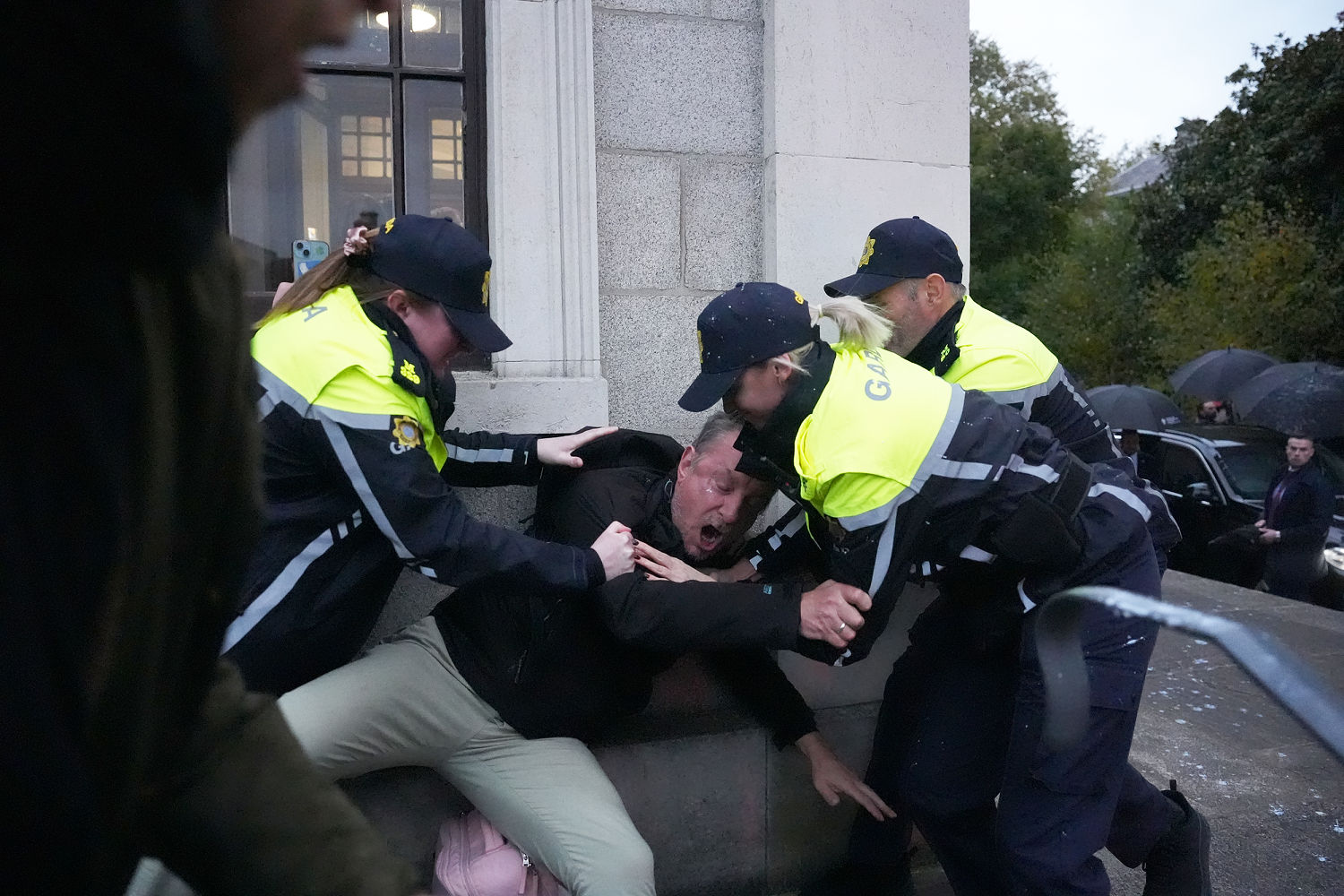
Mainstream coverage of political demonstrations often reduces complex geopolitical flashpoints into simple headlines about confrontation. When reports circulated under the headline "Pro-Palestinian protesters pelt objects at Joe Biden outside Irish university," the framing focused heavily on physical disruption and security breaches rather than the deeper diplomatic, historical, and political currents driving the event.
According to news reports covering President Joe Biden’s visits to Ireland and the United Kingdom—including his appearances at Ulster University in Belfast and events in the Republic of Ireland—demonstrations surrounding U.S. foreign policy in the Middle East have frequently accompanied his public engagements. While headlines emphasizing thrown objects draw immediate attention, focusing solely on the physical friction obscures how protest tactics, Irish political history, and U.S. diplomatic messaging interact on the ground.
The Problem With Spectacle-First Journalism
Breaking news cycles reward immediacy and conflict. A headline centered on protesters throwing objects creates an instant visual of chaos, which often leads readers to assume an entire demonstration was defined by physical hostility.
In reality, political scientists who study social movements note that public protests around high-profile diplomatic visits typically involve diverse coalitions with varying tactics. Scholars of collective action, such as Charles Tilly and Sidney Tarrow, have long documented how media outlets disproportionately cover disruptive or confrontational moments—a phenomenon researchers call "selection bias" in protest reporting. When coverage isolates a single confrontational incident, it frequently leaves out the broader context:
- Scale versus incident: A handful of individuals throwing objects does not automatically reflect the actions or intentions of hundreds of peaceful demonstrators gathered behind security perimeters.
- Security buffer zones: High-level presidential visits involve strict Secret Service and local police cordons, meaning protesters are often stationed far from motorcades or venues, limiting direct interaction.
- The message behind the demonstration: Pro-Palestinian demonstrators in Ireland have consistently pointed to specific policy grievances, including U.S. military aid to Israel, diplomatic vetoes at the United Nations, and calls for immediate ceasefires.
By leading exclusively with the physical act of throwing objects, standard news summaries risk turning a policy dispute into a pure law-and-order story.
Why Ireland Is Unique Ground for Middle East Protests
To understand why demonstrations against U.S. policy resonate strongly outside an Irish university, observers have to look at Ireland's distinct political culture—a factor often missing from brief wire reports.
According to historians and foreign policy analysts, Ireland holds one of the most consistently pro-Palestinian public and political stances in Western Europe. This alignment is not accidental or recent. Many Irish citizens and political leaders draw historical parallels between Ireland's own experience with British rule, partition, and civil rights struggles in Northern Ireland and the Palestinian experience.
- Diplomatic precedent: Ireland was the first European Union member state to endorse the establishment of a Palestinian state in 1980 and has repeatedly criticized Israeli settlement expansion in the West Bank.
- University activism: Irish campuses, from Trinity College Dublin to Queen's University Belfast and Ulster University, have long served as hubs for international solidarity movements, including campaigns focused on human rights and anti-apartheid activism.
- Bipartisan consensus: Unlike in the United States, where foreign policy toward Israel and Palestine generates sharp partisan division, support for Palestinian self-determination in Ireland spans across major political parties, including Sinn Féin, Fianna Fáil, and Fine Gael.
When a U.S. president visits an Irish academic institution, the setting itself amplifies the friction between American diplomatic traditions and Irish public sentiment. What looks like an isolated flashpoint to an outside observer is, in context, the predictable intersection of two very different political consensus models.
The Strategic Dilemma of Confrontational Protest Tactics
A rigorous analysis also requires examining the perspective of those who argue that throwing objects undermines the protesters' own objectives. Critics of confrontational protest methods—including many seasoned organizers and political strategists—point out that physical escalation carries clear downsides for any advocacy movement.
First, throwing objects hands critics an immediate rhetorical victory. Instead of debating U.S. foreign policy or humanitarian conditions in Gaza and the West Bank, commentators and officials spend airtime condemning the breach of decorum and praising security responses.
Second, confrontational acts can alienate moderate observers who might otherwise be sympathetic to the underlying cause. Research into protest efficacy, including work by political scientist Omar Wasow on the 1960s civil rights movement, suggests that while nonviolent disruption can draw constructive attention to grievances, perceived violence or physical hostility often triggers public backlash and shifts media framing toward social order.
Third, heightened physical confrontation justifies stricter security perimeters at future diplomatic events, pushing peaceful demonstrators even further out of sight and earshot of visiting leaders.
Moving Beyond Binary Framing
Understanding protests at international diplomatic events requires holding two truths at the same time. On one hand, throwing objects at a visiting head of state's motorcade or venue is a provocative tactic that inevitably dominates headlines and invites security crackdowns. On the other hand, reducing a complex political demonstration to a single headline about thrown items misses the substantive geopolitical disagreement at the heart of the event.
Readers looking for an accurate picture of international politics should look past the initial sensational framing. Examining the historical context of the host country, the specific policy demands of the demonstrators, and the strategic consequences of protest tactics reveals far more about the state of global diplomacy than any single viral moment outside a university gate.