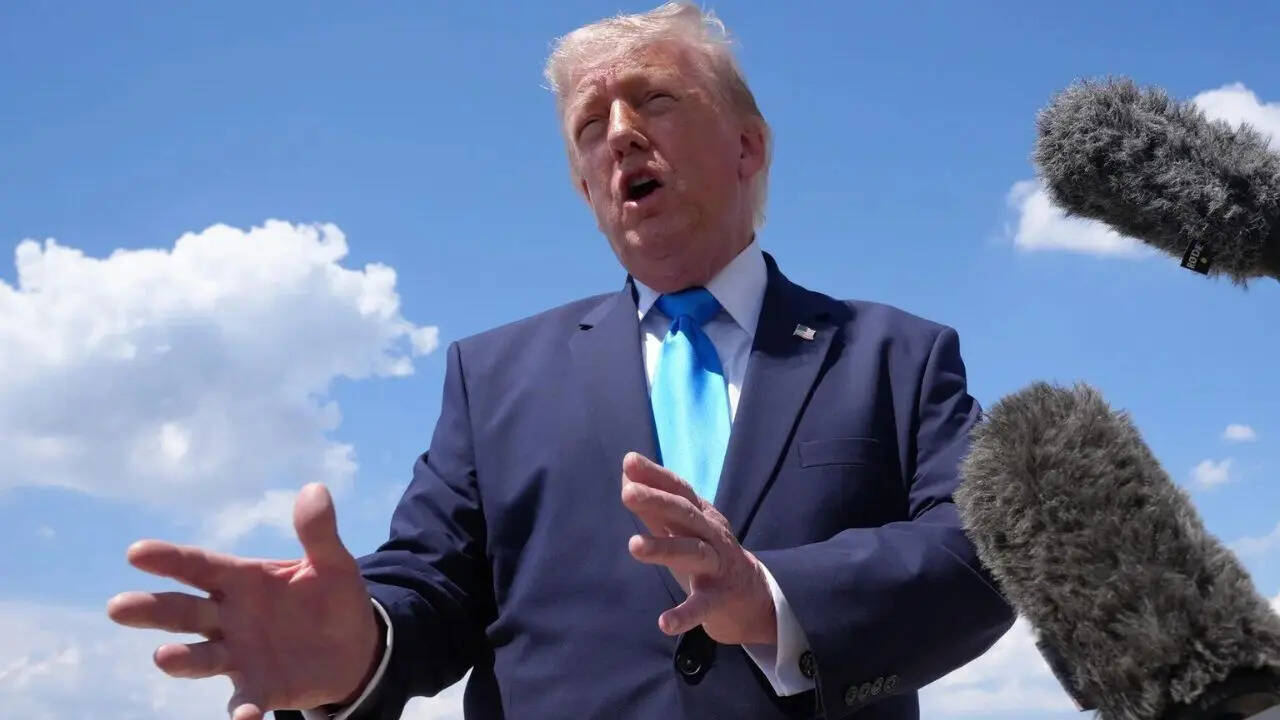
Mainstream political journalism has developed a comfortable, lazy habit whenever global summits roll around. The script writes itself weeks in advance. Analysts tune in exclusively to track the personal friction, tally the awkward handshakes, and speculate on which leader threw subtle shade during the family photo.
When Donald Trump travels to France for a G7 gathering, the media operates on a collective assumption: that public tension, blunt rhetoric, and apparent diplomatic isolation are evidence of a failed foreign policy. They paint a picture of a loose cannon alienating traditional allies while leaving American influence diminished on the world stage.
They are completely misreading the room.
What talking heads mistake for diplomatic blunders is actually a highly calculated, transactional negotiation strategy. The obsession with optics obscures a brutal reality. Global summits are not polite dinner parties meant to celebrate consensus. They are high-stakes economic battlegrounds. While reporters fret over body language, the actual levers of global trade and national interest are being pulled behind closed doors.
The Consensus Illusion and the Real Purpose of the G7
The foundational myth of modern diplomacy is that international forums exist to forge a unified global community. We are told that "cooperation" is an end in itself. This is a fundamental misunderstanding of geopolitical mechanics.
Historically, nations do not act out of altruism or a vague commitment to global harmony. They act out of self-interest. The G7 was originally formed in the 1970s not as a global governing body, but as an informal gathering of the world's most powerful industrialized economies to address urgent macroeconomic crises. Over the decades, it bloated into a bureaucratic photo-op where leaders sign vague, non-binding communiqués filled with platitudes that rarely translate into binding domestic policy.
When a leader disrupts this polite theater by openly challenging the terms of existing agreements, the establishment panics. But friction is not failure.
In private sector negotiations, no one expects a CEO to walk into a room, immediately agree with every competitor, and sign a contract that disadvantages their own firm just to keep the mood pleasant. Yet, we expect exactly that from heads of state. Challenging the status quo at these summits is a deliberate tactic designed to shift the baseline of negotiations. By refusing to play along with the pre-written script, a nation forces its partners to defend their positions on concrete terms rather than hiding behind diplomatic pleasantries.
The Mechanics of Transactional Diplomacy
To understand why the conventional analysis is wrong, you have to look at the mechanics of what is actually happening. Traditional diplomacy relies on multilateralism—agreements forged among many nations simultaneously, usually resulting in a lowest-common-denominator compromise where everyone gives up something to achieve a weak consensus.
The alternative approach is aggressively bilateral and transactional. It treats global politics like a series of zero-sum trade deals.
Imagine a scenario where a country has run a massive trade deficit with its closest allies for decades. Under the rules of traditional diplomacy, raising this issue aggressively during a summit is considered bad manners. It disrupts the collective narrative. But under a transactional framework, that summit is the exact place to leverage a nation's economic power.
This strategy relies on three specific levers:
- Strategic Unpredictability: If your counterparts always know exactly what you will agree to, they have no incentive to offer concessions. By leaving the table open and refusing to commit to pre-cooked statements, you force other leaders to operate on your timeline.
- Asymmetric Economic Leverage: The United States represents nearly a quarter of global GDP. Access to the American consumer market is the single most valuable asset in global trade. Using that access as a bargaining chip—whether through the threat of tariffs or regulatory shifts—is far more effective than appealing to shared values.
- Direct Bilateral Pressure: Multilateral forums are structural traps for dominant superpowers because they allow smaller nations to band together to dilute the superpower's influence. Breaking the collective front by forcing one-on-one negotiations behind the scenes allows the stronger economy to maximize its structural advantages.
When the media reports on a "fractured" summit because a leader refuses to sign a joint statement on climate or trade, they are looking at the wrong metric. The real test isn't whether everyone smiled for the camera; it's whether the subsequent trade negotiations yield better terms for domestic industries months later.
Dismantling the Critics' Playbook
The standard critique of this disruptive approach usually centers on three questions, each rooted in a flawed understanding of how international power works.
Doesn't this approach permanently damage vital alliances?
This question assumes that alliances are fragile agreements built on personal friendships between politicians. They aren't. Alliances are structural realities based on shared security needs and deeply integrated economic systems.
European nations do not cooperate with American intelligence or participate in joint defense initiatives because they like the current resident of the White House. They do it because they face shared geopolitical threats and rely on global stability to survive. Decades of data show that despite sharp, public rhetorical battles over defense spending or steel tariffs, core security architectures like NATO remain intact because the alternative is catastrophic for all parties involved.
Why reject a joint communiqué that everyone else agrees on?
A joint communiqué is a document designed by committee. It typically requires unanimous consent, meaning it is stripped of any teeth before it is even printed. Signing a meaningless document signals submission to the group's collective will. Refusing to sign is a low-cost, high-visibility way to signal that the old rules of engagement are over. It tells the other nations that if they want agreement on future issues, they will have to offer tangible concessions on trade, currency valuation, or market access.
Is isolation on the world stage an effective strategy?
Being isolated is a disaster if you are a small, dependent economy. If you are the global reserve currency and the primary guarantor of international maritime security, it isn't isolation—it's independence. The rest of the industrialized world cannot afford to ignore or permanently alienate the world's largest economy. The idea that European or Asian superpowers will simply form an alternative economic bloc that excludes the American market ignores the sheer scale of global capital flows.
The Cost of the Disruption Model
A truly objective analysis requires admitting the downside of this approach. Transactional diplomacy is highly efficient for short-term gains, but it introduces massive volatility into global markets.
When international relations are governed by stable, predictable rules, corporations can make long-term investment decisions with relative certainty. They know what tariffs will look like in five years. They can build supply chains across borders without worrying that a sudden policy shift will make their factories economically unviable overnight.
When you replace that stability with strategic unpredictability, businesses pull back. Capital becomes defensive. The constant threat of sudden tariffs or dissolved treaties forces multinational companies to spend billions reconfiguring supply chains, diversifying sourcing away from volatile regions, and hoarding cash instead of investing in expansion.
Furthermore, this strategy burns through diplomatic capital. While it forces concessions in the short term, it creates deep resentment among foreign electorates, making it politically harder for foreign leaders to cooperate on long-term, structural challenges like global pandemics or systemic financial instability where collective action is genuinely required.
The Real Scorecard in France
As the media prepares its coverage for the next gathering in France, expect the usual barrage of articles focusing on body language, tense press conferences, and anonymous quotes from frustrated diplomats.
Ignore all of it.
If you want to know who is winning, look past the public theater. Stop reading the op-eds about the "collapse of the liberal international order." Instead, watch the specific, unglamorous economic indicators that follow the event.
Track the changes in bilateral trade balances over the next two quarters. Watch whether European nations quietly adjust their digital services taxes to avoid retaliatory duties on luxury goods. Monitor whether foreign defense ministries increase their domestic military procurement budgets to meet spending targets.
Those are the real metrics of international power. The drama is just an elaborate smoke screen designed to keep the pundits talking while the real work of rewriting global economic rules happens in the dark.