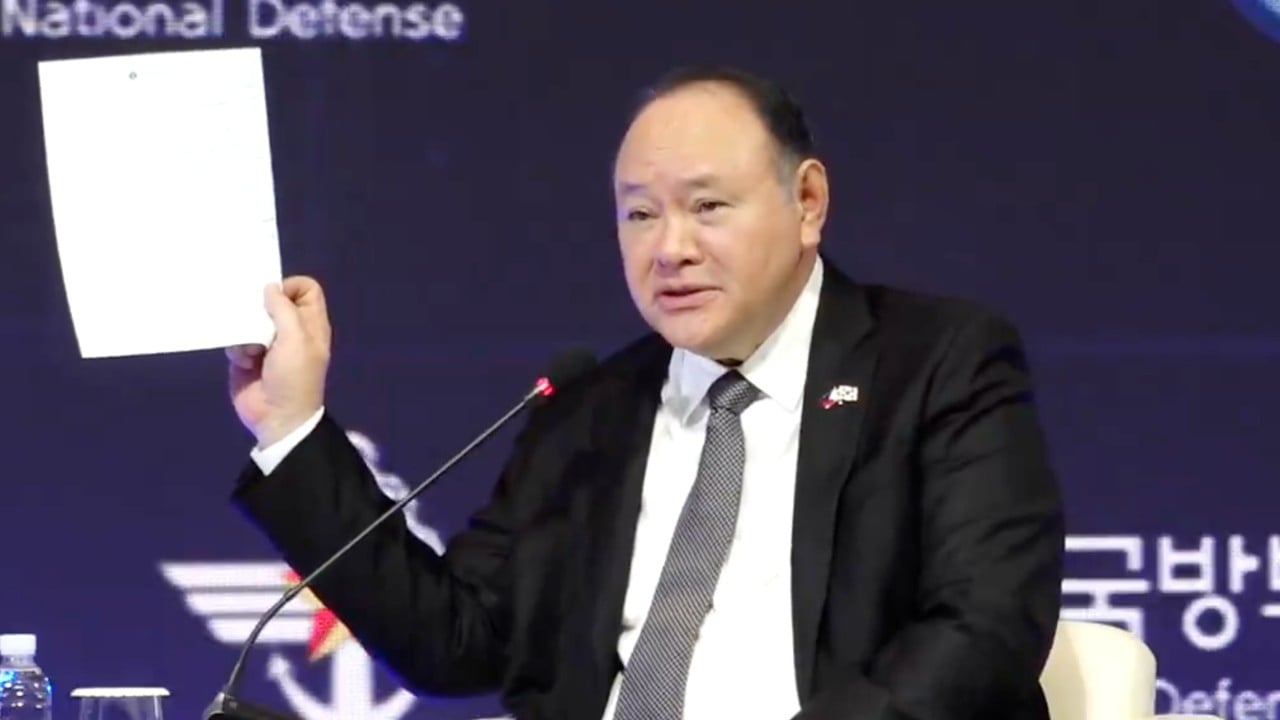
National security crises routinely compress complex political markets into single-issue referendums, creating sudden arbitrage opportunities for defense officials. In the Philippines, persistent maritime confrontations with China in the West Philippine Sea have shifted Defense Secretary Gilberto Teodoro Jr. from a technocratic cabinet administrator into a viable contender for the 2028 presidential election. Evaluating his trajectory requires separating short-term media visibility from the structural mechanics of Philippine electoral coalitions, voter prioritization, and geopolitical risk management.
The Structural Conversion of Maritime Friction into Electoral Equity
Standard political reporting treats election buzz following a military or coast guard clash as an organic surge in popularity. In reality, this phenomenon operates through an identifiable conversion funnel: external kinetic pressure generates domestic media saturation, which elevates the institutional profile of the defense portfolio, creating a temporary proxy for executive strength.
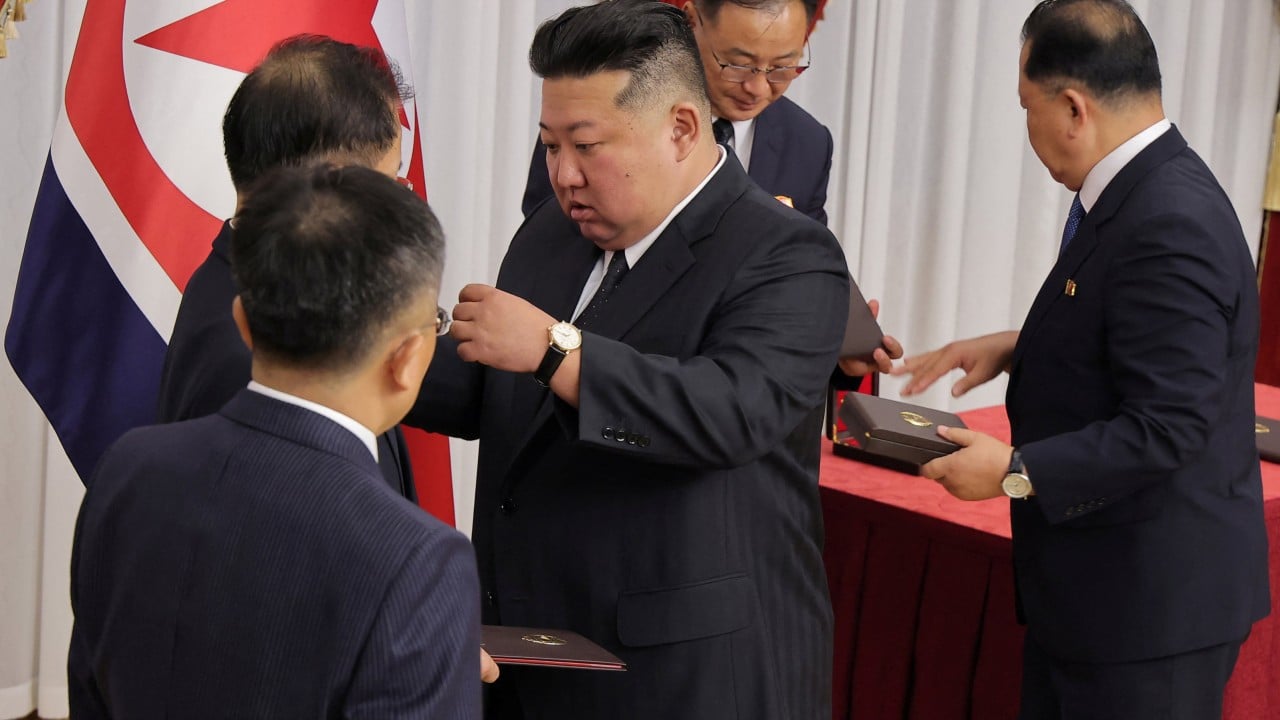
Teodoro occupies a unique structural position within the Ferdinand Marcos Jr. administration. Unlike elected senators or local dynastic executives who must balance patronage networks with legislative optics, a defense secretary commands a singular, non-partisan mandate: territorial integrity. When Chinese vessels execute aggressive maneuvers near Second Thomas Shoal or Scarborough Shoal, the resulting coverage automatically frames the defense chief as the primary defender of national sovereignty.
This dynamic produces three distinct forms of political capital:
- Asymmetric Name Recognition: Teodoro previously ran for president in 2010, finishing fourth behind Benigno Aquino III, Joseph Estrada, and Manny Villar, and failed to win a Senate seat in 2022. Those losses demonstrated a ceiling on his traditional retail campaigning appeal. Daily diplomatic protests, joint military exercises, and blunt public rebukes of Beijing bypass conventional campaign spending, delivering sustained national exposure without the financial burn rate of an early media buy.
- Ideological Differentiation: The fracturing of the 2022 UniTeam alliance between the Marcos and Duterte factions left a vacuum in the administration's succession plan. While Vice President Sara Duterte dominated early 2028 polling through regional strongholds in Mindanao and Visayas, her perceived reticence regarding Chinese maritime aggression created an opening. Teodoro's uncompromising rhetoric establishes an immediate contrast, positioning him as the ideological anchor for voters who view the previous administration's accommodation of Beijing as a strategic failure.
- Institutional Credibility: Educated at the University of the Philippines and Harvard Law School, and possessing prior experience as defense chief under Gloria Macapagal Arroyo, Teodoro projects administrative competence. For the domestic business community and foreign institutional investors, his profile mitigates the volatility often associated with populist candidates.
The limitation of this conversion funnel lies in its half-life. Security-driven approval spikes are notoriously elastic; unless anchored to durable grassroots machinery, they decay rapidly once the news cycle shifts back to domestic inflation, agricultural supply chains, or wage stagnation.
The Three-Variable Constraint on a Technocratic Candidacy
In Philippine presidential politics, elite credentials and sharp geopolitical soundbites rarely translate directly into a plurality victory. Since the restoration of democracy in 1986, winning candidates have relied on a combination of mass populist appeal, overwhelming regional vote banks, or emotional narrative momentum. Analyzing Teodoro's viability requires stress-testing his profile against three structural constraints.
The Bailiwick Deficit
Philippine national elections are won through regional consolidation. A viable candidate requires an unassailable geographic base capable of delivering a multi-million-vote margin to offset losses elsewhere. While Teodoro hails from Tarlac—a province historically divided between the Cojuangco and Aquino political networks—he does not command an exclusive, monolithic regional machine comparable to the Duterte stronghold in Davao or the Marcos bloc in the Ilocos region. Without an automated regional floor, his campaign must construct a coalition from scratch across vote-rich provinces like Cebu, Cavite, Pangasinan, and Negros Occidental.
The Retail Politics Friction
Modern Philippine campaigns reward parasocial intimacy. Candidates who dominate social media ecosystems—specifically Facebook, TikTok, and YouTube—do so by projecting relatable, accessible personas. Teodoro's communication style is analytical, legalistic, and deliberately formal. While this cadence plays well in diplomatic forums, defense summits in Singapore, and Washington think tanks, it risks alienating working-class voters in the Class D and E socioeconomic brackets, who represent the overwhelming majority of the electorate. Bridging this gap requires translating abstract concepts like the 2016 Arbitral Award and exclusive economic zones into tangible economic terms—specifically, the protection of local fishermen's livelihoods and maritime food security.
The Patronage Allocation Problem
Presidential campaigns in the archipelago function as massive logistical syndicates reliant on local government units (LGUs). Governors, mayors, and barangay captains deliver ground-level turnout in exchange for administrative alignment and resource distribution. As a cabinet secretary rather than a legislative power broker or party boss, Teodoro does not directly control discretionary infrastructure funds or local political appointments. Securing LGU commitments for 2028 depends entirely on whether President Marcos Jr. designates him as the official administration standard-bearer, thereby unlocking the state apparatus and the financial backing of major conglomerates.
Geopolitical Signaling and the Deterrence Trap
Elevating a defense chief into a presidential frontrunner introduces complex feedback loops into regional security. When a cabinet official's domestic political stock rises in direct proportion to the intensity of confrontation with a foreign power, incentives can skew toward escalation.
From a deterrence perspective, Teodoro's vocal posture serves a calculated function for the Marcos administration. By adopting a hardline stance against Beijing's gray-zone tactics—such as water cannon deployments, laser illumination, and maritime militia blockades—Teodoro absorbs the diplomatic friction, allowing the President to maintain slightly higher strategic flexibility. This aligns with the broader Philippine shift toward minilateral security architectures, including the expansion of Enhanced Defense Cooperation Agreement (EDCA) sites with the United States and reciprocal access agreements with Japan.
However, transforming the defense portfolio into a springboard for the presidency carries two operational hazards:
- Strategic Predictability: If Beijing concludes that Teodoro's domestic political survival depends on maintaining high-decibel friction in the South China Sea, Chinese maritime forces may calibrate their gray-zone operations specifically to undermine his credibility. By staging incidents that expose the operational limits of the Armed Forces of the Philippines (AFP) without triggering the US-Philippines Mutual Defense Treaty, Beijing could attempt to make Teodoro's tough rhetoric appear performative rather than backed by hard capability.
- Civil-Military Politicization: The AFP has spent decades professionalizing its officer corps following the political turbulence of the late twentieth century. If the Defense Secretary is openly perceived as an active presidential candidate, every procurement decision, command assignment, and operational deployment risks being scrutinized through a partisan lens. Maintaining institutional morale requires strict separation between national defense modernization and electoral ambition.
Comparative Dynamics in the 2028 Succession Market
To assess Teodoro's actual probability of securing the presidency, his profile must be benchmarked against the broader field of prospective 2028 contenders. The Philippine political market currently segments into three distinct archetypes: the entrenched regional populist, the dynastic legislative insider, and the security-focused technocrat.
The Regional Populist Benchmark
Sara Duterte remains the baseline variable in any 2028 projection. Despite political friction with the Marcos administration, impeachments threats, and scrutiny over confidential funds, her core constituency in Mindanao provides a high electoral floor. Her political brand relies on continuity with the Duterte administration's law-and-order rhetoric and an independent, often Beijing-friendly foreign policy. If the opposition vote splinters among multiple administration-aligned candidates, a unified regional populist bloc can win a plurality with roughly 30 to 35 percent of the total vote.
The Legislative Insider Benchmark
Figures within the administration's own legislative coalition—such as House Speaker Martin Romualdez or prominent senators like Raffy Tulfo and Risa Hontiveros—represent competing pathways to the presidency. Romualdez commands unmatched institutional control over the House of Representatives and LGU networks, though he faces persistent challenges in national voter preference polls. Conversely, media-driven populist figures like Tulfo possess massive organic reach among Class D and E voters, bypassing traditional party structures altogether.
The Technocratic Arbitrage Play
Teodoro's path to the nomination relies on the failure of these traditional archetypes to consolidate the administration's base. If the Marcos faction determines that its legislative insiders cannot overcome low public approval ratings, and if populist alternatives prove too erratic for domestic oligarchs and international allies, Teodoro becomes the logical compromise candidate. He offers an acceptable equilibrium: staunchly aligned with Western security interests, predictable on macroeconomic policy, and untainted by legislative pork-barrel controversies.
The Economic Voter Paradox
A critical analytical flaw in equating South China Sea coverage with electoral victory is the hierarchy of voter concerns. Public opinion surveys conducted by organizations such as Pulse Asia and OCTA Research consistently demonstrate a stark divergence between issue salience and vote choice.
While an overwhelming majority of Filipinos—frequently exceeding 70 to 80 percent—support asserting territorial rights in the West Philippine Sea and distrust Beijing's intentions, foreign policy rarely ranks among the top three determinants of actual ballot selection. When entering the voting booth, the Filipino electorate prioritizes immediate microeconomic pressures:
- Inflation and Food Security: The retail price of rice, fuel costs, and basic commodities dictate incumbent approval ratings far more reliably than naval standoffs.
- Employment and Wages: Job creation, overseas Filipino worker (OFW) support systems, and regional wage hikes remain the primary currency of campaign promises.
- Healthcare and Social Services: Access to PhilHealth benefits, educational subsidies, and direct cash transfer programs (such as the Pantawid Pamilyang Pilipino Program) drive ground-level voter loyalty.
A candidate whose entire public identity is forged in the crucible of maritime defense faces a structural translation problem. To convert national security credibility into electoral majorities, Teodoro must demonstrate how maritime sovereignty directly resolves domestic economic friction. This requires linking the protection of offshore energy reserves—such as the Reed Bank gas fields—to lower domestic electricity rates, and connecting maritime patrol capabilities to the preservation of domestic fisheries and lower food prices. Without this economic bridge, his appeal remains concentrated among urban, middle-class, and national-security-conscious demographics, leaving the decisive mass vote uncaptured.
The Strategic Requirements for Conversion
For Teodoro's 2028 buzz to evolve from media speculation into a viable presidential campaign, three sequential operational milestones must be achieved before the filing of certificates of candidacy in late 2027:
- Portfolio Expansion Beyond Defense: Teodoro must avoid being pigeonholed strictly as a wartime administrator. He requires visible involvement in non-military cabinet initiatives—such as disaster resilience, critical infrastructure protection, and energy security—to build a multidimensional executive profile capable of addressing bread-and-butter economic issues.
- Formal Coalition Consolidation: A solo run is mathematically unviable. He must secure explicit endorsement from the Marcos political apparatus while simultaneously negotiating peace with major provincial dynasties in the Visayas and Luzon to construct a functional LGU turnout machine.
- Narrative Recalibration: His communications team must shift away from purely legalistic and diplomatic framing. The central campaign thesis must pivot from defending abstract maritime boundaries to protecting the daily economic survival of Filipino families against external coercion.
If these structural conversions fail to materialize, Teodoro's current prominence will follow the historical trajectory of past technocratic cabinet stars: high respect among policy elites, strong backing from foreign allies, and a decisive defeat at the hands of a better-organized populist machine.