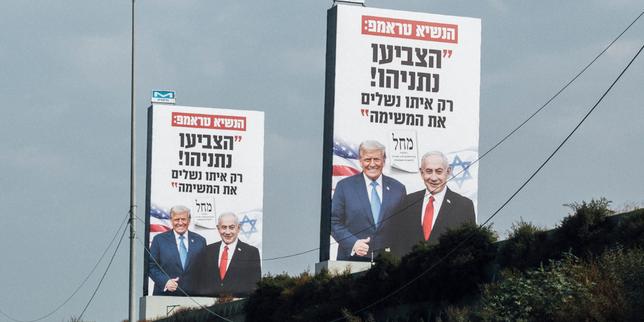
The announcement by President Donald Trump that the United States will terminate military aid to Israel by the end of the year represents an abrupt structural break in a bilateral security framework established over half a century ago. Rather than operating as a conventional diplomatic dispute, this policy shift alters the capital allocation of the US defense industrial base, forces an immediate restructuring of the Israeli defense budget, and voids the strategic assumptions underpinning the 2016 Memorandum of Understanding (MOU). Understanding the real-world impact requires stripping away political rhetoric and analyzing the legal mechanisms, fiscal constraints, and supply chain dependencies governing Foreign Military Financing (FMF).
The Legal Architecture of Bilateral Defense Aid
US military assistance to Israel is not a simple wire transfer; it is a heavily regulated procurement subsidy governed by the Arms Export Control Act (AECA) and structured through multi-year executive agreements. For a more detailed analysis into similar topics, we suggest: this related article.
Under the current 10-year MOU—signed in 2016 for the fiscal years 2019 through 2028—the United States committed to providing $3.8 billion annually. This allocation splits into two distinct statutory buckets:
- Foreign Military Financing ($3.3 billion): Grants administered by the State Department and executed by the Defense Security Cooperation Agency (DSCA). These funds must be used to purchase US-manufactured defense articles, services, and design-construction services.
- Missile Defense Cooperation ($500 million): Appropriated directly through the Department of Defense budget to co-develop and co-produce systems such as Iron Dome, David’s Sling, and Arrow.
A unilateral executive declaration to end aid by year-end immediately collides with the Impoundment Control Act of 1974. The President does not possess the constitutional authority to unilaterally rescind funds already appropriated by Congress. To execute a year-end cutoff, the administration must deploy one of three institutional mechanisms: To get more information on this issue, in-depth coverage can be read on Al Jazeera.
- Rescission Proposals: The President submits a special message to Congress requesting the cancellation of previously appropriated budget authority. If Congress does not pass a rescission bill within 45 days of continuous session, the funds must be released.
- Administrative Delay and Licensing Freezes: While unable to cancel appropriations permanently without legislative consent, the executive branch controls the State Department's Directorate of Defense Trade Controls (DDTC) and the DSCA. By withholding export licenses, slowing down Letters of Offer and Acceptance (LOAs), or halting the release of apportioned funds via the Office of Management and Budget (OMB), the administration can create a de facto freeze on deliveries without passing new legislation.
- Budget Request Zeroing: For the upcoming fiscal year cycle, the White House submits a budget request allocating zero dollars to Israeli FMF, shifting the political burden onto congressional appropriators to restore the funding against executive opposition.
The Domestic Industrial Base Cost Function
A widespread misconception in public policy analysis is that FMF represents a net capital outflow from the United States. In operational reality, FMF functions as a state-sponsored export subsidy that underwrites American manufacturing capacity and reduces unit costs for the Pentagon.
Under the terms of the 2016 MOU, Israel’s historical ability to spend a portion of its aid on domestic defense products—known as Off-Shore Procurement (OSP)—was scheduled to phase out entirely by 2028, dropping from 26.3% to 0%. By 2026, the vast majority of these funds were already contractually locked into US prime contractors, including Lockheed Martin, Boeing, Raytheon (RTX), and General Dynamics.
Terminating this funding stream triggers three immediate economic consequences within the US defense sector:
- Loss of Economies of Scale: Foreign orders run on the same assembly lines as Pentagon orders. When FMF-backed orders for F-35 Joint Strike Fighters, CH-53K heavy-lift helicopters, or precision-guided munitions (PGMs) are canceled or suspended, the fixed overhead costs of those production lines must be amortized across a smaller number of units. The Department of Defense consequently pays a higher unit price for its own acquisitions.
- Sub-Tier Supply Chain Disruption: Prime contractors rely on thousands of specialized tier-two and tier-three suppliers for avionics, propulsion components, and specialty metallurgy. Sudden cancellations create bullwhip effects down the supply chain, forcing smaller firms with thin margins to idle capacity or exit the defense market entirely.
- Intellectual Property and Co-Production Friction: In missile defense, the US and Israel operate under strict co-production agreements. For instance, Raytheon manufactures major components of the Tamir interceptor (used in Iron Dome) in the United States. A funding cutoff jeopardizes joint intellectual property frameworks and disrupts the Pentagon's own procurement of Iron Dome batteries for the US Army.
Fiscal Shock and Budgetary Reallocation in Jerusalem
For the Israeli Ministry of Defense, a sudden elimination of $3.8 billion in annual grants represents a massive macroeconomic shock, though one that is mathematically absorbable if met with aggressive fiscal restructuring.
Prior to the multi-front conflicts that began in late 2023, US aid accounted for roughly 15% to 20% of Israel's total defense budget and approximately 0.7% of its Gross Domestic Product (GDP). However, following the massive surge in Israeli military expenditures to sustain operations across multiple theaters, total defense spending expanded drastically, diluting the relative percentage of US aid while simultaneously increasing Israel's reliance on continuous munitions replenishment.
Absorbing a $3.8 billion deficit requires the Israeli Ministry of Finance to execute a rigid trilemma of fiscal adjustments:
- Sovereign Debt Issuance: Israel can raise the equivalent capital on international bond markets. However, doing so amid heightened regional instability and potential credit rating pressures increases the risk premium, driving up borrowing costs across the broader economy and crowding out private sector investment.
- Taxation and Domestic Spending Cuts: Offsetting the loss through internal revenue generation requires raising value-added taxes (VAT) or corporate tax rates while slashing civilian infrastructure, healthcare, and education budgets. This depresses domestic consumption and slows long-term GDP growth.
- Procurement Prioritization: Without the "free" purchasing power of FMF grants, the Israel Defense Forces (IDF) must shift from acquiring high-end, capital-intensive US platforms (such as advanced fighter squadrons and aerial refueling tankers) toward lower-cost, domestically produced munitions, unmanned systems, and defensive interceptors.
The Erosion of Qualitative Military Edge (QME)
Beyond raw dollars, the termination of aid dismantles the statutory framework of Qualitative Military Edge (QME). Enshrined in US law (22 U.S.C. 2776), QME mandates that any US arms sale to a Middle Eastern nation must be evaluated to ensure it does not adversely affect Israel's ability to defeat any credible conventional military threat.
FMF was the primary operational mechanism used to maintain QME; whenever the US sold advanced weaponry to Gulf states, it compensated Israel with FMF-funded upgrades to maintain technological parity. If the US ends direct military grants while continuing commercial arms sales to regional neighbors, the QME doctrine becomes legally hollow. Israel loses its privileged access to top-tier US defense technology and the financial means to acquire it.
Geopolitical Realignment and Export Control Autonomy
While the immediate impact on Israel is fiscal strain and supply chain bottlenecks, the secondary effect is the removal of US diplomatic leverage over Israeli military operations and defense exports.
For decades, FMF functioned as a leash. Because Israel relied on US-funded munitions and spare parts, Washington could demand restraint in military campaigns, dictate rules of engagement, and exercise veto power over Israeli arms exports to third-party nations. Under the AECA, the US holds end-use monitoring rights and must approve the re-export of any system containing US-origin components or intellectual property.
Eliminating financial aid alters this principal-agent dynamic:
- Unfettered Defense Exports: Israel is consistently ranked among the top ten global arms exporters, specializing in drones, electronic warfare, cyber capabilities, and air defense systems. Without the obligation to align its foreign policy with Washington to protect its annual grant, Jerusalem faces fewer political barriers to selling advanced weaponry to buyers the US might otherwise discourage, including nations in Asia, Eastern Europe, and Latin America.
- Indigenization of Munitions Production: A cutoff accelerates Israel's strategic drive toward autarky in critical munitions. In 2024, the Israeli Ministry of Defense began signing multi-billion-shekel contracts with domestic firms like Elbit Systems to establish local heavy bomb and artillery shell manufacturing lines, explicitly designed to eliminate dependence on foreign export licenses. Removing FMF accelerates this capital reallocation from US factories to Israeli domestic facilities.
- Diversification of Strategic Partnerships: While no single nation can match the technological breadth or production volume of the US defense industry, a severed aid relationship compels Israel to deepen defense-industrial ties with alternative partners. This includes expanding co-development projects with European defense firms (particularly in Germany and Greece) and accelerating technology transfers with major non-Western buyers like India.
Operational Limitations of the Termination Strategy
Executing a clean break by the end of the year faces severe operational friction on both sides of the Atlantic. The hypothesis that aid can simply be "turned off" ignores the multi-year nature of defense contracting.
First, unobligated vs. obligated funds create a massive lag time. Billions of dollars from previous fiscal years have already been committed to contracts with US manufacturers for deliveries scheduled through 2030 and beyond. Canceling these existing contracts would trigger massive termination-for-convenience penalties payable by the US government to American defense contractors, making it more expensive to cancel the hardware than to let it be built.
Second, inventory readiness remains tethered to US logistics. Even if Israel pays cash for future purchases through the Foreign Military Sales (FMS) program—transitioning from a grant recipient to a cash-paying customer—it still relies on the US supply chain for spare parts, engine maintenance, and software updates for its existing fleet of F-15s, F-16s, and F-35s. A financial cutoff does not immediately sever the logistical umbilical cord unless accompanied by a total arms embargo, which would face insurmountable bipartisan resistance in Congress.
Strategic Directives for Affected Stakeholders
Given the structural mechanics of a year-end FMF termination, decision-makers in defense procurement, corporate finance, and policy must immediately execute three defensive adjustments rather than waiting for legislative battles to play out.
For US Defense Prime Contractors: Reclassify all pending Israeli FMF-backed Letters of Offer and Acceptance as high-risk backlog. Treasury teams must audit termination-for-convenience clauses across tier-one and tier-two supplier agreements and prepare to reallocate production slots for high-demand items (specifically 155mm artillery, GMLRS rockets, and air-defense interceptors) to European NATO allies or US Army replenishment contracts to protect quarterly margin guidance.
For the Israeli Ministry of Defense: Immediately halt negotiations on long-lead, high-CAPEX US platform acquisitions—such as additional F-15EX squadrons—and redirect domestic shekel reserves toward securing sovereign intellectual property and raw material stockpiles (nitrocellulose, specialty alloys, and microelectronics) required to run domestic munitions lines at 100% capacity. Transitioning the US relationship from FMF grants to direct commercial sales (DCS) funded by sovereign debt must be limited strictly to non-substitutable technologies, such as F-35 sustainment and heavy strategic munitions.
For Institutional Investors and Sovereign Risk Analysts: Price in a permanent structural increase in Israel's debt-to-GDP ratio of 1.5% to 2.5% over the medium term to account for the self-financing of defense imports. Simultaneously, re-rate domestic Israeli defense contractors upward; the forced indigenization of the Israeli supply chain guarantees a captive domestic customer with multi-year order visibility, insulating firms like Elbit Systems and Israel Aerospace Industries (IAI) from the loss of US taxpayer subsidies.