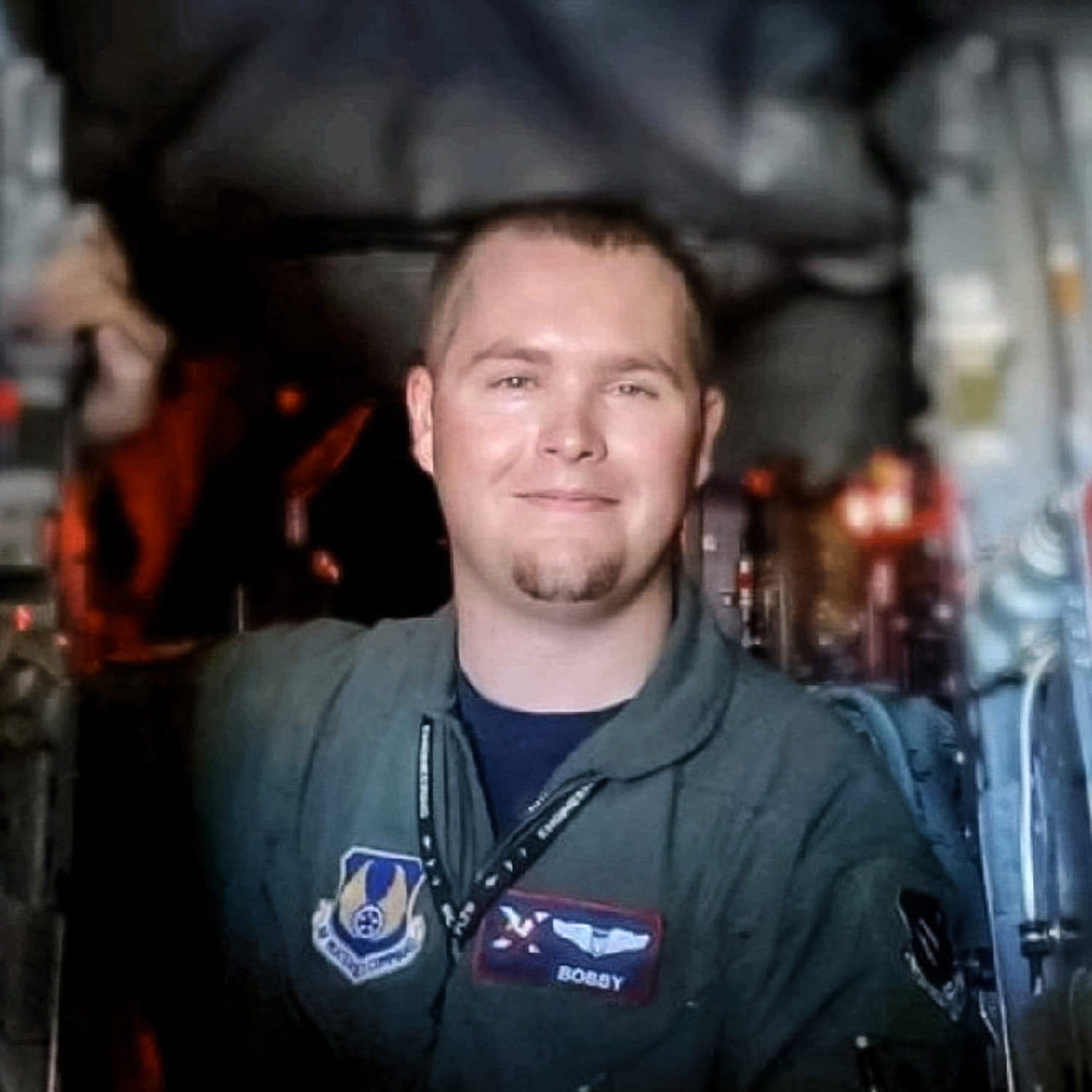
Catastrophic failures in heavy bomber operations are rarely the result of a singular mechanical malfunction or isolated human error. Instead, they represent the terminal intersection of latent organizational deficiencies, compounding environmental variables, and acute operational friction. When a strategic asset like the Boeing B-52 Stratofortress suffers a fatal mishap, the immediate media narrative shifts toward personal tragedy and acute grief. A rigorous operational analysis, however, must abstract these events into systemic vulnerabilities to understand the true cost function of military aviation attrition.
The loss of an operational crew and a capital-intensive airframe requires a granular deconstruction of the factors that govern high-risk, low-frequency flight regimes. By applying structured safety frameworks, military organizations can isolate the causal pathways that transform routine training or deployment missions into catastrophic system failures. In other news, take a look at: Why the Media Is Completely Misreading Iran's Red Lines in Lebanon.
The Tri-Linear Framework of Aviation System Risk
To evaluate the true vulnerability of heavy bomber operations, failures must be categorized across three distinct operational layers. This approach prevents the analytical error of focusing solely on the active failure—the final action taken by the aircrew—while ignoring the latent conditions engineered into the system years prior.
1. Latent Organizational Conditions
The foundation of aviation risk resides within institutional policy, procurement cycles, and fleet management strategies. For aging airframes like the B-52, which has been operational for decades, the organizational layer introduces complexities through structural fatigue management, supply chain obsolescence, and evolving mission profiles that deviate from the original design parameters. USA Today has analyzed this important issue in great detail.
When resource allocation prioritizes operational tempo over preventative depot-level maintenance, the organization builds latent friction into the fleet. This friction manifests as decreased mean time between failures (MTBF) for critical subsystems, placing a higher cognitive and physical burden on the crew.
2. Supervisory and Environmental Triggers
The second layer involves the immediate operational environment and local leadership decisions. This includes flight scheduling, fatigue management protocols, and the enforcement of standardization and evaluation metrics. In heavy bomber operations, flight profiles frequently demand long-duration sorties that challenge human physiological limits.
Supervisory failures occur when mission planners fail to account for compounding stressors, such as circadian rhythm disruption or rapid transitions from low-altitude tactical maneuvering to high-altitude cruise configurations. Environmental variables—such as microbursts, thermal inversion layers at specific California airbases, or degraded visibility—act as catalysts that exploit these supervisory oversights.
3. Active Failures and the Human-Machine Interface
The terminal layer of the framework is the active failure executed within the cockpit. This represents the immediate deviation from standard operating procedures (SOPs) or an inability to recover from an uncommanded aerodynamic upset. In heavy, multi-engine aircraft, spatial disorientation, asymmetric thrust conditions, or delayed recognition of stall characteristics require rapid, highly coordinated crew resource management (CRM).
If the interface between the human operators and the analog or semi-digitized flight control systems degrades during a critical phase of flight—such as takeoff, landing, or low-level terrain following—the margin for recovery shrinks to zero.
Human Capital Depreciation and the Real Cost of Crew Attrition
The media focus on individual biographies underscores a deeper structural reality: the human capital concentrated within a strategic bomber crew represents an irreplaceable national asset. Quantifying the loss of an eight-person crew requires looking past the immediate replacement cost of the physical airframe to evaluate the structural depreciation of institutional knowledge.
The training pipeline for a strategic bomber crew involves a sequential investment spanning multiple years. The pipeline moves through several distinct phases, each compounding the financial and operational investment:
- Undergraduate Pilot / Navigator Training: Initial qualification establishes foundational airmanship, instrument ratings, and basic aviation physiology.
- Formal Training Unit (FTU) Qualification: Aircrews transition to the specific heavy bomber platform, mastering asymmetric aerodynamics, complex fuel management, and platform-specific emergency procedures.
- Operational Integration: Crew members are assigned to operational squadrons where they develop theater-specific tactical proficiency, electronic warfare capabilities, and nuclear command and control protocols.
The culmination of this pipeline is not merely an individual who can fly the aircraft, but a synchronized multi-member team capable of executing complex mission sets under extreme duress. When a senior instructor pilot, a radar navigator, or an electronic warfare officer is lost, the organization loses decades of cumulative operational experience. This loss creates an immediate deficit in peer-to-peer mentorship and tactical development within the squadron, lowering the overall readiness posture of the wing.
Furthermore, the domestic impact on families—such as a crew member leaving behind a newborn—introduces secondary operational friction. High casualty rates or systemic safety failures degrade institutional trust, accelerating voluntary separation rates among mid-career officers and non-commissioned officers. This creates a downstream talent bottleneck that forces the training pipeline to accelerate, inadvertently increasing the risk profile of the entire enterprise.
Aerodynamic and Mechanical Stressors in Legacy Airframes
The B-52 platform presents unique engineering challenges that complicate risk mitigation strategies. Operating an airframe designed in the mid-20th century within a 21st-century strategic framework introduces distinct mechanical and aerodynamic vulnerabilities.
+-------------------------------------------------------------+
|               ORGANIZATIONAL LATENT DEFICIENCIES            |
|       (Supply Chain Shortages, Accelerated Operational Tempo)       |
+-------------------------------------------------------------+
                              |
                              v
+-------------------------------------------------------------+
|               SUPERVISORY / ENVIRONMENTAL STRESSORS          |
|      (Fatigue Management Failures, Complex Flight Profiles) |
+-------------------------------------------------------------+
                              |
                              v
+-------------------------------------------------------------+
|                  MECHANICAL / AERODYNAMIC UPSET             |
|       (Asymmetric Thrust, Structural Fatigue, Control Loss)  |
+-------------------------------------------------------------+
                              |
                              v
+-------------------------------------------------------------+
|                      CATASTROPHIC MISHAP                     |
+-------------------------------------------------------------+
Aeroelasticity and Structural Fatigue
The long, flexible wing design of heavy strategic bombers is engineered to flex during turbulence to alleviate structural loads. Decades of operational flight hours, characterized by low-level training runs and heavy-weight takeoffs, induce cumulative fatigue damage in the wing spars and upper skin panels. While non-destructive inspection methods can identify sub-surface fracturing, the risk of unpredicted structural failure during high-stress maneuvers remains a critical factor.
Propulsion and Asymmetric Thrust Dynamics
Operating an aircraft with eight engines introduces a complex propulsion matrix. While engine redundancy is a core design feature, it creates significant aerodynamic hazards during an uncommanded shutdown or catastrophic failure of an outboard powerplant.
If an engine fails during a high-weight, low-airspeed configuration—such as immediately following rotation on takeoff—the resulting asymmetric thrust creates a severe yawing moment. If the flight crew does not immediately apply corrective rudder and pitch inputs to maintain minimum control speed, the aircraft can quickly enter an unrecoverable departure from controlled flight.
Systemic Integration of Human Factors Analysis
To prevent future attrition, safety investigators utilize the Human Factors Analysis and Classification System (HFACS) to trace the psychological and physiological conditions that precede a crash. This methodology moves away from assigning blame and instead focuses on identifying the preconditions for unsafe acts.
A primary variable in long-duration strategic flight is the degradation of cognitive function due to sleep deprivation and circadian rhythm disruptions. Studies in aerospace medicine demonstrate that sustained wakefulness exceeding 18 hours degrades situational awareness, slows reaction times, and impairs complex decision-making to a degree equivalent to legally defined alcohol intoxication.
In a heavy bomber cockpit, where monitoring dozens of analog gauges, maintaining tight formation, or executing precise refueling maneuvers requires constant cognitive focus, even minor performance drops can lead to disaster.
The second critical human factor is task saturation. During an in-flight emergency, the volume of incoming data can overwhelm a crew's processing capacity. If the aircraft suffers a simultaneous mechanical failure and environmental degradation, the crew may fixate on a single instrument or symptom while ignoring broader trends, such as a declining airspeed profile or an escalating descent rate. Effective crew resource management requires clear communication protocols to distribute the cognitive load across all available crew stations, ensuring that at least one pilot remains dedicated exclusively to flying the airframe.
Strategic Mandate for Modernizing Operational Risk Management
A definitive analysis of strategic bomber mishaps indicates that traditional, reactive safety protocols are insufficient for managing legacy fleets in high-intensity operational environments. To preserve combat capability and protect human capital, defense architectures must shift toward a predictive, data-driven safety model.
Flight Data Monitoring (FDM) and predictive maintenance algorithms must be integrated across the entire heavy bomber inventory. By continuously downloading and analyzing parametric data from every flight, maintenance teams can identify subtle anomalies in engine performance, flight control responses, and structural strain before they trigger a catastrophic failure. This transition from time-based maintenance intervals to condition-based operational management addresses latent mechanical risks at their root.
Concurrently, human performance metrics must be codified with the same rigor applied to hardware systems. Implementing biometric monitoring and algorithmic fatigue tracking for aircrews prior to scheduling high-risk training profiles can provide objective data to mitigate task saturation and physiological exhaustion. Operational commanders must be empowered to defer or restructure missions when predictive models indicate that the cumulative risk index exceeds acceptable safety margins.
The long-term readiness of strategic aviation depends on acknowledging that safety is not an operational constraint, but a core component of combat capability. True modernization requires upgrading both the physical platforms and the analytical frameworks used to manage the human and material systems that project global airpower.