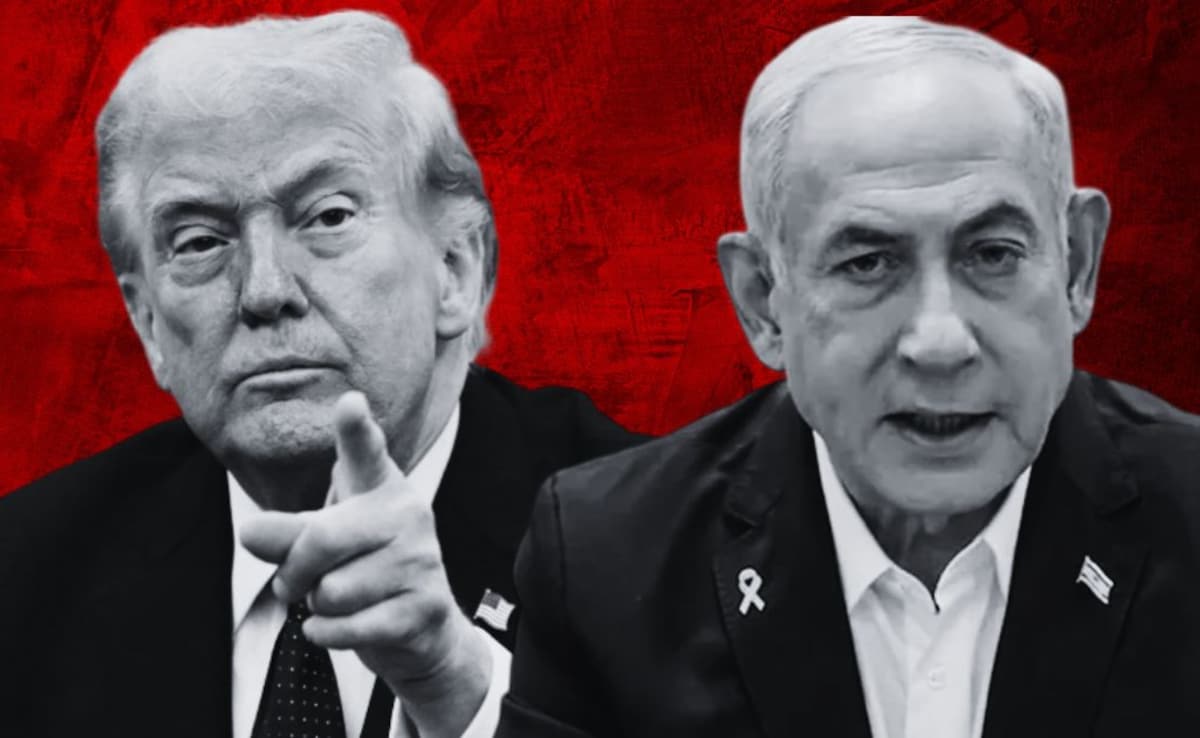
The announcement of a $58 million bounty targeting high-profile state leaders represents more than an escalatory rhetorical gesture; it is a calculated deployment of low-cost, high-leverage asymmetric warfare. In international relations, when a state actor cannot achieve strategic parity through conventional military expenditure, it pivots to non-linear deterrence mechanisms. This specific financial incentive modifies the geopolitical risk landscape by decentralizing threat generation, outsourcing kinetic operations to non-state actors, and forcing adversaries to misallocate defensive resources.
To understand the strategic utility of this maneuver, one must look past the sensationalism and analyze the underlying mechanics of state-sponsored assassination bounties through the lenses of economic deterrence, proxy optimization, and defensive cost imposition.
The Asymmetric Cost Imposition Framework
The fundamental objective of an asymmetric bounty is not necessarily the successful execution of the target, but rather the permanent alteration of the target's operational calculus. This can be quantified through a basic cost-imposition ratio.
Conventional military deterrence requires massive capital expenditure: maintaining standing armies, developing hypersonic missile systems, or deploying carrier strike groups. A bounty requires zero upfront capital investment. It operates as a contingent liability—a payout that only matures upon the delivery of a verified result.
This creates an extreme economic imbalance between the sponsor state and the target state across three distinct vectors.
1. The Defensive Cost Multiplier
While the sponsor state commits a theoretical $58 million on paper, the target states must immediately allocate real, non-theoretical capital to counter the distributed threat. The target's defensive cost function scales exponentially:
- Intelligence Reallocation: Signal and human intelligence assets must be diverted from proactive counter-terrorism or strategic planning to monitor low-level, distributed criminal networks suddenly incentivized by the payout.
- Logistical Friction: High-value targets (HVTs) face severe restrictions on mobility, public engagement, and diplomatic travel. The logistical tail of securing a former or current head of state expands to include continuous counter-sniper teams, armored transport upgrades, and advanced cyber-security protocols to prevent location leaks.
- Perpetual Duration: Unlike a military campaign with a defined timeline, a financial bounty possesses no inherent expiration date. The defensive expenditure must be sustained indefinitely, creating a permanent fiscal drain on the target's security apparatus.
2. Crowdsourcing the Kinetic Threat
Traditional state-sponsored operations require the deployment of highly trained intelligence officers (e.g., specialized covert units). These operations carry immense political risk; if the operatives are captured, the sponsoring state faces direct attribution, retaliatory strikes, or crippling international sanctions.
By externalizing the contract via a public or semi-public bounty, the sponsor state shifts the execution risk to a global pool of distributed actors:
- Transnational Criminal Organizations: Cartels and syndicates with pre-existing smuggling routes and access to black-market weaponry can treat the bounty as a high-risk, high-yield corporate acquisition.
- Radicalized Lone Actors: Individuals driven by ideological alignment who require only a fractional financial catalyst to move from radicalized rhetoric to kinetic action.
- Insider Threats: The magnitude of a multi-million-dollar payout increases the probability of corruption within secondary or tertiary security perimeters, targeting low-salaried support staff, local law enforcement, or private contractors.
3. Plausible Deniability and Escalation Management
Because the execution vector is crowdsourced, the sponsoring state retains a layer of structural ambiguity. If a lone wolf or a criminal gang attempts an assassination, the sponsor state can claim a lack of direct operational control, branding the event as an autonomous action stimulated by general grievances rather than a formal act of war. This complicates the target state’s doctrine of proportionality, making a conventional military retaliation politically difficult to justify on the international stage.
Weaponizing Information Operations and Domestic Mobilization
The proclamation of a multi-million-dollar bounty functions simultaneously as an internal and external information operation. Its efficacy does not depend on military execution; the psychological and political dividends are realized the moment the announcement is broadcast.
[Sponsor Announcement] -> [Global Media Amplification] -> [Adversary Risk Recalculation]
                                                      -> [Domestic Regime Consolidation]
Within the domestic sphere of the sponsoring nation, this move signals resolve and ideological purity. It projects strength to a domestic audience and proxy networks (such as regional militias), demonstrating that the regime remains capable of striking its primary adversaries despite crippling economic sanctions or conventional military constraints. It reframes economic hardship not as a failure of governance, but as a righteous siege, rallying nationalist sentiment around a collective cause.
Externally, the bounty exploits the hyper-connected nature of Western media ecosystems. The headline numbers are picked up, repeated, and analyzed globally, amplifying the perceived reach and capability of the sponsor state. This psychological friction induces a state of constant vigilance within the target's population and leadership, eroding the target nation’s perceived invulnerability.
Operational Bottlenecks and Failure Modes of State Bounties
Despite the high theoretical leverage of an asymmetric bounty, structural friction points often prevent these strategies from achieving their primary kinetic objective. A rigorous analysis reveals three core failure modes inherent in large-scale state-sponsored financial incentives.
The Credibility Gap in the Shadow Economy
The primary barrier to execution is the enforceability of the contract. In a legitimate market, contracts are backed by legal frameworks. In the shadow economy of transnational hits, an operative must trust that a sanctioned, economically isolated state will actually liquidate $58 million in accessible currency upon completion of the task.
Because the sponsoring state cannot use traditional banking channels (SWIFT, institutional wire transfers) due to international sanctions, the payout mechanism must rely on untraceable vehicles:
- Physical Hard Currency or Gold: Transporting multiple tons of fiat currency or bullion across borders presents a massive logistical bottleneck for the receiving criminal enterprise.
- Cryptocurrency Architectures: While privacy coins or complex mixing protocols can obscure transactions, moving tens of millions of dollars into highly liquid fiat off-ramps without triggering global regulatory flags is exceedingly difficult.
If potential operatives calculate that the probability of non-payment or immediate elimination by the sponsor state (to preserve operational security post-event) is high, the bounty ceases to act as an effective economic motivator for top-tier criminal organizations. It remains attractive only to low-capability, disorganized actors whose probability of breaching elite security perimeters is near zero.
The Target's Hardened Security Architecture
The individuals named in these reports—former and current heads of state—are protected by the most sophisticated security apparatuses in existence. These systems are designed to mitigate not just conventional military threats, but distributed asymmetric threats.
The inner perimeter of these targets relies on structural redundancies:
| Security Layer | Defensive Mechanism | Vulnerability Mitigated |
|---|---|---|
| Primary Perimeter | Secret Service / Elite State Guards | Direct kinetic assault, close-quarters attacks |
| Secondary Perimeter | Local law enforcement integration & physical barriers | Vehicle-borne improvised explosive devices (VBIEDs) |
| Tertiary Perimeter | Continuous electronic counter-surveillance & signals intelligence | Standoff attacks, tracking of high-value movements |
| Information Layer | Compartmentalized scheduling and operational security | Inside-information leaks and pre-planned ambushes |
For a crowdsourced asset to penetrate these layers, they require military-grade intelligence, state-level satellite tracking, and heavy weaponry—assets that non-state criminal networks rarely possess or are unwilling to risk losing for a speculative payout.
The Deterrence Backfire Loop
A state that issues a public bounty for the assassination of a foreign leader risks triggering a severe, disproportionate counter-response that outweighs the asymmetric benefits. While the sponsor state uses the bounty for escalation management, the target state may view the act not as rhetoric, but as a formal declaration of existential intent.
This removes political constraints within the target nation, enabling them to launch aggressive counter-value operations:
- Total Economic Isolation: Accelerating secondary sanctions that penalize any third-party nation or corporation doing business with the sponsor state.
- Targeted Counter-Strikes: Executing precision kinetic strikes against the command-and-control nodes, intelligence infrastructure, or leadership elements of the sponsor state under the doctrine of pre-emptive self-defense.
- Cyber Warfare Escalation: Deploying offensive cyber capabilities to dismantle the sponsor state’s critical infrastructure, including energy grids, financial networks, and military communications.
The Strategic Counter-Playbook
To neutralize the efficacy of state-sponsored bounties, target nations cannot rely solely on defensive hardening. They must actively disrupt the economic and psychological assumptions of the sponsor state's framework.
The optimal response model requires a shift from passive protection to active market disruption. First, intelligence agencies must compromise the credibility of the bounty itself. By executing cyber information operations that mimic internal sponsor state communications, intelligence actors can spread disinformation within the criminal underworld suggesting that the bounty is a trap, or that previous operatives were executed rather than paid. Destroying trust in the payout mechanism completely dismantles the economic incentive.
Second, the target state must enforce a policy of collective attribution. The sponsor state must be explicitly informed through backchannels that any attempt on the target's life by any independent actor will be treated as a direct, attributable military strike by the sponsor state itself. Stripping away the shield of plausible deniability forces the sponsor state to bear the full geopolitical weight of the risk model they created, effectively neutralizing the asymmetric advantage of the bounty.