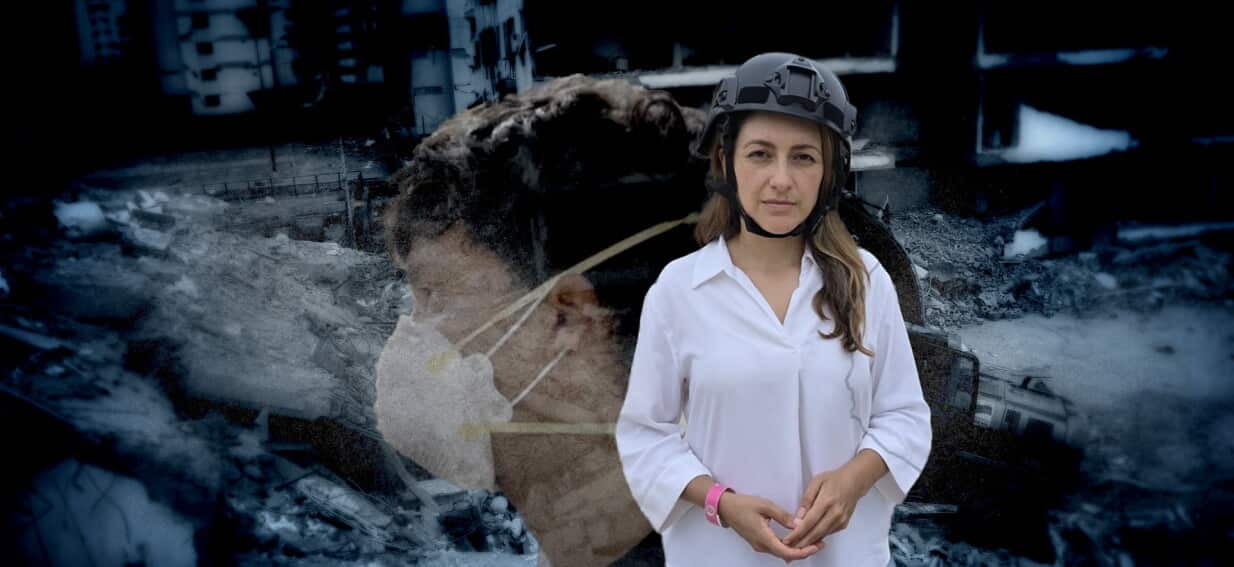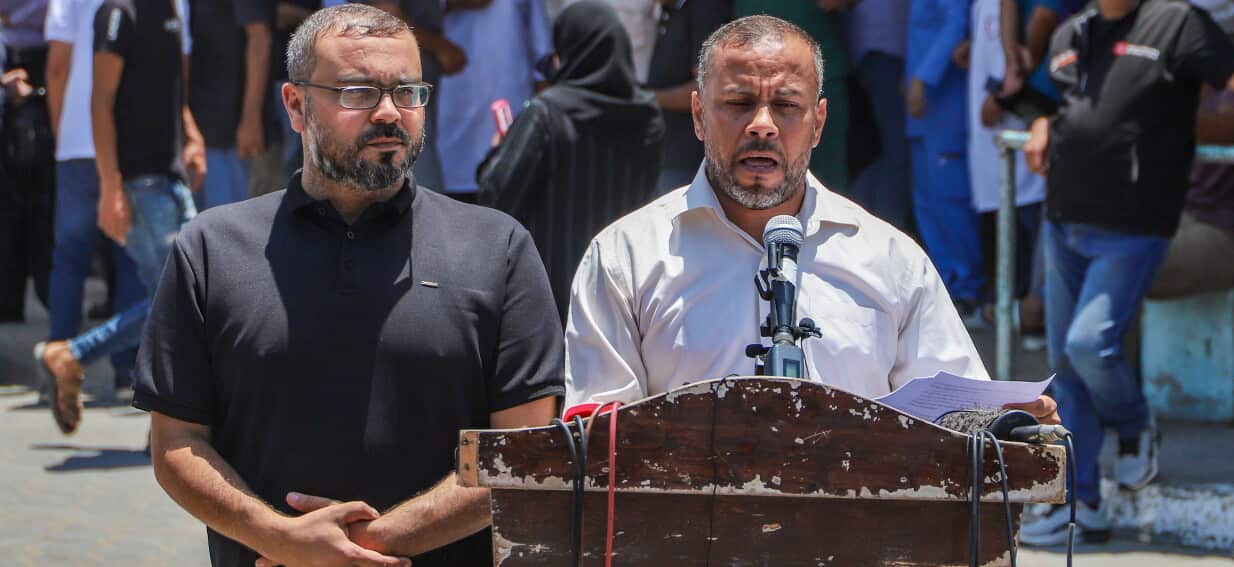
The United Nations Working Group on Arbitrary Detention issued an evaluation finding Israel's confinement of Gazan pediatrician and hospital director Hussam Abu Safiya legally non-compliant with international frameworks. This finding highlights a systemic legal friction between international humanitarian law and domestic security statutes during prolonged military conflicts. Analyzing this specific enforcement action requires an evaluation of the structural mechanism used to sustain it: the Unlawful Combatants Law.
The Legal Architecture of Indefinite Detention
The detention of state and non-state actors in conflict zones operates under distinct legal frameworks. The Israeli military detains specific individuals under a domestic legal statue known as the Unlawful Combatants Law. This framework establishes three specific operational conditions that depart from standard criminal procedure:
- Evidentiary Confidentiality: The state can present intelligence to a judicial review panel without disclosing the source material or specific allegations to the defense counsel.
- Absence of Formal Charges: The mechanism allows detention without a formal indictment, bypassing the standard requirement to establish a prima facie criminal case within a fixed period.
- Indefinitely Renewable Mandates: Detention orders are subject to mandatory periodic reviews, yet the law permits endless extensions based on updated or sustained security assessments.
Abu Safiya, the director of Kamal Adwan Hospital in northern Gaza, was taken into custody in December 2024. State authorities argue his detention remains lawful under this domestic statute, pointing toward an administrative classification of the individual as an operative within an adversary organization. Specifically, state records assert he holds a ranking position within the Hamas Military Medical Services. The defense, alongside Palestinian health officials, rejects this classification, asserting his status remains strictly civilian and medical.
This friction creates an irreconcilable gap between domestic statutory power and international treaty obligations. The UN Working Group evaluated the case against the Universal Declaration of Human Rights and the International Covenant on Civil and Political Rights. Because the state mechanism denies the detainee immediate access to legal counsel—up to 90 days in certain phases—and relies on non-disclosed evidence, the UN panel categorized the detention as structurally arbitrary.
The Operational Breakdown of Medical Neutrality
Under Article 24 of the First Geneva Convention, medical personnel engaged exclusively in the search for, collection, transport, or treatment of the wounded must be respected and protected under all circumstances. The ongoing detention of hospital administrators introduces an operational bottleneck into the localized healthcare ecosystem.
When a state apparatus exercises the Unlawful Combatants Law against medical directors, a multi-stage operational degradation occurs within the targeted healthcare facilities:
- Administrative Decapitation: Regulating logistics, supply chain management, and international aid coordination at a major medical facility requires specialized personnel. Removing a director immediately compromises the hospital's capacity to process incoming casualty volume.
- Resource Attrition: According to reports compiled by legal advocacy groups, at least 14 medical professionals from the same region have faced comparable long-term detentions without formal indictments. This systematically reduces the clinical capacity of remaining triage units.
- Deterrence of Medical Delivery: The enforcement mechanism signals to remaining healthcare staff that professional immunity under international humanitarian protocols is functionally secondary to domestic military intelligence mandates.
The state defense relies on the argument that protected status under the Geneva Convention is void if an individual engages in acts harmful to the adversary outside their humanitarian duties. However, the structural limitation of the current domestic framework rests on the non-disclosure of this evidence. By maintaining a closed evidentiary loop, the domestic judicial system insulates its conclusions from adversarial verification, rendering it incapable of satisfying international oversight standards.
The Systemic Jurisdictional Friction
The ruling by the UN Working Group lacks direct enforcement mechanisms. It operates instead as an analytical benchmark utilized by international tribunals to assess state compliance with human rights standards. The domestic legal system remains insulated from direct international intervention due to the principle of state sovereignty.
This creates a systemic bottleneck. The Supreme Court of Israel reviewed Abu Safiya's appeal against his ongoing detention and rejected it, validating the state's reliance on confidential intelligence files. This judicial validation establishes a precedent where domestic security imperatives supersede the procedural protections outlined in global human rights treaties.
The primary structural risk of this dynamic is the normalization of parallel legal tracks. One track maintains rigorous public accountability for domestic citizens, while the other applies a highly elastic, executive-driven detention process for non-citizens within occupied or contested territories. This division erodes the uniform application of international law, changing the definition of arbitrary detention from an objective legal standard to a function of geographical and political jurisdiction.
A permanent resolution to this legal gridlock requires structural adjustments to the judicial oversight process within conflict zones. States operating under emergency security legislation must introduce classified defense clearings for independent legal representatives, allowing a adversarial test of the evidence without compromising raw intelligence sources. Without this structural reform, domestic enforcement actions will continue to diverge from international legal frameworks, escalating international legal liability while degrading the functional baseline of local humanitarian systems.
Footage from the Supreme Court hearing shows the physical toll of this prolonged administrative custody on the hospital director.