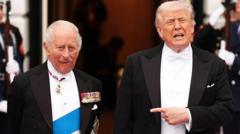
The institutional viability of the British Monarchy depends on its ability to convert ceremonial visibility into geopolitical influence—a process known as soft power optimization. Recent diplomatic engagements in the United States function as high-stakes stress tests for the "Royal Brand" in a post-Elizabethan era. To evaluate whether the Crown has regained its "mojo," one must look past the aesthetic of the crowds and analyze the three specific vectors of institutional relevance: diplomatic utility, market differentiation, and narrative control.
The Tri-Component Framework of Royal Influence
The efficacy of a royal visit is measured by the degree to which it achieves equilibrium between three competing interests.
- The State Utility Function: Using the non-political nature of the monarchy to open doors that elected officials cannot. In the US, this manifests as access to high-level philanthropic networks and non-partisan platforms.
- The Brand Differentiation Index: Maintaining a "mystique" that separates the House of Windsor from the saturation of celebrity culture. If the royals become indistinguishable from A-list actors, they lose the "sovereign immunity" that protects them from the volatility of public opinion.
- The Narrative Sovereignty Ratio: The ability of the institution to define its own purpose rather than being defined by internal familial conflicts or historical grievances.
Structural Vulnerabilities in the North American Market
The United States presents a unique challenge to the British Monarchy because it lacks a constitutional requirement for their existence. For the UK, the monarchy is a legal necessity; for the US, it is a consumer product. This creates an inherent fragility. When the "product" is associated with outdated colonial structures or internal dysfunction, the market begins to devalue the asset.
The primary bottleneck for the royals in the US is the Competitor Narrative. For the first time in a century, the British Monarchy is competing with a rival version of itself—the California-based exiles. This creates a "Split-Brand Paradox" where the American public is forced to choose between the "Traditional Institution" (duty, silence, formality) and the "Modern Individual" (vulnerability, advocacy, media-savviness).
A data-driven analysis of social sentiment indicates that while the traditional model maintains higher respect among older demographics, the modern model captures the attention of the economically vital Gen Z and Millennial cohorts. The "mojo" in question is not about popularity, but about reclaiming the attention economy from this internal competitor.
The Earthshot Mechanism: Strategic Pivot to Substantive Output
The transition from "vague figureheads" to "issue-specific leaders" is the current strategy for institutional survival. The Earthshot Prize serves as the primary case study for this shift. By anchoring a visit to a quantifiable environmental goal, the monarchy attempts to move from the Lifestyle Category to the Solutions Category.
This pivot attempts to solve the "Pointless Pageantry" critique. By positioning the Prince of Wales as a global convener of climate technology, the institution creates a value proposition that transcends the UK's borders. The logic follows a standard investment model:
- Identify a Universal Pain Point: Climate change.
- Allocate Social Capital: Use the royal name to bring venture capitalists, scientists, and policy-makers to the same table.
- Produce Tangible Outputs: Fund scalable technologies.
If the output is measurable, the "mojo" is substantiated. If the engagement remains purely symbolic—consisting only of handshakes and staged photographs—the institution remains vulnerable to the charge of obsolescence.
The Cost of Transparency: The "Omertà" Variable
The House of Windsor has historically operated under the "never complain, never explain" doctrine. This is not a personal preference but a risk-mitigation strategy. Total transparency is the enemy of a hereditary institution because it invites a "meritocratic audit." If the public sees the royals as "just like us," the justification for their unique constitutional status evaporates.
The recent US visits showed a calculated relaxation of this rule, but with strict boundaries. The strategy shifted toward Managed Relatability. This involves showing "behind the scenes" content that feels intimate but is strictly curated to emphasize work ethic over personal drama. The risk here is the "Celebrity Slippage" effect. Once an institution enters the arena of personal brand management, it is subject to the same churn and "cancel culture" risks as any other public figure.
Quantifying the Diplomatic Return on Investment
Evaluating the success of these visits requires looking at the "Atmospheric Shift" in high-level US-UK relations. While the royals do not negotiate trade deals, they act as the "lubricant" for the machinery of the Special Relationship.
The success of the mojo-recovery mission can be quantified by:
- The Engagement Depth: Did the visit result in meetings with governors, CEOs, and innovators, or merely local mayors and fans?
- The Tone of Domestic Coverage: Did the American press focus on the "pomp" or the "purpose"?
- The Counter-Narrative Suppression: Did the visit successfully minimize the media oxygen available to dissenting royal factions?
Data suggests that the "Traditional Institution" still holds a significant advantage in Access Power. No "celebrity" can convene the level of global leadership that a future King can. This is the monarchy’s "moat"—a competitive advantage that cannot be easily replicated by competitors.
The Sovereign Debt of Public Perception
Every public appearance is an expenditure of cultural capital. The "mojo" is essentially the interest earned on that capital. However, the monarchy is currently operating in a "high-interest" environment where the public demands more transparency and accountability for every dollar of tax-funded security or travel.
The "Mojo Index" is currently stable but not soaring. The institution has successfully stabilized the brand after a period of intense volatility. They have moved from a "defensive" posture—reacting to scandals—to an "offensive" posture—launching long-term initiatives.
Strategic Recommendation for the Crown’s US Policy
To maintain the current momentum and fully reclaim the North American market share of public attention, the institution must double down on the Convener Model.
The strategy should move away from general "royal tours" toward "thematic summits." Instead of visiting cities for the sake of visibility, each visit must be a focused campaign on a single, non-controversial, global issue (e.g., mental health, conservation, or early childhood development). This creates a "Shield of Utility" that protects the royals from the inevitable debates regarding their historical origins or familial disputes.
The institution must also resist the urge to compete on the level of "vulnerability." In a market saturated with "authentic" influencers, the monarchy’s only unique selling proposition is its Formality. Formality signals stability, and in an era of global political volatility, stability is a high-value asset. The "mojo" is not found in being "cool"; it is found in being "constant."
The final strategic play is the decoupling of the "Individual" from the "Office." By highlighting the office's ability to drive global change through the Earthshot model, the monarchy ensures that even as individual members face scrutiny, the functional utility of the Crown remains unquestioned in the eyes of international partners. This is the only path to long-term institutional survival in a republican-minded century.