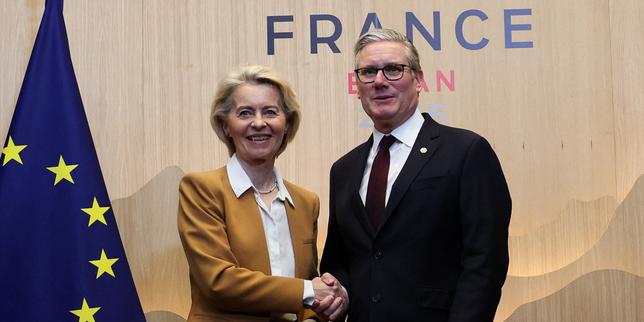
The upcoming bilateral summit between the European Union and the United Kingdom scheduled for July 22 in Brussels represents more than a diplomatic reset; it is a structural negotiation aimed at reducing the economic frictions introduced by the Trade and Cooperation Agreement (TCA). While political commentary often frames this event around vague concepts of goodwill and "reconnection," a rigorous strategic analysis reveals that the summit’s outcomes will be dictated by a hard calculus of regulatory divergence, supply chain bottlenecks, and asymmetric economic leverage. The primary objective for both parties is to optimize the current framework without reopening the highly sensitive core text of the TCA. This analysis deconstructs the structural variables, operational constraints, and strategic trade-offs that will determine the success or failure of the Brussels summit.
The Trilemma of Post Brexit Regulatory Economics
To understand the boundaries of the July 22 summit, one must analyze the structural constraints operating on both the British and European delegations. Any modification to the current EU-UK relationship is bound by a trilemma where only two of the following three pillars can be achieved simultaneously:
- Regulatory Autonomy: The freedom to establish independent domestic laws, standards, and enforcement mechanisms.
- Frictionless Market Access: The elimination of non-tariff barriers, sanitary and phytosanitary (SPS) checks, and rules-of-origin audits.
- Political Sovereignty: The rejection of external judicial oversight, specifically the jurisdiction of the European Court of Justice (ECJ).
The TCA prioritized Regulatory Autonomy and Political Sovereignty, which automatically introduced friction into the trading relationship. The Brussels summit cannot break this trilemma; instead, it seeks to identify marginal efficiencies within these boundaries.
The UK’s strategy centers on a "pragmatic alignment" model. By identifying sectors where domestic standards naturally mirror European baselines, British negotiators aim to secure mutual recognition agreements (MRAs) or simplified compliance verification processes. However, the EU’s negotiating posture remains anchored to the integrity of the Single Market. The European Commission views regulatory alignment not as a static agreement, but as a dynamic process. If the UK demands reduced border friction, the EU will require a mechanism for automatic alignment with updating Union standards—a condition that directly challenges the UK's pursuit of regulatory autonomy.
The Cost Function of Border Friction and Supply Chain Bottlenecks
The structural necessity of the summit is driven by the measurable accumulation of non-tariff barriers (NTBs) since the implementation of the TCA. These barriers operate as a systemic tax on cross-border commerce, disproportionately affecting high-velocity, just-in-time supply chains. The cost function of these frictions can be broken down into three operational bottlenecks.
Sanitary and Phytosanitary (SPS) Compliance Costs
For agribusiness, food products, and livestock, the imposition of third-country export health certificates (EHCs) has created permanent administrative drag. Each certificate requires veterinary sign-off, physical inspections at Border Control Posts (BCPs), and predetermined entry windows. The summit will attempt to address this through a veterinary or SPS agreement.
The structural model for this is the EU-Switzerland agreement, though the EU will likely push for a closer approximation of the EU-New Zealand model, which reduces inspection rates but does not eliminate documentation. Without a dynamic alignment treaty on veterinary standards, the cost per consignment will remain elevated, depressing the margin profile of UK agricultural exports.
Rules of Origin Auditing
The TCA provides tariff-free trade, but only for goods that originate within the respective territories. Verifying the local content threshold requires extensive supply chain auditing. For complex manufacturing sectors like automotive and aerospace—where components cross the English Channel multiple times during assembly—the administrative burden of proving origin often exceeds the value of the tariff saved. Negotiators in Brussels will examine whether diagonal cumulation or simplified certification processes can be applied to mitigate this overhead.
Technical Barriers to Trade (TBT)
Duplicative product certification regimes, such as the UK Conformity Assessed (UKCA) marking versus the European CE mark, force manufacturers to run parallel testing tracks. While the UK has indefinitely extended the recognition of the CE mark for many goods to protect domestic supply chains, British exporters to the EU still face the strict requirement of conforming to EU notified body assessments. The summit's technical working groups will prioritize streamlining these conformity assessment procedures to prevent further decoupling of industrial manufacturing networks.
The Asymmetry of Strategic Leverage
A critical flaw in standard commentary regarding EU-UK relations is the assumption of symmetrical interdependence. A data-driven assessment of trade volumes and economic scale highlights a significant structural imbalance that dictates the negotiating dynamics.
The UK relies on the European Union for roughly 42% of its total exports and 52% of its imports. In contrast, the UK accounts for less than 8% of the EU’s global trade portfolio. This asymmetry means that while trade disruptions can cause localized pain in specific European regions (such as French ports or German automotive hubs), they represent a systemic macroeconomic headwind for the United Kingdom.
Consequently, the European Union enters the July 22 summit from a position of structural dominance. The European Commission's chief negotiator will treat the summit as an enforcement and optimization exercise of existing treaties rather than a negotiation among equals. The UK must offer tangible cooperation in strategic arenas outside of pure trade to extract regulatory concessions from Brussels.
The Three Vectors of Cross Sectoral Trade offs
To secure marginal gains in market access, the UK delegation will need to deploy leverage in non-trade domains where it possesses structural advantages. The summit’s success will depend on how effectively these three distinct vectors are traded off against one another.
+-------------------------------------------------------------+
|              THE SUMMIT'S CORE NEGOTIATING VECTORS          |
+-------------------------------------------------------------+
|  1. DEFENSE & SECURITY      |  2. ENERGY MARKETS            |
|  - Intelligence sharing     |  - North Sea grid coupling    |
|  - Joint procurement        |  - Carbon pricing linkages    |
|  - Geopolitical alignment   |  - Electricity interconnects  |
+-----------------------------+-------------------------------+
|                             |  3. DATA & FINANCIAL SERVICES |
|                             |  - Equivalence stability      |
|                             |  - Cross-border data flows    |
+-------------------------------------------------------------+
Defense and Security Co-operation
The UK remains a primary military power in Europe, possessing advanced intelligence capabilities, a nuclear deterrent, and a significant expeditionary force. In the current geopolitical environment, the EU highly values structured security cooperation. The British strategy involves bundling a comprehensive defense and security pact with economic concessions. By offering formal mechanisms for joint defense procurement, intelligence sharing, and coordinated sanctions regimes, the UK seeks to build a framework of interdependence that inclines European leaders toward flexibility on technical trade barriers.
Energy Market Integration
The decoupling of UK and EU energy markets post-Brexit introduced inefficiencies in electricity interconnectors and gas flows, exacerbating price volatility during systemic shocks. The North Sea represents a shared asset for wind energy generation. Re-coupling the UK's emissions trading scheme (ETS) with the EU ETS, alongside optimizing the allocation of cross-border electricity flows through implicit allocative auctions, serves the economic interests of both parties. This sector represents the highest probability area for a mutually beneficial, high-yield agreement at the summit, as it aligns with the shared decarbonization mandates of Brussels and London.
Data Adequacy and Financial Services
The financial services sector, centered in the City of London, was largely excluded from the TCA, leaving it reliant on unilateral, revocable equivalence decisions by the European Commission. Simultaneously, cross-border digital commerce depends on the EU’s continued recognition of the UK's data protection regime as adequate under GDPR rules. The UK faces a delicate balancing act: it wishes to reform its domestic data laws to spur artificial intelligence and tech sector growth, but any significant divergence risks the revocation of EU data adequacy, which would instantly disrupt all trans-Channel digital workflows. The summit will serve as an early-warning radar for how much regulatory drift Brussels will tolerate before triggering retaliatory clauses.
Operational Limitations of the Summit
It is critical to distinguish between diplomatic rhetoric and institutional capacity. The July 22 summit cannot legally alter the text of the TCA or the Windsor Framework. Any agreements reached in Brussels will merely constitute political directives issued to the existing joint committees—specifically the EU-UK Partnership Council.
These joint committees operate under strict mandates and are bound by civil service timelines. Therefore, businesses operating across the English Channel must not expect immediate operational relief following the summit. The structural unwinding of border friction is an incremental process. Even under an optimal scenario where both political leaderships agree to a streamlined veterinary framework, the technical translation into customs software, border infrastructure adjustment, and staff training will require a multi-year implementation runway.
Furthermore, any sectoral agreement negotiated at the summit must comply with World Trade Organization (WTO) rules. Specifically, Article XXIV of the General Agreement on Tariffs and Trade (GATT) dictates that preferential trade treatments can only be granted within a comprehensive free trade agreement or an interim agreement leading to one. This prevents the EU and UK from cutting ad-hoc, discriminatory deals for specific industries without expanding those benefits to all WTO members, unless they fit neatly under recognized carve-outs for international standards.
Execution Blueprint for Cross Border Enterprises
Given the structural realities of the EU-UK relationship, corporate strategies must not be predicated on a rapid return to frictionless trade. The July 22 summit will define the outer limits of cooperation, but the operational baseline remains one of permanent regulatory divergence. Organizations navigating this corridor should execute a three-part risk mitigation framework.
First, decouple critical supply chains from reliance on short-term border flexibility. This requires establishing buffer stocks for high-value components and diversifying sourcing paths to avoid high-congestion Channel crossings. Second, implement automated compliance auditing tools capable of managing parallel regulatory tracks simultaneously, ensuring that changes to either the EU or UK rulebooks are flagged prior to product distribution. Third, treat energy and data flows as distinct risk vectors separate from physical goods, securing localized data storage options where possible to hedge against the potential degradation of the UK’s data adequacy status. The Brussels summit will clarify the trajectory of these rules, but operational resilience remains an internal corporate requirement.