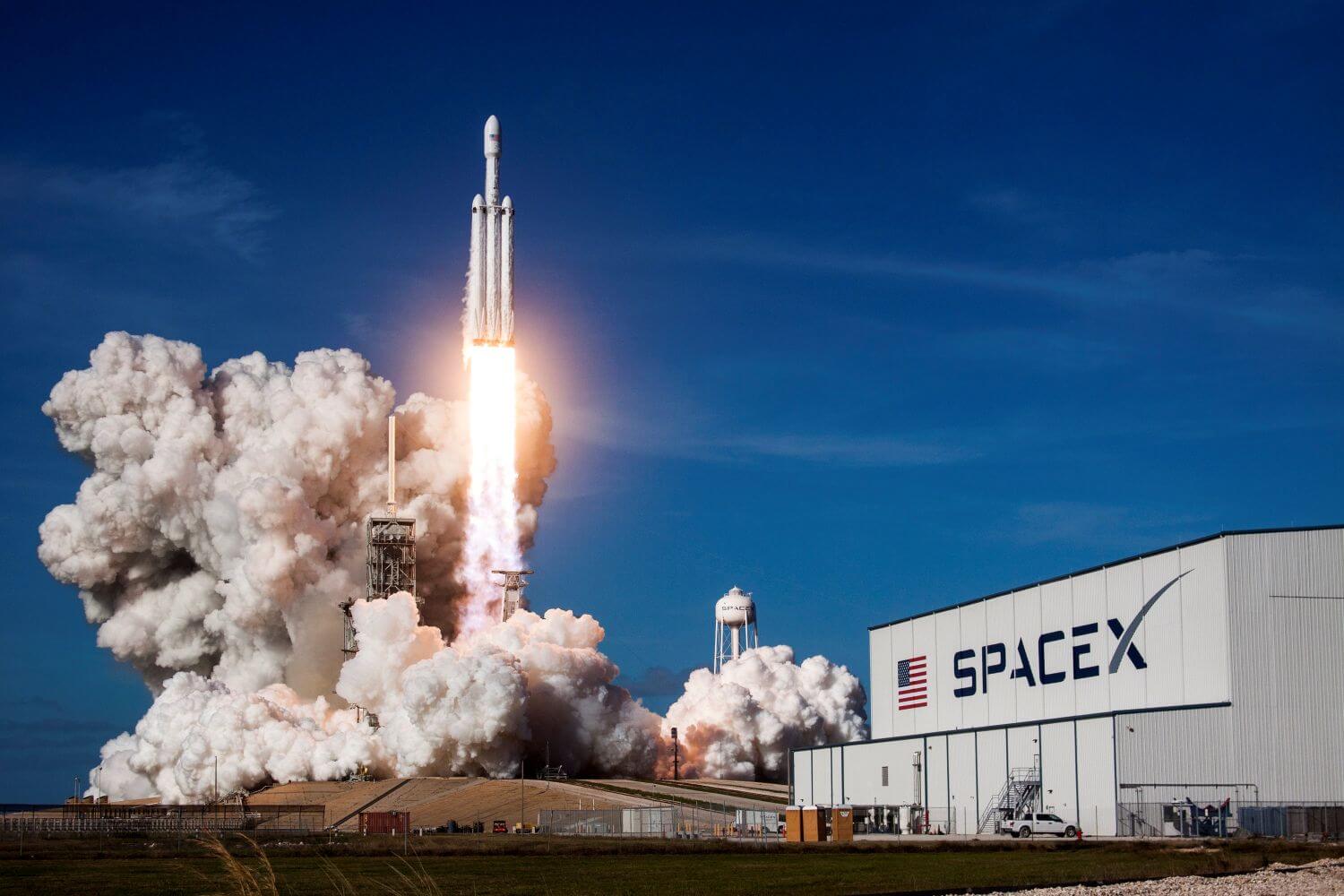
Eliminating landing legs from an orbital-class rocket booster is not an aesthetic choice; it is a mass-fraction optimization strategy that shifts structural risk from the flight vehicle to ground support equipment. When SpaceX executed the mid-air capture of the Super Heavy booster using mechanical arms mounted to the launch tower, the aerospace sector witnessed the physical validation of a closed-loop launch architecture. Most observers focus on the spectacle of a 70-meter stainless steel cylinder hovering beside a launch pad. That focus misses the underlying engineering reality. The catch mechanism—informally designated as "Mechazilla"—is an economic instrument designed to compress turnaround times from months to hours while recovering dry mass margins that directly translate into payload capacity.
To understand why catching a booster in mid-air alters the fundamental unit economics of spaceflight, one must strip away the dramatic framing of standard aerospace reporting and examine the physics, structural mechanics, and operational bottlenecks governing orbital launch systems.
The Tyranny of the Rocket Equation and Dry Mass Penalties
Every orbital launch vehicle operates under the constraints of the Tsiolkovsky rocket equation, which dictates that the change in velocity ($\Delta v$) a vehicle can achieve is logarithmically proportional to the ratio of its initial wet mass to its final dry mass. In a conventional expendable rocket, the first-stage booster is discarded after propellant depletion, meaning its dry mass no longer penalizes the upper stage. In a reusable system, however, the booster must retain enough propellant to decelerate, re-enter the atmosphere, and execute a terminal landing burn.
This recovery requirement introduces a compounding mass penalty. Every kilogram of landing hardware—specifically deployable landing legs, hydraulic actuators, and the reinforced structural hardpoints required to absorb vertical impact loads—must be lifted through the thickest part of Earth's atmosphere during ascent.
- The Structural Mass Multiplier: Landing legs on an orbital booster like the Falcon 9 weigh roughly two metric tons. Scaling that architecture up to a Super Heavy booster—which carries approximately 3,400 metric tons of subcooled liquid methane and liquid oxygen—would require massive, articulated landing gear capable of supporting a dry mass exceeding 200 metric tons upon touchdown.
- Propellant Overhead: Lifting that additional structural mass requires extra ascent propellant. Carrying extra ascent propellant requires larger tanks and higher thrust, which further increases dry mass.
- Payload Erosion: On a fully reusable two-stage vehicle, payload mass to Low Earth Orbit (LEO) represents a tiny fraction—often between two and four percent—of total liftoff mass. Adding five metric tons of landing gear to the booster does not reduce payload capacity by five metric tons; through the compounding effects of stage mass ratios, it can erode upper-stage payload delivery by a significant percentage.
Transferring the capture apparatus to the Orbital Launch Mount (OLM) breaks this cycle. By off-loading the landing gear onto the tower, the booster only needs two small, static load-bearing pins—commonly referred to as lift points or catch pins—integrated directly into its upper interstage structure. These pins serve a dual purpose: they act as the hoisting interface when stacking the vehicle prior to launch, and they serve as the structural load path during mid-air capture.
Kinematic Sequence of the Tower Catch
Executing a mid-air capture requires synchronizing hypersonic aerodynamics, real-time trajectory optimization, and heavy industrial hydraulics within a margin of error measured in centimeters. Unlike a drone ship landing, where a booster aims for a flat deck roughly 50 meters wide, a tower catch requires threading a 9-meter-wide cylinder between two mechanical arms while accounting for wind shear, engine gimbal latency, and residual propellant slosh.
Atmospheric Entry and Terminal Guidance
Following hot-staging separation—where the Starship upper stage ignites its engines while still attached to the booster to preserve momentum—Super Heavy executes a boostback burn using a subset of its Raptor engines. This maneuver reverses its horizontal velocity vector, placing it on a ballistic trajectory back toward the launch site in Boca Chica, Texas.
During atmospheric descent, the booster relies on four actuated hypersonic grid fins to control pitch, yaw, and roll. Unlike flat planar fins, grid fins maintain aerodynamic authority across transonic and supersonic regimes without stalling at high angles of attack. The vehicle's flight computers continuously solve an onboard convex optimization problem, recalculating the optimal trajectory thousands of times per second to compensate for atmospheric density variations and crosswinds. Crucially, the trajectory is deliberately biased slightly offshore until the final seconds of the landing burn. If any telemetry parameter—such as engine chamber pressure, hydraulic actuator response, or inertial measurement unit (IMU) alignment—falls outside strict safety thresholds, the vehicle maintains its trajectory into the Gulf of Mexico rather than colliding with the ground infrastructure.
The Terminal Deceleration and Capture Envelope
As the booster approaches the launch tower, it relights a central cluster of Raptor engines to bleed off terminal velocity. At this stage, the aerodynamic drag provided by the grid fins diminishes rapidly as airspeed drops, shifting control authority entirely to thrust vector control (TVC) via engine gimbaling.
The capture envelope is defined by three strict kinematic boundaries:
- Vertical Velocity ($V_z$): Must approach zero precisely as the catch pins align with the vertical plane of the tower arms. A residual downward velocity exceeding structural tolerances would shear the pins or buckle the upper tank dome.
- Horizontal Velocity ($V_x, V_y$): Lateral drift must be damped out before contact. The booster approaches the tower at a slight angle, translating laterally into the gap between the open arms only after confirming stable hover authority.
- Attitudinal Alignment (Roll, Pitch, Yaw): The catch pins are positioned at specific radial coordinates on the booster's forward section. The grid fins and engine gimbals must hold the vehicle's roll orientation within a narrow angular window so the pins sit squarely over the shock-absorbing rails mounted atop the arms.
Once the booster enters the capture zone, the two mechanical arms—driven by massive hydraulic rams and pulley systems—swing inward. These arms do not grab the booster with a vise-like grip; rather, they close underneath the catch pins, forming a structural cradle. As the Raptor engines throttle down and shut off, the booster settles onto the arms, which absorb the remaining kinetic energy through integrated hydraulic dampers and sliding carriage tracks.
Shifting Risk from Vehicle to Ground Support Equipment
Traditional aerospace engineering treats the launch pad as passive infrastructure—a concrete slab with flame trenches, propellant umbilicals, and a lightning protection system. The Starship architecture inverts this relationship, transforming the launch tower into an active mechanical participant in the flight profile.
This architectural shift introduces a distinct set of engineering trade-offs. While removing landing legs reduces flight-vehicle complexity and mass, it concentrates operational risk at a single point of failure: the launch mount.
If a Falcon 9 booster suffers an engine-out anomaly or a guidance sensor failure during a landing burn on an autonomous spaceport drone ship, the worst-case scenario is the loss of the booster and localized deck damage to a replaceable marine vessel. If Super Heavy experiences a comparable failure within the final three seconds of a tower catch, the resulting explosion could destroy the Orbital Launch Mount, the tank farm, the quick-disconnect umbilical tower, and the catch arms themselves. Rebuilding a specialized orbital launch complex requires months of civil engineering and hundreds of millions of dollars in capital expenditure, halting the entire launch cadence of the program.
Furthermore, thermal management becomes an acute ground-engineering challenge. During the final hover, the Raptor engines exhaust superheated methane-oxygen combustion products directly adjacent to the tower structure and propellant lines. Every sensor, hydraulic line, and structural weld on the catch arms must be shielded against acoustic vibration exceeding 160 decibels and convective heat flux that can warp unprotected steel.
Operational Cadence and the Airline Model of Spaceflight
The strategic objective behind mid-air capture is not merely booster reuse; it is rapid booster reuse. The Falcon 9 program demonstrated that orbital boosters can be recovered and reflown more than twenty times, driving down marginal launch costs and allowing SpaceX to capture the majority of global commercial launch mass. However, Falcon 9 recovery remains operationally labor-intensive.
After landing on a drone ship hundreds of kilometers downrange, a Falcon 9 booster must be secured to the deck by a marine crew, transported back to port over several days, lifted off the vessel by a crane, folded horizontal onto a transporter, driven back to a hangar, inspected, fitted with new thermal protection components, and re-integrated with a second stage. Even under optimal conditions, this post-flight logistics chain takes weeks.
Catching Super Heavy directly on the launch mount compresses this entire maritime and terrestrial logistics pipeline into a single automated sequence:
- Immediate Re-stacking: Because the booster is caught by the same arms used to stack the rocket, it is already positioned at the launch site. Once residual propellants are vented and post-flight diagnostics verify structural integrity, the arms can lower the booster directly back onto the launch ring.
- Elimination of Refurbishment Bottlenecks: Without landing legs to inspect, retract, or replace, the external mechanical interfaces requiring post-flight maintenance are reduced to the grid fin actuators, the heat shield around the engine skirt, and the engine nozzles themselves.
- Propellant Tanking and Turnaround: With the booster seated on the mount, the quick-disconnect arm can immediately re-engage to load subcooled propellants while a crane or the tower arms lift a newly refurbished or newly manufactured Starship upper stage onto the interstage.
In economic terms, this converts a launch vehicle from a bespoke aerospace asset into high-utilization capital equipment. When fixed capital costs—manufacturing facilities, launch towers, engineering payroll—are amortized over hundreds of flights per year rather than dozens, the cost per kilogram to orbit drops by an order of magnitude.
Unresolved Engineering Constraints and Failure Modes
While the mechanical capture of a Super Heavy booster proves the viability of the guidance and control algorithms, scaling this maneuver into a routine, airline-style operation presents unresolved technical hurdles.
Acoustic and Thermal Fatigue on Ground Infrastructure
Repeatedly exposing the launch tower and catch arms to the exhaust plume of multiple Raptor engines accelerates metallurgical fatigue. High-frequency acoustic vibrations induce micro-cracking in welds, while rapid thermal cycling degrades protective coatings and hydraulic seals. Maintaining a high launch cadence requires designing ground support equipment with modular, rapidly replaceable wear components—essentially treating sections of the launch tower like consumable brake pads rather than permanent civil infrastructure.
Upper-Stage Thermal Protection System (TPS) Parity
A reusable booster solves only half of the orbital economics equation. Super Heavy separates at roughly Mach 5 to Mach 7, experiencing moderate thermal loads compared to the Starship upper stage, which must re-enter Earth's atmosphere at orbital velocities approaching Mach 25. While the booster can be caught and turned around rapidly, achieving true full reusability requires the upper stage's hexagonal ceramic heat shield tiles to survive orbital re-entry without requiring weeks of manual inspection and replacement. Until upper-stage thermal protection achieves the same operational maturity as booster propulsion, the overall system cadence will remain gated by second-stage refurbishment.
Regulatory and Airspace Containment
Executing a return-to-launch-site (RTLS) trajectory over populated coastlines requires continuous engagement with aviation and spaceflight regulators. Every catch attempt necessitates clearing massive swaths of commercial airspace and maritime corridors. As launch frequency increases from monthly test flights to weekly or daily operational missions, static airspace closures become economically untenable for commercial aviation. SpaceX and regulatory bodies will need to deploy dynamic, real-time corridor management systems that narrow exclusion zones to minutes rather than hours.
Strategic Trajectory for Aerospace Competitors
The successful execution of a mid-air booster catch invalidates the strategic roadmaps of competitors still developing partially reusable rockets with deployable landing legs or downrange marine recovery. Downrange landing architectures impose an inherent ceiling on launch cadence due to transit times and maritime weather dependencies.
To remain viable in a market defined by fully reusable heavy-lift vehicles, competing launch providers and national space agencies must immediately pivot their development frameworks:
- Abandon Expendable Upper Stages: Any launch architecture that discards its second stage cannot compete on cost per kilogram once fully reusable systems reach operational cadence, regardless of how efficiently the first stage is recovered.
- Integrate Ground and Vehicle Engineering: Aerospace firms must stop treating launch pads as separate civil engineering contracts and begin co-designing ground capture systems alongside flight hardware to capture mass-fraction efficiencies.
- Prioritize Propellant Densification and Full-Flow Staged Combustion: Achieving the thrust-to-weight ratios required for mid-air hover and capture demands high-chamber-pressure engines burning densified propellants. Legacy kerosene and hydrogen architectures lack the volumetric efficiency and rapid reusability characteristics required to execute pinpoint terminal hover maneuvers at scale.