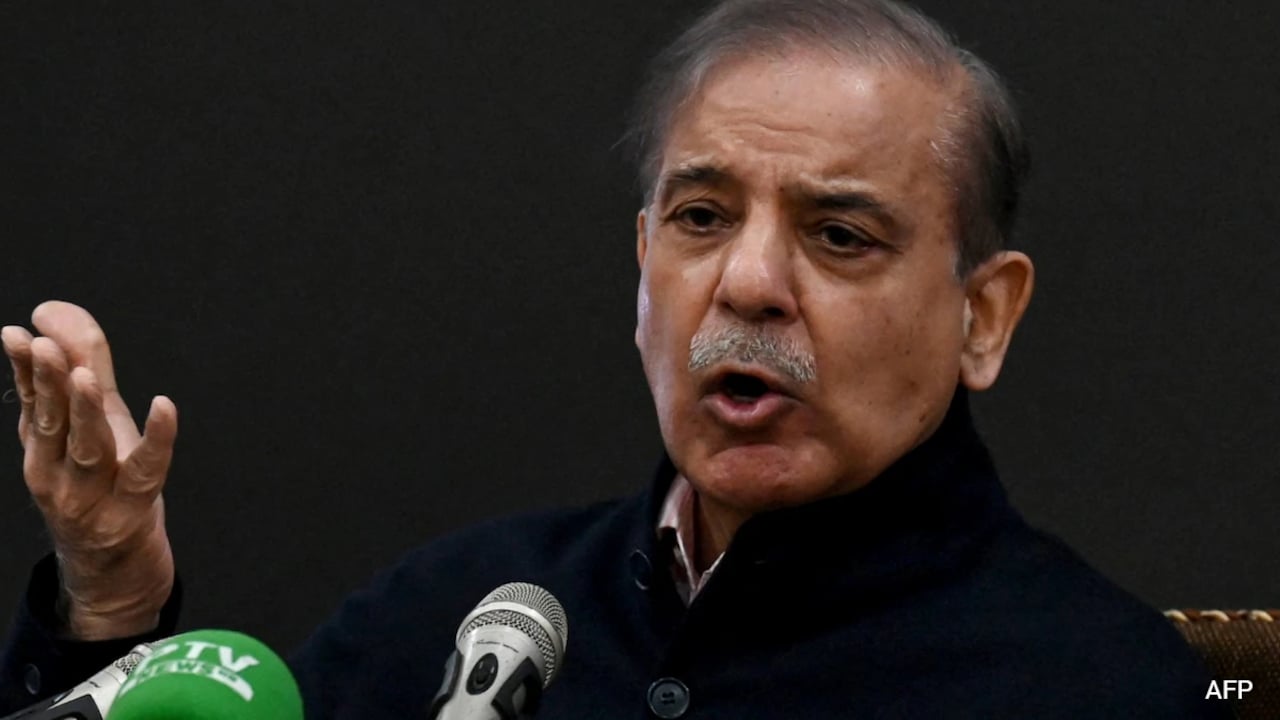
The electronic signing of the Islamabad Memorandum of Understanding (MoU) by the United States and Iran marks a critical inflection point in the maritime and energy sectors. Announced by Pakistani Prime Minister Shehbaz Sharif, the agreement purports to "instantly" reopen the Strait of Hormuz and "immediately" lift the United States naval blockade of Iranian ports. To evaluate the true systemic impact of this diplomatic development, the political rhetoric must be separated from the operational, structural, and economic realities of maritime logistics, commercial shipping insurance, and nuclear counter-proliferation.
Political declarations of instantaneous operational shifts ignore the physical and regulatory inertia inherent to global shipping. Reopening a war-torn maritime chokepoint through which approximately 20 percent of global oil consumption transited pre-conflict involves a complex sequence of risk mitigation, demining, and infrastructure verification. Meanwhile, you can find other developments here: The Eight Ship Scare How Media Outlets Overblow Standard Naval Patrols into Imminent Invasions.
The Operational Friction of Chokepoint Reactivation
The primary constraint on the "instant" resumption of commercial transit through the Strait of Hormuz is the physical state of the waterway. The conflict, which began on February 28, 2026, saw active military engagements, missile salvos, and drone deployments. Restoring maritime traffic requires an initial phase of explosive ordnance disposal (EOD) and naval surveying.
The draft terms of the agreement reveal that while the political mandate is immediate, the execution framework is phased. A 60-day technical negotiation window underpins the MoU. Within this window, specific operational steps dictate the timeline: To see the bigger picture, check out the excellent analysis by BBC News.
- Mine Clearance and Hydrographic Surveying: The initial 30 days require the Islamic Republic of Iran to identify, locate, and clear any naval mines or unexploded ordnance deployed within the shipping lanes and traffic separation schemes of the strait.
- Verification of Navigational Aids: Destruction of radar infrastructure, lighthouses, and electronic automated identification system (AIS) land stations during the conflict necessitates technical recalibration by regional maritime authorities.
- Port Infrastructure Readiness: The lifting of the United States naval blockade on Iranian ports does not automatically translate into cargo throughput. Ports such as Bandar Abbas require rapid structural assessment of berths, loading arms, and oil terminal facilities that faced bombardment or prolonged maintenance neglect during the blockade.
Commercial maritime operators do not deploy capital based on political signatures; they operate on risk assessments certified by marine underwriters. The Joint War Committee (JWC) of the Lloyd's Market Association will dictate the true timeline of the reopening. The region will remain designated as a Listed Area for war, piracy, terrorism, and related perils until independent verification proves the threat vector has subsided. Consequently, shipowners face prohibitive War Risk Protection and Indemnity (P&I) premiums. This economic reality creates a lag between the political declaration of an open strait and the actual return of commercial vessel density.
The Financial Architecture and Asset Realignment
The economic baseline of the Islamabad MoU hinges on a high-stakes exchange of immediate asset liquidity for phased strategic concessions. Reports circulating from regional news organs, including Iran’s state-affiliated Mehr agency, point to a multi-tiered financial structure that remains a point of intense friction between Washington and Tehran.
The first financial pillar involves the reported repatriation of $24 billion in frozen Iranian assets held in overseas escrow accounts. The sequencing of this release is highly contested. Iranian hardliners have demanded that 50 percent ($12 billion) be made liquid prior to the formal commencement of the 60-day technical nuclear negotiations. The United States executive branch, conversely, maintains that any structural sanctions relief will be strictly phased, back-loaded, and directly tied to verifiable milestones verified by the International Atomic Energy Agency (IAEA).
The second financial variable is the rumored creation of a $300 billion post-war reconstruction fund for Iran, financed by Western allies and regional partnerships. While Iranian state media has amplified this figure to project domestic victory, senior United States officials have confirmed that no such concrete commitment exists within the signed MoU text. Instead, the framework outlines potential multilateral investment guarantees conditional upon a comprehensive, binding United Nations Security Council resolution at the end of the 60-day window.
The immediate market impact has reflected these structural uncertainties. While Brent crude futures fell sharply to a three-month low below $80 per barrel upon the initial announcement, prices rapidly clawed back losses, settling near $87.33. This volatility reflects a market pricing in the high probability of execution failure. Traders understand that the current drop in oil prices is driven by speculative sentiment rather than physical barrels immediately hitting the water.
[Pre-War Base: ~21M bpd] ---> [Conflict Blockade: ~0-2M bpd] ---> [MoU Phased Reopening: Gradual return over 30-60 days]
The Nuclear Down-Blending and Verification Bottleneck
The structural core of the United States strategic calculus in accepting the Islamabad MoU is the immediate mitigation of Iran's breakout capability. The conflict was largely precipitated by the rapid advancement of Iran's enrichment facilities following previous diplomatic collapses.
Under the technical terms of the newly minted framework, Iran must execute an immediate down-blending of its highly enriched uranium (HEU) stockpiles, specifically those enriched to 60 percent purity, which sit dangerously close to weapons-grade thresholds (90 percent). The operational protocol demands:
- On-Site Dilution: Rather than exporting the enriched material to a third party like Russia or Kazakhstan—a mechanism utilized in the 2015 JCPOA but politically unfeasible in the current geopolitical alignment—Iran must mix its HEU with depleted or natural uranium on-site to reduce its enrichment level back to low-enriched uranium (LEU) status (under 5 percent).
- Continuous Inspection Access: IAEA inspectors must be granted immediate, unhindered access to the primary enrichment facilities at Natanz and Fordow to monitor the down-blending process via real-time telemetry and physical verification.
- Centrifuge Deactivation: The physical disconnection of advanced IR-6 and IR-9 centrifuge cascades must occur concurrently with the lifting of specific sectoral sanctions on Iranian petrochemicals.
The technical bottleneck lies in the verification timeline. The physical process of down-blending metric tons of uranium hexafluoride gas takes weeks, and verifying the exact material balance sheet requires rigorous mass spectrometry analysis. The Trump administration has communicated that it will know within days or weeks if Iran is stalling. A return to military kinetic options remains explicitly on the table, with Washington reserving the right to execute targeted strikes if compliance metrics are missed.
Regional Geopolitical Fracture Lines
The mediation of the Islamabad MoU highlights a significant shift in regional diplomatic architecture, driven primarily by Pakistan and Qatar. Islamabad’s role as the central mediator underscores its acute vulnerability to a prolonged Persian Gulf conflict. Pakistan imports over 80 percent of its oil requirements, and the wartime spike in crude prices pushed its balance of payments to the brink of insolvency. By facilitating the electronic signing, Pakistan sought to stabilize its own macroeconomic indicators.
The diplomatic success of the mediation team, which included Qatari backing and logistical support from Saudi Arabia, Egypt, and Turkey, faces a stark containment barrier: Israel. The state of Israel was a co-belligerent with the United States at the launch of operations on February 28, 2026. However, the current framework was negotiated largely as a bilateral understanding between Washington and Tehran.
This divergence creates a primary security bottleneck in southern Lebanon and Syria. While the MoU dictates an immediate and permanent halt to military operations across all fronts, including Lebanon, the Israeli security cabinet has explicitly rejected any binding constraints on its operational freedom. Israeli forces currently occupy strategic positions in southern Lebanon seized during the active phase of the conflict. The Israeli administration has stated that its military will not withdraw from these buffer zones until Hezbollah is physically pushed north of the Litani River and its missile infrastructure is dismantled.
This decoupling of United States and Israeli strategic objectives means that while the formal interstate war between the US and Iran may enter a cooling phase, the proxy architecture remains highly volatile. A single tactical miscalculation by Hezbollah or a preemptive Israeli airstrike in Damascus could trigger an Iranian retaliatory response, instantly invalidating the ceasefire provisions of the MoU.
Furthermore, domestic friction within Iran introduces structural risk. The deal was signed with the endorsement of President Masoud Pezeshkian and lead negotiator Mohammad Bagher Ghalibaf. Yet, Ghalibaf has already publicly stated that the Strait of Hormuz will not return to pre-war conditions. He asserted that Iran intends to charge transit fees to commercial vessels after the 60-day toll-free period stipulated in the agreement expires. This position directly contradicts the United States position that the strait must remain permanently toll-free under international maritime law, signaling that the upcoming technical talks in Switzerland will be highly adversarial.
Strategic Forecast and Implementation Risk
A clinical analysis of the Islamabad MoU indicates that the transition from a wartime blockade to a normalized maritime environment will be bumpy, non-linear, and prone to sudden reversals. Corporate planners, energy traders, and maritime logistics operators must structure their strategies around a realistic risk matrix rather than political declarations.
The most probable scenario over the next 30 days is a highly cautious, incremental return of regional shipping. Initial transits will likely be restricted to state-owned tankers carrying sovereign risk, while private international fleets wait for the formal signing ceremony in Switzerland and the subsequent JWC risk reassessments.
The primary risk variable to monitor is the material balance of Iran's nuclear material. If the IAEA cannot verify the initialization of the down-blending protocol within the first 14 days of the technical negotiations, the United States will face intense domestic and allied pressure to snap back sanctions and resume naval interdictions.
Organizations exposed to Persian Gulf logistics should maintain alternative supply chain routing through the East-West Pipeline in Saudi Arabia or Oman’s ports outside the chokepoint, keeping war risk insurance contingencies active through the third quarter of 2026. The structural baseline of the regional security architecture has been altered, but a permanent equilibrium remains unachieved.


