The cessation of hostilities between Israel and Hezbollah is not a resolution of conflict but a transition into a high-friction monitoring phase where the absence of war depends on the precise calibration of enforcement mechanisms. The current diplomatic framework relies on a tripartite structure: the withdrawal of Hezbollah forces north of the Litani River, the retreat of the Israel Defense Forces (IDF) from Lebanese territory, and the deployment of the Lebanese Armed Forces (LAF) as the sole legitimate security entity in the south. This architecture is structurally vulnerable because it assumes the LAF possesses the operational capacity and political mandate to displace a non-state actor that has spent decades integrating into the local socio-political fabric. The survival of this agreement rests on whether the cost of violation exceeds the perceived strategic utility of kinetic engagement for both parties.
The Dual-Incentive Calculus of Violation
The immediate instability observed following the ceasefire’s implementation stems from a fundamental disagreement on the definition of "defensive posture." Israel views any movement of Hezbollah personnel or equipment toward the border as an existential breach, justifying preemptive strikes. Hezbollah views continued Israeli overflights and targeted strikes on returning displaced persons as a violation of sovereignty, justifying retaliatory posturing.
This creates a Response Loop Inefficiency. In a standard military engagement, escalation serves a clear tactical goal. In this ceasefire, however, both sides are testing the "rules of engagement" (ROE) in real-time. Israel seeks to establish a precedent of freedom of action within Lebanese territory to prevent the re-establishment of Hezbollah’s "Line of Contact." Conversely, Hezbollah aims to prove that the ceasefire does not equate to a surrender of its presence south of the Litani.
The Enforcement Deficit
The Monitoring and Enforcement Mechanism, chaired by the United States and involving France, UNIFIL, and the LAF, lacks a kinetic enforcement arm. International monitors can document breaches, but they cannot physically stop them. The burden of physical enforcement falls on the LAF.
The LAF faces a Functional Bottleneck:
- Resource Constraints: The LAF is severely underfunded and lacks the heavy weaponry required to challenge a battle-hardened Hezbollah if cooperation fails.
- Political Legitimacy: Roughly one-third of the Lebanese population—and a significant portion of the army’s rank-and-file—hails from the Shia community. Forcing a direct military confrontation with Hezbollah risks fracturing the army along sectarian lines, potentially sparking internal civil strife.
- Sovereignty Paradox: If the LAF fails to act, Israel will step in to enforce the terms itself. This creates a cycle where Israeli intervention undermines the LAF's authority, making it even harder for the Lebanese government to assert control.
The Litani Buffer Zone and the Physics of Withdrawal
The geographic focus of the agreement is the 30-kilometer zone between the Blue Line and the Litani River. The logistical reality of "withdrawing" a guerrilla force is distinct from that of a conventional army. Unlike the IDF, which moves in visible columns of tanks and armored personnel carriers, Hezbollah operates via a "stay-behind" infrastructure.
Subterranean and Civilian Integration
Hezbollah’s presence is not merely a collection of personnel; it is an integrated network of hardened tunnels, weapons caches embedded in residential structures, and social service centers. True withdrawal would require the total dismantling of these fixed assets. The current agreement focuses on the movement of "armed elements," which allows for a high degree of ambiguity. If a Hezbollah operative remains in their home village but stores their rifle in a basement, have they withdrawn?
The Intelligence-Verification Gap occurs because UNIFIL and the LAF cannot conduct intrusive searches of private residences without specific, actionable intelligence. Israel fills this gap with aerial surveillance and SIGINT (Signals Intelligence). When Israel detects movement they deem a threat and strikes, the Lebanese government characterizes it as a violation of the ceasefire. This creates a permanent state of tactical friction where "compliance" is a matter of interpretation rather than observable fact.
Economic and Demographic Pressures as Stabilizing Variables
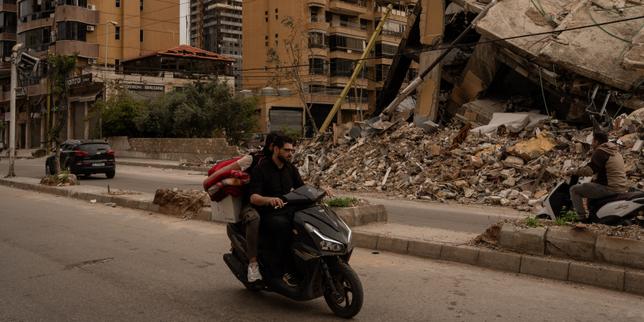
While military dynamics point toward instability, economic variables provide a countervailing force. Lebanon’s economy has contracted by over 80% since 2019. The cost of rebuilding the south is estimated in the billions of dollars.
For the Lebanese government, the ceasefire is a mandatory precursor to unlocking international reconstruction aid. Without a stable environment, foreign donors and the Lebanese diaspora will not commit capital to rebuilding infrastructure. Hezbollah, as a political entity, also faces pressure from its constituency. The Shia community in the south has borne the brunt of the displacement and destruction. A return to active conflict in the immediate term would risk alienating its core support base, which requires a period of recovery.
On the Israeli side, the domestic pressure to return displaced residents to the northern Galilee is the primary political driver. The Israeli government cannot declare the mission a success if the northern communities remain ghost towns. Therefore, Israel is incentivized to maintain the ceasefire only as long as it successfully suppresses Hezbollah’s long-range fire capabilities and prevents the re-infiltration of the Radwan Force.
The Role of External Guarantors
The involvement of the United States and France introduces a layer of Diplomatic Insurance. The U.S. provides the intelligence and technical support necessary to monitor the border, while France offers a diplomatic bridge to the Lebanese state.
However, this insurance is subject to the Great Power Divergence:
- U.S. Priority: The Washington objective is the containment of Iranian influence and the prevention of a regional conflagration that would require direct American intervention.
- French Priority: Paris views Lebanon through a lens of historical and cultural ties, prioritizing the preservation of Lebanese state institutions and preventing a total collapse of the Maronite-led political order.
If these two powers disagree on what constitutes a "tolerable violation," the enforcement mechanism will paralyze. If Israel strikes a target and the U.S. defends it as "self-defense" while France condemns it as a "violation of sovereignty," the diplomatic cover for the ceasefire evaporates.
The Iranian Factor and the Proxy Equilibrium
Hezbollah does not operate in a vacuum. Its strategic decisions are calibrated against the broader interests of the Islamic Revolutionary Guard Corps (IRGC). For Tehran, Hezbollah serves as a "First Strike" deterrent against an Israeli attack on Iranian nuclear facilities.
If Iran perceives that Hezbollah is being systematically degraded during the "peace" phase—through targeted Israeli assassinations or the destruction of its remaining missile stockpiles—it may calculate that a return to active conflict is preferable to a slow strangulation. The ceasefire is, therefore, a component of the wider Iran-Israel Shadow War. Any escalation in the Persian Gulf or the Red Sea can manifest as a deliberate violation of the ceasefire in Southern Lebanon.
Technical Markers of Imminent Collapse
To predict the durability of this agreement, one must monitor specific technical triggers rather than political rhetoric:
- The Re-entry Threshold: The speed and volume of displaced Lebanese returning to villages south of the Litani. If Israel blocks these returns or strikes returning civilians suspected of being operatives, the ceasefire will fail within weeks.
- LAF Deployment Density: The number of LAF brigades successfully stationed in the south. Anything less than four full brigades indicates a lack of serious enforcement intent.
- Airspace Violations: The frequency of Israeli IAF sorties over Beirut. These are seen as the ultimate sign of Lebanese sovereign weakness and are frequently used by Hezbollah to justify breaking the ceasefire.
- The "Grey Zone" Frequency: Small-scale skirmishes—IEDs, sniper fire, or drone incursions—that fall below the threshold of "total war" but erode the psychological confidence in the agreement.
Strategic Forecast: The Transition to Permanent Low-Intensity Friction
The most probable outcome is not a return to total war or a transition to a lasting peace, but the establishment of a Permanent Low-Intensity Friction Zone. We are entering a period where the "ceasefire" is a nominal state punctuated by frequent kinetic incidents.
The strategy for international actors must shift from "monitoring for peace" to "managing the friction." This requires:
- De-linking the Fronts: Ensuring that incidents in Gaza or Iran do not automatically trigger a breakdown in Lebanon.
- Professionalizing the Enforcement Committee: Moving beyond political appointments to a technical, data-driven body that can adjudicate violations using objective satellite and SIGINT data within hours of an incident.
- Strengthening the LAF's Logistics: Focusing aid on the LAF’s ability to sustain troops in the south, including fuel, food, and communication equipment, rather than just lethal weaponry.
The ceasefire will survive only if the parties accept a degree of "uncomfortable ambiguity." If either side demands absolute security and total compliance, the inherent contradictions of the agreement will lead to a rapid kinetic reset. The current fragility is not a bug in the system; it is a fundamental feature of a truce between two parties that still view each other's existence as an unacceptable risk.