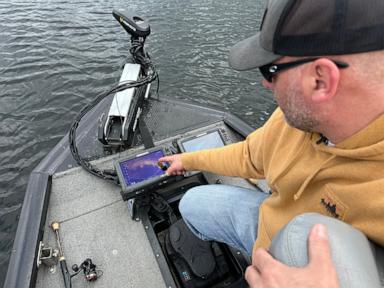
The introduction of LiveVü or forward-facing sonar (FFS) represents the most disruptive technological shift in aquatic recreation since the commercialization of the internal combustion outboard motor. By converting acoustic telemetry into real-time, high-definition visual vectors, FFS eliminates the foundational variable of traditional angling: environmental uncertainty. The ongoing debate between proponents who champion its efficiency and detractors who argue it degrades the ethos of the sport is not merely a clash of opinions. It is a structural friction caused by the rapid transition from probabilistic hunting to deterministic harvesting. Understanding the future of fisheries management and competitive angling requires a cold deconstruction of how this technology alters fish behavior, angler psychology, and resource depletion rates.
The Technological Architecture of Visual Asymmetry
Traditional sonar technologies—specifically 2D down-scan and side-scan—operate on historical data collection. As the vessel moves, the transducer emits a cone or slice of acoustic energy, recording the return signals and plotting them chronologically on a screen. The image displayed is a compressed historical record of what the boat has already passed over. The angler must use cognitive interpolation to guess where the fish went after the beam passed them.
Forward-facing sonar fundamentally alters this data loop through phased-array transducer design. Instead of a single static beam, FFS uses multiple elements firing at distinct angles simultaneously, sweeping a compressed wedge of water (typically 20 degrees wide by 135 degrees deep) up to 100 feet or more ahead of the vessel. The onboard processing unit stitches these returns together at refresh rates exceeding 20 frames per second.
This introduces three structural transformations to the angling framework:
- Real-Time Kinematic Feedback: Anglers observe the exact swimming velocity, depth adjustments, and micro-reactions of individual fish to the presentation of a lure in real time.
- Target Isolation: The system bypasses the need to read broad environmental indicators like surface ripples, avian behavior, or structural topography. Anglers hunt specific biological targets rather than high-probability zones.
- Presentation Calibration: If a fish tracks a lure but refuses to strike, the angler can alter the retrieval speed, cadence, or depth instantly to trigger a predatory response before the fish moves out of range.
This reduces the search phase of the angling lifecycle to near zero. The time-to-target metric plummets, converting a sport historically defined by patience into an optimization problem driven by screen-time management and spatial tracking.
The Economic and Behavioral Cost Function
The adoption of FFS creates a stark divergence in angler capital allocation and behavioral dynamics. To understand why this technology divides the community, one must analyze the shifting inputs required to achieve a successful catch.
Traditional Angling Efficiency = f(Local Knowledge, Environmental Analysis, Time on Water)
FFS Angling Efficiency = f(Capital Expenditure, Digital Pattern Recognition, Transducer Orientation)
In the traditional model, success is tied to accumulated experiential data. An angler spends years mapping seasonal migrations, thermoclines, and localized structural cover. This knowledge acts as a barrier to entry, protecting fish populations from over-exploitation by novice participants.
FFS democratizes this extraction capability by substituting capital expenditure for experiential time. A novice angler equipped with a multi-display FFS setup can locate pelagic or suspended fish species—which were historically the most difficult to find—within hours of launching a vessel. This compression of the learning curve alters the behavioral profile of the modern angler, leading to two distinct phenomena.
Screen Dependency and Spatial Disconnection
Anglers using FFS experience a cognitive shift where their primary focus moves from the physical environment to an LCD display. The physical mechanics of casting become secondary to the digital tracking of the lure's descent toward a specific pixel signature. This creates behavioral fatigue unique to high-tech angling: physical neck strain from looking down at bow-mounted displays and mental exhaustion from processing continuous streams of real-time spatial data.
The Erasure of Structural Sanctuary
Historically, fish found sanctuary by moving away from visible shoreline cover into open, pelagic waters or deep, offshore humps where blind casting was statistically inefficient. FFS removes this spatial protection. Suspended fish in the middle of a water body are now highly vulnerable targets. Because these offshore populations are often the older, larger genetic strains of a fishery, their targeted removal has an outsized impact on the reproductive capacity of the ecosystem.
Biological Stress and Catch-and-Release Fallacies
The primary argument for the sustainability of FFS is that recreational angling relies heavily on catch-and-release practices. However, this argument ignores the physiological mechanics of fish targeting, specifically barotrauma and compounding capture stress.
When anglers can see fish at any depth, they frequently target specimens suspended 30 to 60 feet below the surface. This creates a severe biological bottleneck for physoclistous fish species, such as largemouth bass, walleye, and crappie, which possess closed swim bladders.
The Mechanism of Rapid Decompression
When a fish is hooked at a depth of 40 feet and retrieved rapidly to the surface, the ambient pressure drops from roughly 2.2 atmospheres to 1 atmosphere. According to Boyle's Law, the volume of gas within the swim bladder doubles.
Because physoclistous fish cannot vent this gas quickly through the esophagus, the expanding bladder exerts extreme pressure on internal organs, forcing the stomach out of the mouth and causing internal hemorrhaging or the rupture of blood vessels. Even if an angler releases the fish immediately and it swims away down out of sight, the delayed mortality rate from internal injuries and inability to maintain equilibrium remains high. FFS directly accelerates this hidden mortality rate by making these deep-water sanctuaries easily accessible to everyday anglers.
The Conditioning Loop and Lure Avoidance
Fish are not static biological units; they possess neural pathways capable of operant conditioning. The widespread deployment of FFS has accelerated the rate of lure conditioning within heavily pressured fisheries.
As hundreds of anglers target the exact same fish using real-time feedback, those fish receive continuous negative reinforcement from encounters with synthetic lures. Data from high-pressure tournament circuits shows that fish in FFS-dominated waters are beginning to exhibit flight responses the moment a forward-facing sonar beam sweeps over them or a lure enters their immediate sensory field. This conditioning creates a secondary problem: the technology that initially increased efficiency eventually creates a population of highly sensitized, uncatchable fish, reducing the overall recreational value of the fishery for everyone, regardless of the technology they use.
Structural Ruptures in Competitive Tournament Dynamics
The competitive angling sector provides the clearest data on how FFS alters institutional frameworks. In professional bass and walleye circuits, the technology has transformed tournament strategy from a test of environmental intuition to a pure test of electronic navigation and mechanical execution.
The Demise of the Traditional Pattern
Historically, tournament anglers succeeded by establishing a "pattern"—identifying a repeatable set of environmental variables, such as "fish are holding on clay points in 4 to 6 feet of water near flooded timber." Anglers would then search for similar areas across a body of water.
FFS has largely broken this paradigm. Professional competitors now hunt for individual rogue fish or small groups roving in open water, completely untethered to traditional shoreline structures. The winning strategies are no longer based on adapting to the seasonal weather patterns of a specific lake, but on scanning open water until a target of sufficient mass appears on the screen.
The Generational Divide and Financial Barriers
The integration of FFS has created an immediate generational and financial divide within the sport. A competitive tournament setup now requires multiple marine electronics displays, specialized high-output lithium battery networks to run the processors, and precise aftermarket transducer mounts. The entry-level cost for a competitive electronics package routinely exceeds $15,000, creating an economic barrier to entry that favors well-funded competitors.
Simultaneously, a demographic shift has occurred. Younger competitors who grew up processing high-density visual data from video games adapt to FFS data visualization much faster than veteran anglers. This has compressed the peak age of competitive success, with younger anglers dominating professional standings by relying heavily on electronics mastery over decades of on-water experience.
Regulatory Frameworks and the Limitation of Current Policies
As the efficiency of FFS scales, state and federal wildlife agencies face unprecedented challenges in maintaining sustainable fish populations. Traditional regulatory toolkits are proving insufficient against data-driven angling.
The Inadequacy of Daily Creel Limits
Historically, fisheries management relied on daily bag or creel limits to protect fish populations from over-harvesting. These limits assume that weather, seasonal changes, and the difficulty of finding fish will naturally limit the number of days an angler catches their maximum limit.
FFS disrupts this assumption by stabilizing the catch curve. By eliminating the search phase, anglers can consistently reach their daily limits even during poor weather or off-peak seasons. When the average daily harvest shifts from a highly variable bell curve to a consistent maximum plateau, the total annual biomass removed from a fishery escalates dramatically. This quickly leads to stock depletion, particularly in crappie and walleye populations.
Emerging Regulatory Models
To prevent total fishery collapses, management agencies are forced to evaluate non-traditional regulatory interventions:
- Technology-Free Zones: Designating specific lakes or sections of waterways where active electronic broadcasting is banned, preserving traditional sanctuaries for both fish and non-tech anglers.
- Dynamic Depth Bans: Restricting angling in waters deeper than 30 feet during specific summer and winter months to prevent the widespread mortality associated with deep-water barotrauma.
- Transducer Frequency Restrictions: Limiting the power output or allowable frequencies of recreational sonar to reduce the acoustic footprint and pressure on sensitive aquatic ecosystems.
Implementing these regulations introduces significant enforcement difficulties. Game wardens can easily verify a physical fish count in a cooler, but auditing the software settings, transducer angles, or live electronic feeds of a vessel in real time requires specialized training and creates complex legal questions regarding recreational surveillance.
The Strategic Path Forward for the Angling Industry
The angling community cannot resolve the polarization surrounding forward-facing sonar through moral debates about sportsmanship or the soul of the sport. Technology does not move backward, and the commercial interests driving the marine electronics sector are too large to allow for voluntary disarmament.
The path forward requires a pragmatic structural compromise founded on data symmetry and ecosystem preservation. Manufacturers must collaborate with fisheries biologists to integrate conservation metrics directly into their software ecosystems. For example, FFS units could feature automated depth-warning systems that alert users to the high probability of fatal barotrauma when tracking targets below critical depth thresholds.
Simultaneously, competitive tournament organizations must diversify their event formats to preserve the value of traditional angling skills. Implementing alternating tournament days—where electronics are permitted on Day 1 but completely powered down on Day 2—would force competitors to master both modern digital tracking and traditional environmental analysis. This dual-requirement framework would ensure that professional titles validate a complete angler rather than just an electronics operator.
For the everyday recreationist, the choice shifts from whether to adopt the technology to how to manage its use. Anglers must transition from using FFS as a tool for maximizing total catch volume to using it as an educational tool for observing underwater behavior. By shifting the objective from extraction efficiency to selective, low-impact harvest, the angling community can prevent regulatory overreach while ensuring the long-term survival of public fisheries.


GR_SOL_TOP__FCO_X_200_ML.jpg)