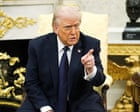
The White House’s recent deployment of a promotional video utilizing fictional Hollywood legal figures—specifically characters from Matlock, Suits, and The West Wing—represents a calculated pivot from traditional policy communication to a model of Cultural Signal Injection. This strategy acknowledges a fundamental breakdown in the public’s processing of abstract judicial concepts. By mapping the "Rule of Law" onto established archetypes, the administration attempts to bypass partisan friction and leverage pre-existing neural pathways associated with "justice" in the American psyche.
The efficacy of this communication framework rests on three operational pillars:
- Archetypal Authority Transfer: The movement of perceived credibility from fictional solvers (e.g., Andy Griffith) to real-world bureaucratic processes.
- Linguistic Simplification via Narrative: The reduction of complex legal proceduralism into moralized story beats.
- Cross-Generational Targeting: The selection of characters that span specific demographic cohorts—ranging from Boomers (Matlock) to Millennials (Suits).
The Strategic Architecture of Symbolic Legitimacy
The use of fictional characters is not merely a "fun" outreach tactic; it is an attempt to solve the Legitimacy Deficit currently facing federal institutions. When trust in the Supreme Court and the Department of Justice reaches historic lows, the administration cannot rely on the institutions themselves to validate their own fairness. Instead, they outsource that validation to cultural symbols that have remained untainted by specific 21st-century political cycles.
The Mechanism of Parasocial Validation
Viewers form parasocial relationships with fictional lawyers. Over seasons of television, these characters are established as tireless advocates for "the right thing," often operating within a system that is flawed but ultimately functional. By associating these faces with current White House judicial appointments and policy shifts, the administration triggers a cognitive heuristic: if the "good guy" from the show would approve of this, the policy must be inherently just.
This creates a Trust Proxy. The administration is not asking the public to trust a press secretary; it is asking them to trust the memory of a character they already admire.
The Cognitive Load of Judicial Policy
Judicial reform and the "American way" of justice are intellectually dense topics involving constitutional law, precedent, and bureaucratic friction. The average citizen’s bandwidth for these topics is limited.
The White House video functions as a Semantic Compression tool. It takes 200 years of legal tradition and compresses it into a three-minute montage of recognizable tropes. The "American Way" is redefined not through legal citations, but through the visual shorthand of a courtroom speech or a fast-paced walk-and-talk in a mahogany-lined hallway.
Structural Logic of the Character Selection
- The Matlock Variable: Targets the 65+ demographic. Ben Matlock represents a traditional, reliable, and "common sense" approach to law. This stabilizes the message for conservative-leaning or older moderate voters who value stability and institutional heritage.
- The Suits/Harvey Specter Variable: Targets the 25–45 demographic. This character represents competence, modernization, and the "cool" factor of the legal profession. It frames the administration’s judicial efforts as high-performing and efficient.
- The West Wing/Josh Lyman/Toby Ziegler Variable: Targets the "Blue Wall" of the Democratic base. This is an internal signal to the party faithful, reminding them of an era where government was viewed as an intellectual, noble pursuit.
The Risk of Narrative Dilution and Backfire
While the strategy is sound from a marketing perspective, it encounters a significant Friction Point when the fiction clashes with the material reality of the legal system. This is where the strategy risks "Uncanny Valley" territory—where the gap between the polished Hollywood version of justice and the slow, often frustrating reality of the current court system becomes too wide to ignore.
- The Competence Gap: If the administration promotes a "Hollywood-style" efficiency while the actual judicial process remains stalled by gridlock, the use of these characters highlights the administration's failures rather than its successes.
- Cynicism Feedback Loops: For a segment of the population, the use of "make-believe" characters to explain "real-world" problems signals a lack of seriousness. It suggests that the administration views the electorate as children who need a celebrity to explain a concept.
Quantifying the Impact of Fictional Endorsements
The impact of this campaign can be measured through Sentiment Shift Tracking across the specific demographic clusters mentioned.
- Primary Metric: The delta in "Institutional Trust" scores among viewers who engaged with the video versus a control group presented with a standard, text-heavy policy briefing.
- Secondary Metric: The "Resonance Score" of the phrase "Justice the American Way." If this phrase begins to appear in organic social discourse without irony, the linguistic injection has succeeded.
The Cost Function of Celebrity-Adjacent Politics
There is a hidden cost to this strategy: the Devaluation of Professional Expertise. When a government relies on actors to sell a policy, it inadvertently admits that its own experts—the lawyers, the judges, and the policy advisors—are insufficient for the task of public persuasion.
In the long term, this reinforces a culture where "The Brand" of a policy is more important than the "The Content" of the policy. If the administration continues down this path, the barrier to entry for future judicial messaging will only rise. They will eventually run out of untainted fictional characters and be forced to move into more aggressive, perhaps more polarizing, cultural territory.
The Divergence of Theory and Application
The video posits that justice is a clean, heroic arc. In reality, the American judicial system is a Probabilistic System where outcomes are determined by a mix of statutory law, judicial philosophy, and administrative resources. The "Hollywood" framing ignores the grit of the system:
- Plea bargaining as the primary driver of case resolution.
- Resource disparities between public defenders and state prosecutors.
- The lengthy, un-cinematic timeline of federal appeals.
By omitting these, the administration builds a Synthetic Narrative that is easy to consume but difficult to sustain when voters encounter the actual system.
Strategic Recommendation: Transitioning from Symbolism to Systemic Transparency
The administration has successfully captured the initial attention cycle. To prevent this from becoming a fleeting "viral moment" with no lasting policy impact, the following shift must occur:
The "Matlock/Suits" framing should be treated as a Gateway Interface only. The next phase of the campaign must immediately pivot to high-granularity data regarding judicial appointment speeds, the reduction of case backlogs, and the tangible impacts of legal aid funding.
The strategic play is to use the fictional characters to "open the door" and then immediately flood the room with Hyper-Literal Transparency. If the administration fails to provide the data to back up the Hollywood-inspired optimism, they will leave a vacuum that opposition forces will fill with a "Reality vs. Fiction" counter-narrative.
The final move: Establish a "Public Dashboard of Justice" that uses the same visual design language as the video but populates it with real-time metrics on judicial vacancies, sentencing parity, and court efficiency. This bridges the gap between the archetypal "Justice" and the operational "Justice," turning a marketing stunt into a permanent tool for institutional accountability.