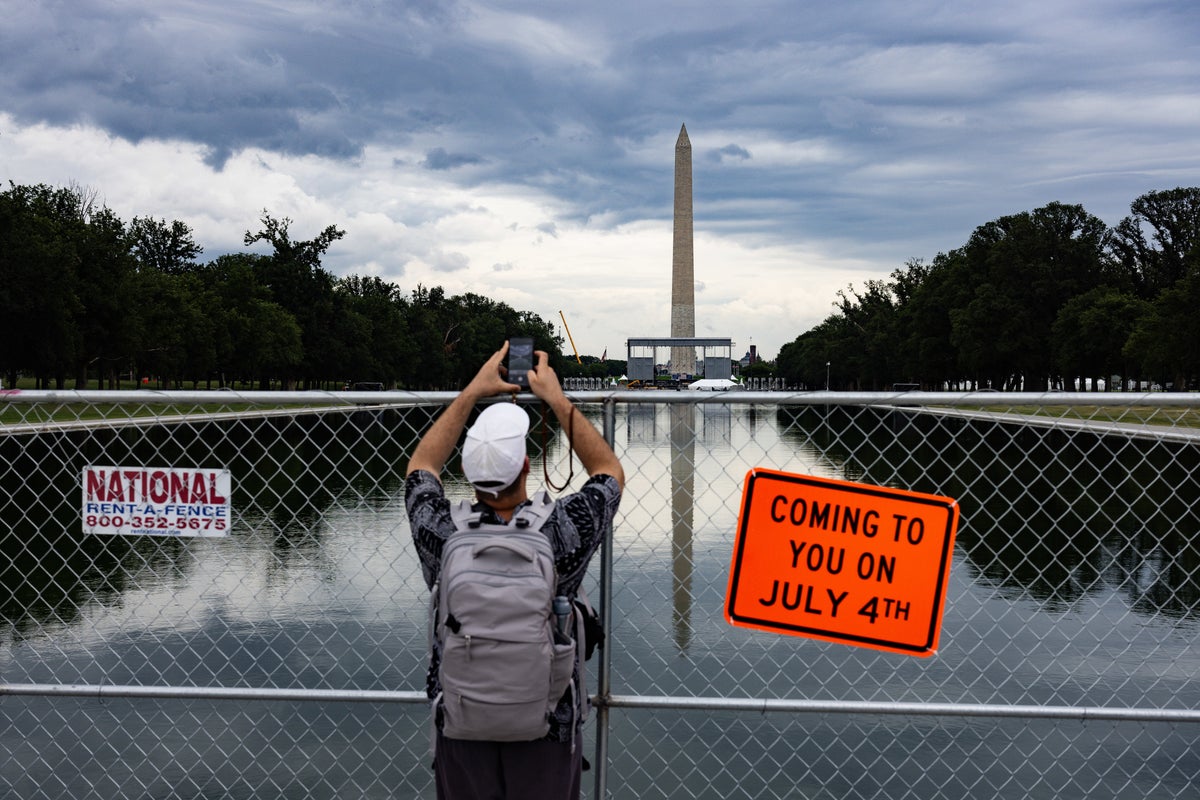
The physical architecture and governance of Washington DC operate not merely as aesthetic choices, but as a direct transmission mechanism for executive power and ideological signaling. When a federal administration attempts to alter the design, layout, or jurisdictional control of the capital, it is not an arbitrary aesthetic obsession. It is a strategic intervention in the structural framework that defines state authority. By dissecting the capital into distinct vectors—jurisdictional friction, architectural ideology, and the economics of federal branding—we can map exactly how competing visions of the American state manifest in the literal brick and mortar of the District of Columbia.
The fundamental conflict stems from a constitutional design flaw: the tension between the federal government's requirement for a secure, neutral seat of power and the local population's demand for democratic self-governance. This creates a highly politicized urban environment where the physical landscape is continuously weaponized to project competing definitions of national identity.
The Tri-Partite Framework of Capital Space Control
To evaluate how executive visions reshape a capital city, the space must be broken down into three distinct functional layers. Each layer possesses its own vulnerabilities to political leverage and executive intervention.
+-----------------------------------------------------------------------+
| 1. The Symbolic Core (The Mall, Federal Enclaves, Monuments)           |
|    - High federal oversight; primary vector for ideological signaling |
+-----------------------------------------------------------------------+
| 2. The Functional Infrastructure (Transit, Security, Utilities)        |
|    - Interdependent; subject to jurisdiction friction and veto points  |
+-----------------------------------------------------------------------+
| 3. The Municipal Periphery (Residential and Commercial Districts)     |
|    - Local governance vs. federal intervention and budget riders     |
+-----------------------------------------------------------------------+
The Symbolic Core
This comprises the National Mall, federal enclaves, and monument grounds. Control over this layer is heavily centralized under federal agencies like the National Park Service and the General Services Administration. Executive power influences this layer through appointments, direct orders, and the review processes of the Commission of Fine Arts (CFA) and the National Capital Planning Commission (NCPC). The strategic objective here is narrative domination—ensuring the physical space reflects the administration's philosophical alignment, whether that means classical monumentalism or modern utilitarianism.
The Functional Infrastructure
This encompasses transit networks, security perimeters, and utility corridors. This layer is highly interdependent and prone to operational friction. For example, the expansion of a security perimeter around the White House or Capitol complex directly chokes municipal traffic flow and degrades local economic activity. Executive mandates focusing on heightened security systematically cannibalize the functional efficiency of the city’s civilian infrastructure.
The Municipal Periphery
This represents the residential and commercial zones governed by the local District government. While nominally self-governing under the Home Rule Act of 1973, this layer remains highly vulnerable to federal intervention via congressional budget riders and executive enforcement mechanisms. The periphery represents the primary friction point between the lived reality of residents and the symbolic priorities of the federal apparatus.
Architectural Ideology as a Transmission of State Power
Architecture is rarely neutral. The deliberate selection of architectural styles by an administration serves as a visual codification of its governance philosophy. The historical oscillation between Neoclassical dominance and Modernist experimentation illustrates this dynamic.
The imposition of a mandate favoring classical architecture—characterized by symmetry, columns, and Greek or Roman precedents—is a deliberate effort to project stability, permanence, and historical continuity. Proponents of this framework argue that classical forms democratize space by anchoring it in timeless civic virtues.
The underlying strategic mechanism, however, is the deliberate rejection of pluralism and contemporary evolution. By legally or bureaucratically prioritizing a single aesthetic style, the executive branch attempts to construct a rigid definition of American identity that prioritizes state authority over modern cultural shifts.
Conversely, the shift toward Modernist or Brutalist federal architecture during the mid-20th century reflected an entirely different structural goal: projecting efficiency, transparency, and the technocratic capability of an expanding administrative state. The raw concrete of the Hubert H. Humphrey Building (HHS) or the Robert C. Weaver Federal Building (HUD) signaled a government focused on functional utility rather than historical romanticism.
When a modern administration seeks to reverse these styles, it is executing an ideological rollback. This maneuver attempts to delegitimize the technocratic, bureaucratized state by replacing its physical symbols with structures reminiscent of pre-modern authority.
The Jurisdictional Friction Coefficient
The structural inefficiency of Washington DC's governance is driven by overlapping jurisdictions. The intersection of the Executive Branch, Congress, the District Government, and independent federal planning bodies creates a high "friction coefficient" that complicates any unilateral attempt to redesign or rezone the city.
The primary operational bottleneck is the statutory review process. Any major modification to federal land or building aesthetics requires navigation through a complex matrix:
- The Commission of Fine Arts (CFA): Establishes aesthetic guidelines and reviews the design of all public and certain private buildings within designated areas of the District.
- The National Capital Planning Commission (NCPC): Acts as the central planning agency for the federal government in the National Capital Region, ensuring urban density, transportation link-ups, and security footprints align with long-term federal interests.
- The District Department of Transportation (DDOT) and Local Zoning Boards: Manage the immediate municipal infrastructure that interfaces with federal properties.
An executive intent on overriding local priorities must exploit structural vulnerabilities within this matrix. The most direct mechanism is the weaponization of presidential appointments to the CFA and NCPC. By packing these boards with ideological allies, an administration can bypass decades of bureaucratic consensus to push through specific aesthetic or security agendas.
This intervention carries a distinct structural cost. Bypassing established local input breaks down inter-agency cooperation, resulting in prolonged litigation, delayed infrastructure projects, and increased capital expenditure on federal construction.
The Economics of Federal Branding vs. Municipal Vitality
The federal government’s use of Washington DC as a national branding asset creates a direct economic distortion for the city's municipal economy. This dynamic can be modeled as a trade-off between the Federal Branding Valuation (the geopolitical and tourist value generated by a pristine, secure, and monumental capital) and Municipal Economic Efficiency (the productivity, tax generation, and growth of the local civilian economy).
When an administration prioritizes the Federal Branding Valuation, it typically implements policies that maximize security perimeters, restrict commercial zoning near federal assets, and emphasize monumental land use over commercial density. The economic consequences of this strategy follow a clear causal chain:
Executive Prioritization of Federal Branding
  │
  ▼
Expansion of Security Perimeters & Spatial Restrictions
  │
  ▼
Contraction of Commercial Footprint & Increased Logistics Costs
  │
  ▼
Erosion of the Local Commercial Tax Base
  │
  ▼
Increased Municipal Financial Dependence on Federal Appropriations
The expansion of security perimeters creates a dead zone for commercial enterprise. Retailers, restaurants, and corporate offices cannot operate efficiently inside areas subject to sudden, uncoordinated federal lockdowns. This spatial restriction contracts the city's commercial footprint, driving up commercial rents elsewhere and forcing logistics networks to absorb the costs of circumnavigating expanded federal zones.
This contraction directly erodes the local tax base. Because federal property is exempt from municipal real estate taxes, the District is forced to generate revenue from an artificially constrained geographic area. When federal interventions suppress the valuation of that remaining area, the city's financial independence degrades, increasing its vulnerability to federal budgetary control and riders.
Systemic Vulneracies in Capital Re-engineering
Any strategy aimed at fundamentally re-engineering the capital's image faces severe structural limitations. These constraints prevent any single administration from permanently cementing its vision.
- The Multi-Year Procurement Cycle: The timeline required to design, clear, fund, and construct a major federal building typically spans seven to twelve years. This duration far exceeds the standard four-to-eight-year horizon of an executive administration, meaning projects initiated under one ideological framework are frequently inherited, modified, or canceled by a subsequent administration with opposing priorities.
- The Federal Judiciary: Executive orders seeking to alter the zoning, historical preservation status, or architectural mandates of the capital are subject to immediate legal challenges under the Administrative Procedure Act (APA). If an administration fails to provide a rigorous, data-driven rationale for an aesthetic or structural shift, the federal courts routinely enjoin the action as arbitrary and capricious.
- The Distributed Congressional Budget Power: While the executive branch can propose bold overhauls or re-zonings, Congress retains absolute power over the appropriations required to execute those designs. A hostile House or Senate can starve an executive capital project of funds, rendering mandates unenforceable.
Strategic Deployment of Capital Control
To execute a durable transformation of the capital's image and operational layout, an administration cannot rely on rhetorical pronouncements or superficial executive orders. The strategy must deploy a sequence of institutional maneuvers designed to permanently alter the planning equilibrium.
First, the administration must secure a coordinated majority on both the CFA and NCPC simultaneously. This requires tracking term expirations and aggressively placing technical practitioners—architects, urban planners, and structural engineers—who share the administration’s philosophical framework, rather than mere political donors. This establishes a compliant regulatory baseline that can withstand standard legal scrutiny under the APA.
Second, the administration must shift its focus from aesthetic mandates to budgetary and structural re-allocations. Instead of dictating building styles, the executive branch should direct the General Services Administration (GSA) to execute a systematic decentralized footprint strategy. By relocating specific non-essential agency headquarters outside of the downtown core or into entirely different states, the administration can alter the socioeconomic density of the capital. This reduces local municipal leverage, recalibrates the commercial real estate market, and creates physical vacancies within the symbolic core that can then be redeveloped under the preferred federal design archetype. This operational realignment bypasses the aesthetic debate entirely, reshaping the capital by manipulating its administrative and economic density.