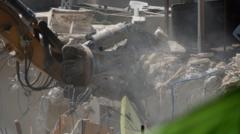
The spatial configuration of East Jerusalem operates as a primary instrument of demographic and territorial engineering. While public discourse frequently frames municipal home demolitions as isolated enforcement actions against unauthorized construction, a structural analysis reveals a highly integrated, data-driven administrative system designed to restrict Palestinian urban expansion while accelerating Israeli settlement growth. By deconstructing this mechanism into its legal, financial, and spatial components, we can isolate the operational logic that drove a 70% increase in structural demolitions from 2022 to the conclusion of 2025, culminating in a historic peak of 360 demolished structures in East Jerusalem in 2025 alone.
The underlying structural bottleneck is not a failure of compliance, but a deliberate restriction of civic supply. This operational blueprint relies on three distinct administrative levers: restrictive zoning regimes, asymmetric permit distribution, and the weaponization of municipal enforcement costs.
The Structural Mechanics of Zoning and Permit Asymmetry
The primary mechanism of containment relies on the deliberate restriction of land zoned for Palestinian development. In East Jerusalem, where Palestinians constitute approximately 40% of the total municipal population, only 13% of the land is zoned for Palestinian construction. Because much of this 13% is already densely built-up, the legal capacity for natural urban growth is effectively choked.
This creates a structural deficit when contrasted with the land allocation for Israeli settlement infrastructure and municipal green spaces. The operational output of this planning asymmetry is quantified by comparing permit approval rates between demographic groups:
- Israeli Residential Approvals: In recent fiscal cycles, nearly 9,000 building permits were approved for Jewish residents and settlement projects in East Jerusalem.
- Palestinian Residential Approvals: Fewer than 700 building permits were approved for Palestinian residents during the identical time frame, according to data verified by the urban planning organization Bimkom.
This structural divergence forces a predictable equilibrium: to accommodate natural population growth, Palestinian residents must choose between localized displacement or building without municipal authorization. When unauthorized construction occurs, it triggers the legal mechanism for an administrative or judicial demolition order under the Israeli Planning and Building Law. The state then categorizes the resulting demolition as a routine code-enforcement measure, shifting the legal liability entirely onto the property owner.
The Cost Function of Self-Demolition and Financial Coercion
The administrative framework optimizes its resource allocation by transferring the financial and operational burden of structural destruction to the targeted population. When a final demolition notice is issued, the municipal authority presents the property owner with a binary cost function designed to minimize state expenditure while maximizing local economic disruption.
Total Enforcement Penalty = Direct Demolition Fine + Operational Cost Recovery + Asset Liquidation
If the municipality executes the demolition using state-contracted heavy machinery and security escorts, the owner is billed for the entirety of the operational expenditure. In high-profile flashpoints like the Al-Bustan community within the Silwan neighborhood, these municipal enforcement bills routinely range from 45,000 shekels (approximately $13,500) to 90,000 shekels ($27,000).
Non-compliance with these invoices triggers immediate financial sanctions. The state deploys administrative asset-seizure protocols, freezing local bank accounts and blocking lines of credit until the operational costs of the bulldozer and security details are recovered in full.
To mitigate this catastrophic asset depletion, rational economic actors are forced into "self-demolition"—destroying their own family residential structures with their own hands and rented equipment. This mechanism yields two distinct advantages for the municipal apparatus: it eliminates the direct fiscal cost of enforcement from the city's budget, and it structurally suppresses visible state violence by forcing the occupied population to physically execute their own displacement.
Spatial Continuity and the Infrastructure of National Parks
The application of code enforcement is highly concentrated in specific geographic corridors designed to achieve territorial continuity between isolated Israeli enclaves and the Old City. The Silwan neighborhood, particularly the Al-Bustan sector, serves as a clear case study for this spatial strategy.
The municipal master plan for Al-Bustan does not involve replacing unauthorized Palestinian structures with authorized municipal housing. Instead, the land is designated for conversion into a public park and tourist infrastructure linked directly to the adjacent "City of David" archaeological site. By overlaying green zones, national parks, and heritage corridors onto densely populated Palestinian areas, the planning apparatus establishes a legally defensible mechanism for broad-scale property clearing.
A secondary structural vector is the advancement of major arterial road systems and settlement master plans designed to alter regional connectivity. The E1 settlement project, alongside targeted demolitions in areas like Al-Eizariya and Wadi Qadum, illustrates this phenomenon.
In December 2025, the demolition of a four-story residential building in Wadi Qadum displaced 77 residents in a single operational action. Simultaneously, the execution of long-standing demolition orders for commercial facilities at the entrance of Al-Eizariya serves an explicit infrastructural goal: clearing the path for the E1 master plan.
This project aims to connect the Maale Adumim settlement bloc directly with East Jerusalem. The structural consequence of this infrastructure is twofold:
- It establishes a contiguous corridor of Israeli jurisdiction slicing through the center of the West Bank.
- It creates a bifurcated road system that isolates several Palestinian peripheral communities, permanently dividing northern and southern West Bank transit routes.
Operational Limitations and Risk Profiles of the Current Strategy
While highly effective at changing local demographics on a micro-scale, this planning-centric displacement model possesses severe long-term institutional limitations that undermine its strategic sustainability.
The first limitation is the production of acute systemic instability and an unquantifiable "grievance tax." Deconstructing thousands of residential units without providing alternative housing or legal immigration pathways generates a growing, unmanaged population stripped of formal stakes in the civil framework. Data from international monitoring groups shows that four out of five children subjected to home demolitions report prolonged psychological trauma and severe alienation from formal legal or governance systems. This systemic alienation erodes the basic intelligence-gathering and policing stability required to manage a complex urban center.
The second limitation is the increasing exposure to international legal and financial counter-measures. In July 2024, the International Court of Justice (ICJ) issued an advisory opinion declaring Israel's presence in the occupied Palestinian territory, including East Jerusalem, to be unlawful under international law, specifically referencing settlement expansion and systematic house demolitions as breaches of the Fourth Geneva Convention's prohibitions on forcible transfer.
By accelerating these programs between 2024 and 2026, the state risks triggering targeted third-party sanctions, corporate divestment from state-linked infrastructure firms, and international judicial proceedings against individual planning officials.
The Strategic Projection
The data indicates that the acceleration of demolitions observed throughout 2025 is not a temporary spike, but a permanent recalibration of municipal enforcement priorities. In the absence of sustained, high-level diplomatic intervention or explicit economic conditionalities tied to international financial aid, the municipal planning apparatus will continue to use the legal cover of code enforcement to clear critical geographic bottlenecks.
The logical trajectory points toward the full implementation of the E1 corridor infrastructure and the systematic conversion of the remaining historical valleys surrounding the Old City into state-managed national parks. For institutional actors, non-governmental organizations, and risk analysts navigating this space, the primary indicator to monitor is no longer political rhetoric, but the weekly publication of municipal zoning maps and the specialized budgetary allocations of the Jerusalem Municipality’s enforcement division. The battle for territorial control in East Jerusalem has shifted decisively away from open military maneuvers and is now fought entirely within the dry, technical parameters of municipal code enforcement and urban master plans.