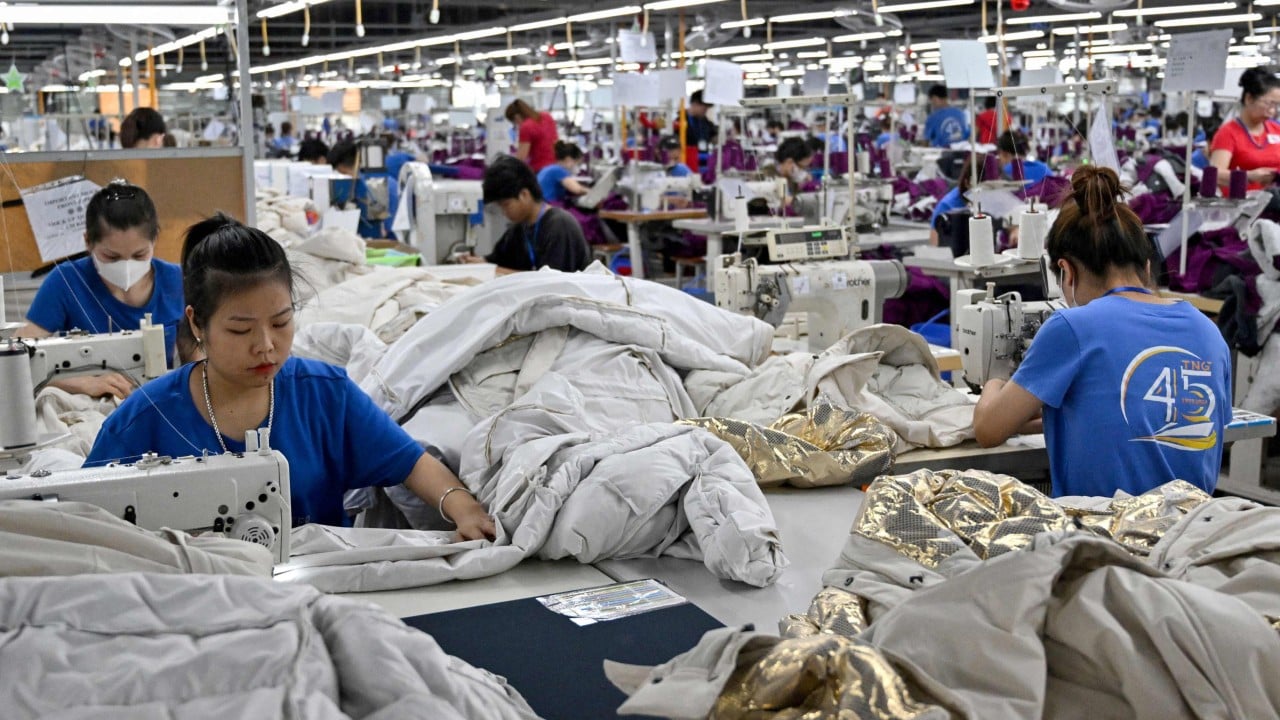
National labor migration acts as an immediate monetary injection and a structural drain on domestic economic capacity. When a developing economy adopts a state-sponsored or state-regulated model of sending workers abroad, policy designers are essentially engaging in human capital arbitrage. They trade immediate foreign exchange liquidity and short-term household income against long-term domestic productivity growth and industrial scaling. Deconstructing this phenomenon requires moving past superficial metrics of total annual remittances and examining the microeconomic frictions, macro-level distortions, and human capital depreciation that define the true cost equation.
The Macroeconomic Arbitrage Mechanism
The economic rationale for deploying national workforce units to foreign markets rests on wage differentials between the domestic economy and destination countries. Nations with advanced demographic deficits and aging populations, such as Japan, South Korea, and various European states, generate high structural demand for low-to-medium-skilled labor. By channeling surplus labor into these foreign markets, origin governments achieve two immediate macroeconomic objectives.
First, they alleviate internal unemployment and underemployment pressure without requiring immediate domestic capital investment to create equivalent industrial jobs. Second, they establish a consistent stream of foreign currency via worker remittances. These inflows directly support household consumption and bolster foreign exchange reserves.
However, this inflow functions as an economic stimulus that introduces secondary distortions. Large-scale remittance transfers alter local purchasing power parities, driving up asset prices and land values in migrant-heavy provinces. This localized inflation creates an uneven domestic economy where households without overseas workers experience higher cost-of-living burdens without a proportional increase in local wages.
The Domestic Human Capital Deficit
The primary blind spot in analyzing labor export policies is treating human capital as a permanent, infinitely replaceable inventory item. Every worker who signs an overseas contract represents an immediate subtraction from the domestic labor supply pool.
Manufacturing and heavy industry sectors within the origin country frequently encounter acute labor shortages precisely when foreign direct investment surges require expanding operational capacity. When tens of thousands of productive-age workers exit the domestic labor market annually, industrial employers face upward wage pressures or operate below capacity. This dynamic creates a structural bottleneck for domestic industrial upgrading.
[Domestic Labor Pool] ---> (Overseas Migration Pipeline) ---> [Foreign Industrial Output]
         |
         +---> [Local Manufacturing Shortfall] ---> [Stalled Domestic Value Chain]
Rather than moving up the global value chain into high-value manufacturing and technology-driven services, local industries remain constrained by labor scarcity. The human capital that could have driven domestic automation or process innovation is instead deployed to service foreign economic infrastructure.
Financial Friction and the Debt Bondage Vector
A rigorous evaluation of migrant worker economics must account for the initial friction costs borne by the worker before departure. International migration is capital-intensive. Recruitment fees, intermediary brokerage costs, visa processing charges, and mandatory pre-departure deposits often sum to thousands of dollars.
When workers lack sufficient personal liquidity, they rely on formal loans or informal lending networks to finance these migration expenses. This creates a mandatory debt-servicing period during which the worker's initial foreign earnings are completely absorbed by liability reduction rather than wealth accumulation or domestic savings injection.
- Direct Recruitment Fees: Payments made to authorized or private agencies for placement processing.
- Intermediary Costs: Brokerage charges that persist despite regulatory caps and compliance mandates.
- Opportunity Cost of Capital: Interest payments on loans secured against rural land titles or family assets.
This financial structure exposes workers to extreme vulnerability. If a foreign employer terminates a contract prematurely, or if health complications force an early return, the worker is left with catastrophic debt obligations and no foreign revenue stream to amortize them. The economic risk is thus shifted away from the state and the recruiting agencies entirely onto the individual household.
The Illusion of Skills Transfer
Proponents of labor export frequently cite the long-term benefit of technical and professional skills transfer. The hypothesis posits that workers migrating to advanced industrial economies will acquire sophisticated competencies, operational disciplines, and technical know-how, eventually returning to catalyze domestic enterprise development.
Empirical verification of this hypothesis reveals a stark divergence between expectation and outcome. The vast majority of contracted migrant workers are deployed in structured, low-discretion operational roles within manufacturing, agriculture, construction, or caregiving sectors. These roles rarely require or impart advanced technological design capabilities, managerial strategy, or systems engineering skills.
Instead, returning workers possess standardized operational proficiencies that match the specific, often rigid, requirements of the foreign host nation. Upon return, the domestic economy frequently lacks the advanced industrial ecosystems required to deploy even those narrow competencies effectively. Consequently, the anticipated technological spillover remains largely theoretical, resulting in a net brain drain or skill mismatch rather than an upgrade of domestic productive capacity.
Strategic Realignment of State Policy
Sustaining long-term economic growth requires transitioning human resource management away from short-term export maximization and toward domestic capital deepening. Governments must calculate the exact marginal cost of labor extraction against the lost productivity of domestic industries.
To break the cycle of dependency on overseas labor rents, economic planners must decouple industrial expansion from demographic export models. This requires shifting capital allocation toward domestic vocational institutions, aligning technical curricula with immediate industrial automation needs, and enforcing stringent labor standards that make domestic industrial employment competitive with regional alternatives. State policy must treat workforce retention as a primary key performance indicator of national economic health rather than measuring success purely by the gross volume of outgoing contracts.