The air raid sirens started on the evening of July 1 and didn't stop for 11 agonizing hours. By the morning of July 2, 2026, Kyiv looked like a war zone from a different decade. Russia didn't just launch a routine raid. It deployed an overwhelming, complex swarm of 496 drones and 74 missiles in a synchronized effort to completely saturate Ukraine's air defenses.
At least 27 people are dead, over 90 are injured, and around 130 buildings across the capital lie in ruins.
If you've been following the war in Ukraine, you might think this is just more of the same. It isn't. The sheer volume of this attack represents a terrifying shift in Kremlin tactics. It's the deadliest single strike on the capital this year, and the math behind how it happened reveals a massive problem for Ukraine and its Western allies.
The Brutal Math of Air Defense Saturation
To understand why this strike succeeded in killing so many people, look at what Russia actually fired. This wasn't just a collection of cheap Shahed drones. It was a highly deliberate, mixed-payload assault designed to force Ukrainian commanders into making impossible split-second choices.
According to data released by the Ukrainian Air Force, the 570 total aerial threats included:
- 4 hypersonic 3M22 Zircon anti-ship missiles
- 24 Iskander-M and S-400 ballistic missiles
- 34 Kh-101 cruise missiles
- 8 Kalibr cruise missiles
- 4 guided air missiles (Kh-59/69)
- 496 drones, including jet-powered UAVs and cheap "Parody" decoy drones
Ukrainian forces performed an incredible feat under pressure, downing 476 of the drones and 48 of the missiles. But the numbers they missed tell the real story.
Twenty-five ballistic missiles and 12 drones made impact, striking 33 different locations. Ballistic missiles drop from the edge of space at extreme speeds. You can't shoot them down with mobile fire teams or shoulder-fired weapons. You need high-end systems like the American-made Patriot.
And that's exactly where Ukraine is running out of options.
What Went Wrong on the Ground
Air Force spokesperson Yuri Ihnat admitted that the interception rate for ballistic missiles was devastatingly low during this raid. Ukraine is facing a critical shortage of Patriot interceptor missiles. When hundreds of decoy drones and cruise missiles flood the radar screens simultaneously, air defense systems get overwhelmed, or worse, they simply run out of ammunition.
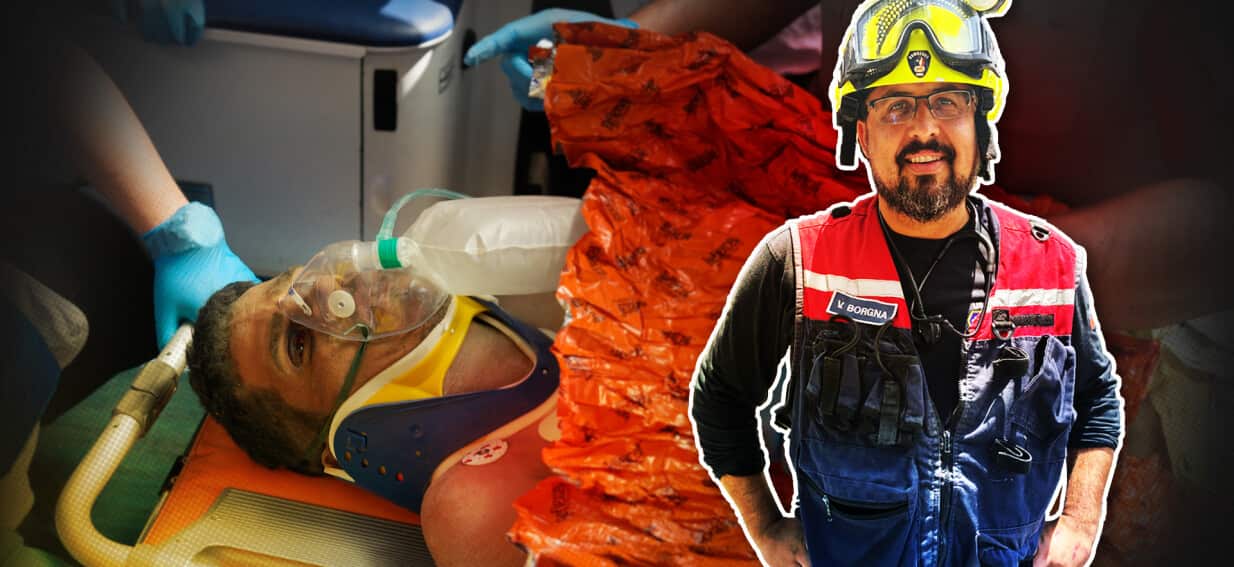
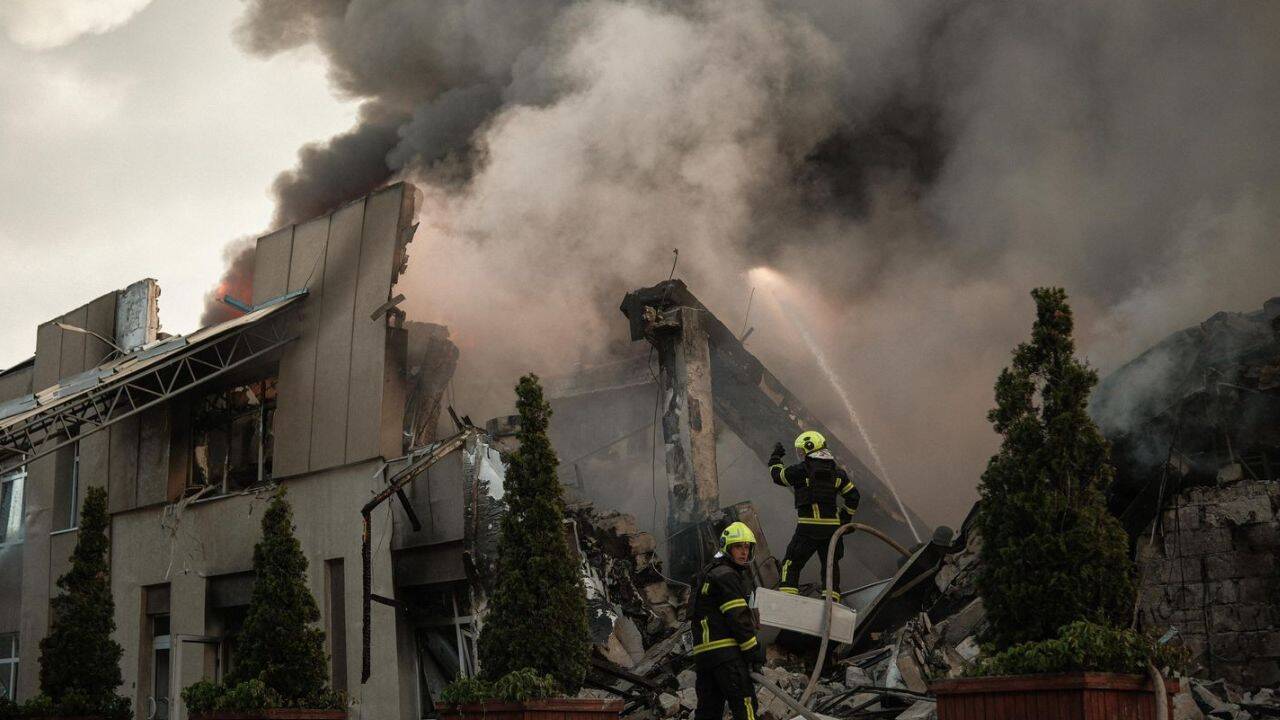
The destruction in Kyiv is widespread, spanning residential districts on both sides of the Dnipro River. In an eastern suburb, a missile tore straight through a nine-story apartment building, instantly vaporizing 64 apartments. Rescue crews have been working around the clock to pull bodies from the concrete rubble.
The strike didn't just hit homes. It gutted the National Institute of Biochemistry, destroying a state-of-the-art laboratory in what local scientists are calling a catastrophe for Ukrainian medical science. The Ukrainian Red Cross also lost its main humanitarian warehouse in the attack, wiping out 320,000 emergency relief items meant for frontline civilians. Even diplomatic accommodations housing European staff caught fire, though the personnel escaped unharmed.
Ukrainian President Volodymyr Zelenskyy cut short an official visit to Ireland, flying straight back to Kyiv to stand outside the ruined apartments. He didn't mince words. He pointed directly to the delayed deliveries of Western air defense systems as the reason these missiles got through.
The Retaliation Cycle
Moscow isn't hiding the motive behind this massive escalation. The Russian Defense Ministry claimed the strike was a direct retaliation for Ukraine's own deep-strike campaign inside Russian territory. Just hours before the Kyiv bombardment, Ukrainian forces used long-range drones to hit one of Russia's largest oil refineries in the Nizhny Novgorod region, hundreds of miles east of Moscow.
Ukraine has been executing a coordinated blitz against Russian energy infrastructure, attempting to squeeze the Kremlin’s economic lifeline and force Vladimir Putin to the negotiating table. But as this attack proves, every time Ukraine punches deep into Russia, Moscow responds by raining fire on Ukrainian civilians.
Kremlin spokesperson Dmitry Peskov confirmed that General Valery Gerasimov personally briefed Putin on the results of the strike. The message from Moscow is clear: they are willing to burn through massive stockpiles of high-end weaponry to maintain domestic deterrence.
What Allies Must Do Next
Condemnation from global leaders followed quickly. European Union Foreign Policy Chief Kaja Kallas promised a new round of sanctions targeting the entities fueling Russia's military-industrial complex. UN Secretary-General António Guterres called it part of a deadly, unacceptable pattern.
But statements don't stop ballistic missiles.
For Ukraine's allies, this tragedy highlights a desperate need to shift from financial promises to physical deliveries. If Western partners want to prevent Kyiv from becoming defenseless, the next steps are clear:
- Prioritize Interceptor Production: Ukraine doesn't just need launchers; it needs a steady, uninterrupted supply of Patriot and NASAMS interceptor missiles to handle mass-saturation tactics.
- Tighten Component Sanctions: Russia is still manufacturing Zircon and Iskander missiles despite sweeping sanctions. The microchips and Western components keeping their missile factories running must be completely cut off.
- Expand Mobile Defense Networks: To save high-end interceptors for ballistic threats, allies need to supply thousands of simpler, automated anti-drone systems to handle the hundreds of decoy UAVs Russia throws into the sky.
Kyiv Mayor Vitali Klitschko declared a city-wide day of mourning. The smoke over the Dnipro River will eventually clear, but the vulnerability of Ukraine's airspace remains wide open until the supply chains in the West catch up to the reality on the ground.
The WION news broadcast on the Kyiv strike provides a detailed on-the-ground look at the rescue efforts and the sheer scale of the structural damage across the capital.