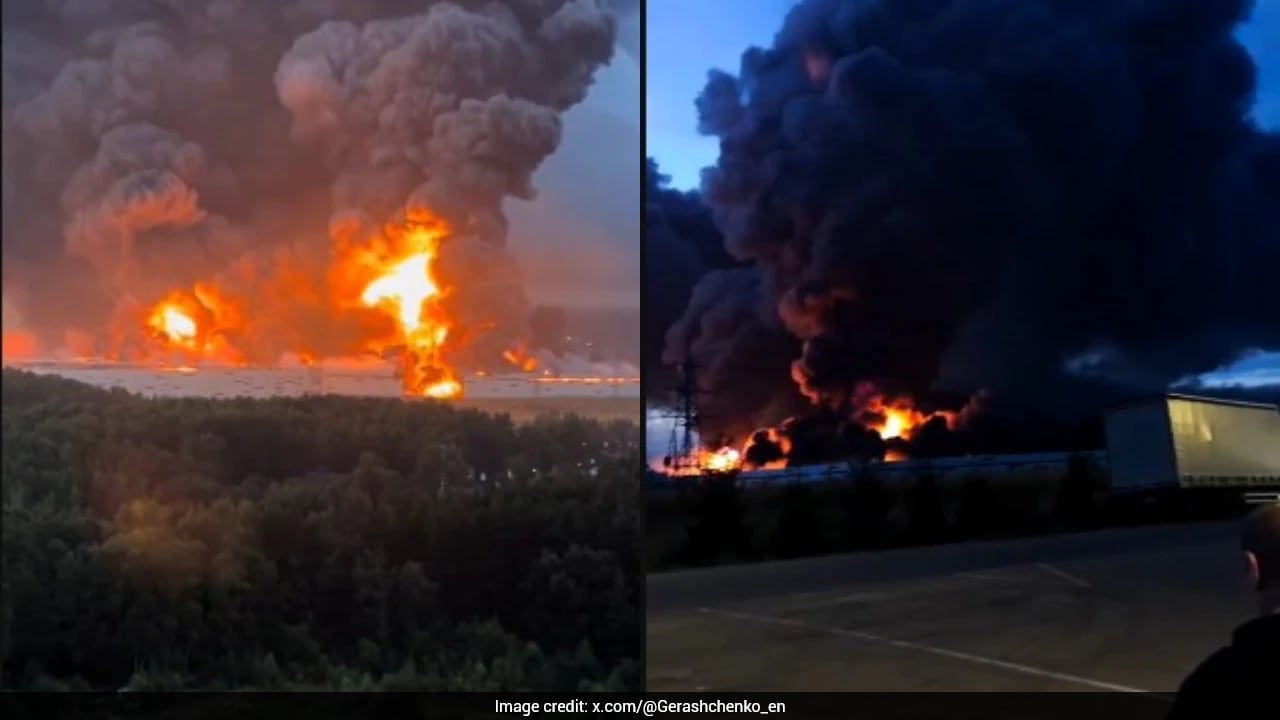
Six hundred drones. That is the number ringing through intelligence offices and defense forums today. When Moscow mayor Sergei Sobyanin reported that roughly 600 unmanned aerial vehicles headed toward the Russian capital during a single overnight assault, it became clear that the technical reality of modern conflict has shifted permanently. You aren't watching a localized border dispute anymore. You are witnessing the dawn of industrial-scale drone warfare that brings the front lines directly to the doorsteps of millions of civilians who previously felt entirely insulated from the fighting.
Let's look past the initial panic and break down what actually happened during this unprecedented barrage.
The Anatomy of a Massive Aerial Barrage
The scale of the operation defies traditional military logic. According to regional reports, the assault wasn't just a token gesture or a symbolic strike. It was a coordinated, high-volume saturation of Russian air defense networks.
- The Numbers: Moscow officials tracked hundreds of systems approaching the region, with over two hundred neutralized specifically within the Moscow airspace.
- The Targets: Unlike early-war engagements that strictly focused on military installations, recent campaigns explicitly target logistics hubs, critical supply chains, and massive e-commerce distribution centers like the Wildberries facilities in Podolsk.
- The Human Toll: While interception rates remain a focal point for state media, ground impacts still resulted in reported injuries within the ring road areas, alongside fatal incidents in surrounding suburbs like Ramenskoe and across southern regions like Rostov.
You need to understand why logistics networks are suddenly taking center stage. Kyiv's defense planners realized that destroying a tank on the battlefield stops one unit. Shutting down a major commercial logistics artery that handles dual-use components cripples an entire supply pipeline.
Why Traditional Air Defenses Are Struggling
People always ask how a modern capital with supposedly elite air defense can face a swarm of this magnitude. The answer comes down to pure economics and geometric saturation.
Missiles cost millions of dollars. Long-range strike drones cost a fraction of that amount. When you deploy hundreds of low-cost airframes simultaneously, you force defenders into an impossible mathematical bind. If they fire on every single target, their interceptor stockpiles vanish in days. If they let targets through to save ammunition, critical infrastructure takes direct hits.
This asymmetry explains why both sides are racing to scale up automated countermeasures, electronic jamming grids, and low-cost kinetic interceptors. The era of relying entirely on high-end surface-to-air missile batteries to stop cheap aerial threats is over. It simply doesn't scale.
The Broader Escalation Spiral
You cannot view the Moscow drone wave in a vacuum. It represents one half of a punishing cycle that intensified aggressively over the weekend. While the capital region dealt with incoming swarms, Russian forces unleashed heavy missile and drone volleys targeting Kyiv, Kryvyi Rih, and industrial facilities across central Ukraine.
The humanitarian consequences continue to mount as civilian areas absorb the shockwaves of this tit-for-tat escalation. Independent monitors and local administrators report mounting casualties on both sides of the border, proving that distance from the immediate contact line no longer guarantees safety.
If you are tracking where this conflict heads next, stop looking at peace talks for a moment and look at factory floors. The winner of this war won't just be decided by tactical genius on the ground. It will be decided by who can manufacture, code, and launch thousands of autonomous systems faster than the other side can blow them out of the sky.
Russia Claims 600 Ukrainian Drones Targeted Moscow Overnight, 3 Injured
This video provides visual context and coverage of the massive overnight drone assault reported by Russian authorities near Moscow.
http://googleusercontent.com/youtube_content/1


