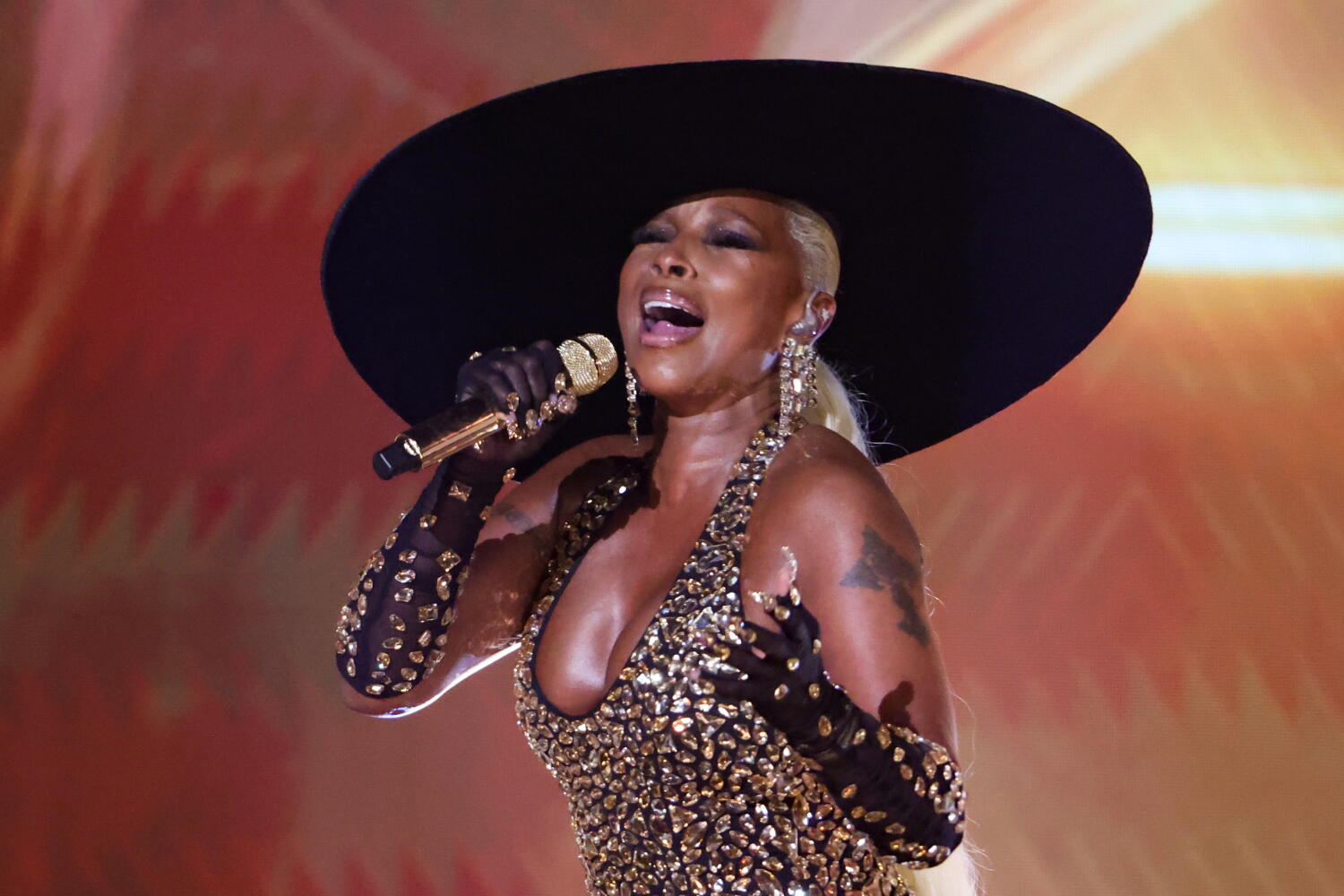
Every entertainment blog on the internet runs the exact same headline whenever Mary J. Blige sets a boundary, turns down a messy interview, or keeps her inner circle locked tighter than a federal reserve vault. They wrap her strategic decisions in scented candles and self-care platitudes. They call it "protecting her peace." They applaud her for "not letting anyone ruin this for her."
That framing is lazy, patronizing, and completely misses the real story.
When a legacy artist who has survived three decades of music industry predators, catastrophic public divorces, and tax liens suddenly becomes untouchable, it is not because she discovered journaling. It is because she built an operational fortress around her intellectual property and public equity. Calling Mary J. Blige’s current career posture a simple matter of personal boundaries reduces a ruthless, high-level business recalibration to a wellness meme.
I have watched legacy acts flush tens of millions of dollars down the drain because they confused access with relevance. They stayed available to every podcast host, every nostalgic docuseries, and every opportunistic collaborator until their mystique evaporated and their booking fee dropped to county-fair rates. Blige went the opposite direction. She didn't just close the door on drama; she monetized the lock.
The Myth of the Vulnerable Diva
To understand why the mainstream celebrity press gets Blige so wrong, you have to look at the box they built for her in 1992.
When What's the 411? dropped, the industry sold Mary J. Blige as the patron saint of public heartbreak. Her pain was the product. For twenty years, the unspoken contract between Blige, her labels, and the media was simple: she would bleed on the microphone, and the press would dissect her personal life in real time to drive album cycles. If her relationships were chaotic, her ballads charted higher. If her finances were publicly scrutinized, her authenticity score went up.
That business model works when you are twenty-five. At fifty-five, it is a death sentence.
The competitor narrative—that Blige is simply refusing to let haters or past trauma ruin her current golden era—assumes she is playing defense. It paints her as someone fragilely guarding a newly acquired state of Zen. Look at her actual moves over the last few years and that theory collapses immediately.
- She launched Sun Goddess Wines, turning her personal lifestyle brand into a tangible consumer packaged goods play rather than a licensing vanity project.
- She secured a recurring acting role in Power Book II: Ghost as Monet Tejada, deliberately choosing a character defined by cold, calculating authority rather than romantic vulnerability.
- She founded Blue Butterfly Productions, shifting her position on the call sheet from talent-for-hire to equity-holding producer.
- She headlined the Strength of a Woman Festival and Summit, vertically integrating live touring, brand sponsorships, and cultural curation under her own banner.
None of these are the moves of a woman hiding from bad vibes. These are the moves of an executive executing a textbook brand reposition. You cannot pitch Fortune 500 beverage distributors or greenlight multi-million-dollar television slates while your public identity is still tethered to tabloid chaos. The "no drama" rule isn't about her feelings. It is a prerequisite for institutional capital.
Why Entertainment Media Confuses Strategy With Self-Care
The celebrity media complex hates analyzing Black female artists as ruthless capitalists. It is much easier to write about emotional healing than it is to break down reputational risk management.
When male moguls like Jay-Z or Dr. Dre cut off press access, refuse to address old beefs, and curate every public appearance to the millisecond, business outlets write glowing profiles about their "mogul discipline" and "scarcity marketing." When Mary J. Blige does the exact same thing—refusing to take the bait on legacy drama, keeping her dating life completely off the grid, and controlling her own narrative through owned media—the blogs treat it like an episode of Red Table Talk.
Here is the reality of modern celebrity economics: availability is a depreciating asset.
In the attention economy of 2026, oversharing is the default setting for desperate talent. Artists go on three-hour podcasts to air decades-old grievances for a momentary spike in streaming numbers. They trade long-term brand equity for forty-eight hours of trending-topic relevance. Blige’s team clearly understood that her catalog—songs like "Real Love," "No More Drama," and "Be Without You"—already has permanent, self-sustaining cultural penetration. She does not need the algorithm. The algorithm needs her.
By starving the gossip ecosystem of new personal turmoil, she forced the market to re-price her. If you want Mary J. Blige today, you do not get her for free on a messy morning show. You get her through a Super Bowl Halftime appearance, a major streaming series, or a top-tier brand partnership where she controls the lighting, the edit, and the backend points.
The Mechanics of Legacy Brand Insulation
If you want to understand how Blige actually pulled off this pivot, stop reading entertainment news and start looking at corporate turnaround strategies. What she executed is a four-part insulation model that any high-profile figure—or executive—can study.
1. Eliminating Uncompensated Liabilities
During her 2016 divorce from Kendu Isaacs, the public learned the hard way how entangled Blige’s personal life was with her business infrastructure. When your spouse is also your manager, personal fallout becomes an immediate corporate insolvency crisis. Every messy headline directly impacted her net worth and touring margins.
Blige’s post-divorce restructuring was brutal and necessary: she severed personal relationships from executive decision-making. Today, her management and production operations are walled off from her private life. When insiders say she "won't let anyone ruin this for her," what they are actually observing is strict governance. Nobody in her personal orbit holds unilateral keys to her corporate bank accounts or publishing rights anymore.
2. Narrative Scarcity
Look at Blige’s press tours over the past twenty-four months. Notice what is missing. There are no unscripted, free-wheeling sit-downs where an interviewer gets to ambush her about old industry rivalries or her romantic status. Every appearance is tied to a specific commercial deliverable: a tour launch, a spirits rollout, a television premiere, or her annual festival.
She replaced reactive publicity with scheduled deployments. By refusing to respond to rumors, she denies online commentators the oxygen required to sustain a negative news cycle. A rumor without a response dies in seventy-two hours. A rumor with a clapback lives on YouTube for ten years.
3. Weaponizing Nostalgia Without Becoming a Museum Piece
The biggest trap for any artist with thirty years in the game is the "heritage act" ceiling. Once the market decides you are strictly a nostalgia play, your ceiling is fixed. You play the same hits, wear the same outfits, and slowly fade out as your core demographic ages.
Blige bypassed that ceiling by using her legacy status as a foundation rather than a cage. Playing Monet Tejada gave a Gen Z audience—who might not have grown up on My Life—an entirely new reference point for her. To twenty-year-olds, Mary J. Blige isn't a tragic R&B singer from the nineties; she is a ruthless crime matriarch who commands respect in every room she enters. That role actively rewrote her public persona in real time, making the "tough, unbothered boss" image feel completely organic.
4. Vertical Integration of Her Audience
Why beg radio programmers or festival promoters for prime slots when you can own the venue? Through the Strength of a Woman Festival, Blige captured the direct-to-consumer relationship with her core fanbase.
Think about the economics of that move. Instead of taking a flat performance fee while a third-party promoter pockets the sponsorship money, VIP ticket upcharges, and merchandise margins, Blige positioned herself at the top of the value chain. When you own the platform, nobody can cancel your slot, bury you on the flyer, or dictate your setlist.
People Also Ask: Dismantling the Lazy Questions
When audiences search for news about Mary J. Blige’s current era, the internet feeds them a steady diet of surface-level curiosity. Let's look at the actual mechanics behind the questions people keep asking.
Is Mary J. Blige retiring from music?
No, and asking that question fundamentally misunderstands how music catalogs generate wealth today. A legacy artist at Blige’s tier does not need to grind out a new twenty-track studio album every eighteen months to stay active. Studio albums are loss leaders; touring, sync licensing, and brand equity are the profit centers. She will continue releasing strategic singles and projects to feed her live show setlists, while her primary wealth compounds through ownership and non-music verticals.
Why is Mary J. Blige so private about her dating life now?
Because transparency in romance has a negative return on investment for a woman of her net worth. Every public relationship a high-earning female celebrity enters immediately invites scrutiny over prenuptial agreements, power dynamics, and potential heartbreak. By keeping her personal life completely invisible, she eliminates the single easiest angle tabloids use to undermine a woman's professional authority. Privacy is not shyness; it is asset protection.
How did Mary J. Blige recover from her financial troubles?
She did not "manifest" her way out of debt, and she didn't rely on sheer luck. She worked relentlessly—taking aggressive touring schedules and acting gigs—while overhauling her financial representation and eliminating predatory management structures. Her comeback is a textbook case of high-cash-flow debt service paired with ruthless expense cutting and smarter tax structuring.
The Hidden Cost of the Fortress
If you are looking at Blige’s blueprint and thinking it is a painless formula for success, you are missing the trade-offs. Building an impenetrable wall around your brand comes with real artistic and personal costs.
First, sanitized brands lose raw artistic friction. The very chaos that nearly destroyed Mary J. Blige in the nineties and early two-thousands is the exact fuel that produced My Life—one of the greatest, most visceral R&B albums ever recorded. When an artist reaches total emotional stability and corporate insulation, the music naturally shifts. It becomes celebratory, polished, and aspirational. Fans who crave the bleeding-heart desperation of her early catalog will never get that version of her again, because the woman who made those records no longer exists. You cannot manufacture raw trauma from inside a gated estate.
Second, hyper-control creates creative echo chambers. When you curate your team exclusively around loyalty, non-disclosure agreements, and zero friction, you run the risk of insulating yourself from honest creative pushback. Surrounding yourself with people who protect your peace can easily slide into surrounding yourself with people who are afraid to tell you a song is weak or a script doesn't work.
Finally, scarcity requires immense discipline. Most celebrities claim they want privacy until their engagement metrics dip for two consecutive quarters. Maintaining the kind of silence Blige practices means watching lesser talents grab cheap headlines while you sit quietly waiting for the right quarter to make your move. Most egos cannot survive that kind of delayed gratification.
Stop Reading Celebrity News Like a Soap Opera
The next time a headline tells you that Mary J. Blige "won't let anyone ruin this for her," recognize the framing for what it is. Journalists love a personal triumph narrative because it makes readers feel good and requires zero financial literacy to write.
Blige is not delicately guarding a fragile mood. She is protecting a multi-million-dollar enterprise that took thirty years of public scars, bad contracts, and hard-won survival instincts to build. She figured out the ultimate truth of the entertainment business: the industry will happily let you bleed to death on stage for their profit, and the only way to survive it is to buy the building, lock the doors, and charge them admission.
She didn't just find her peace. She incorporated it.



