For thousands of years, humanity operated under a brutal economic assumption regarding strength: if you want compliance, you break the spirit first. Across generations of agriculture and industry, the traditional method of introducing a horse to a saddle involved ropes, blindfolds, confinement, and exhaustion. It was a transaction written in sweat and terror. You showed the animal who was boss. You extracted obedience through the quiet, terrifying promise of pain.
Then came a boy crawling through the dust of Nevada deserts, watching wild mustangs settle their disputes without throwing a single punch. Read more on a connected topic: this related article.
Monty Roberts, who passed away at his California ranch at the age of ninety-one from complications of an autoimmune disease, spent his life dismantling the architecture of force. To the world, he became known as the original horse whisperer, a moniker he politely resisted because it sounded too much like magic and too little like the rigorous, patient observation it actually was. But magic is often what we call patience when we have entirely forgotten how to wait.
Consider what happened in the dust of a round pen when Roberts stepped inside with an unbroken, terrified animal. Additional analysis by Wall Street Journal highlights related perspectives on the subject.
Traditional trainers would tighten cinches until the horse fought itself into exhaustion. Roberts did something radically counterintuitive. He spoke a language he named Equus—a vocabulary of posture, lowered eyes, angled shoulders, and intentional breathing. He watched the horse’s ears flick. He read the white of a rolling eye. Instead of cornering the creature, he drove it away just enough to make it realize it was alone, then softened his stance, invited it inward, and waited for the animal to make the first move.
That single movement had a name: Join-Up.
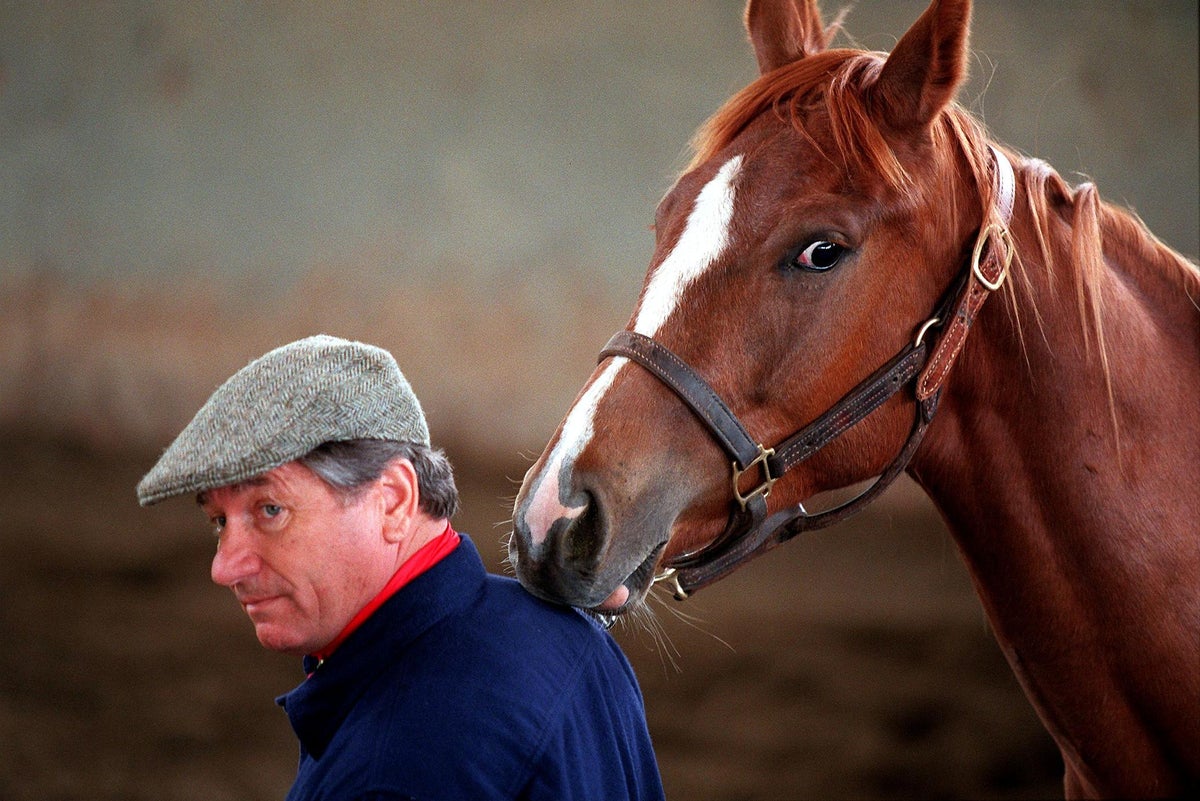
It was a process where the horse, its primal flight instinct finally quieted by a human who refused to threaten it, chose to walk across the dirt and put its nose against the man’s shoulder. No ropes. No beating. Just a mutual agreement forged in thirty minutes that rewrote millennia of domestic abuse disguised as training.
Word of this quiet rebellion traveled far beyond California pastures. In 1989, the British royal household took notice. The Queen Mother, a lifelong devotee of Thoroughbreds, watched Roberts work at Windsor Castle and reportedly dissolved into tears as she watched a notoriously aggressive, unapproachable horse lower its head and accept a saddle without a single flinch. That demonstration caught the attention of Queen Elizabeth II, sparking a cross-cultural friendship that would endure for thirty years.
It is easy to picture royalty through the lens of cold marble and rigid protocol. Yet, in the company of horses, the sovereign dropped her armor. As Roberts later recalled of their countless conversations, Her Majesty shared a core philosophy that cut straight to the heart of why their bond worked.
She believed that no human being or animal should ever be told, "You do what I tell you to do or I'll hurt you."
When the Queen stood beside the California cowboy in the royal mews, she wasn't the head of state. She was simply a horse person seeking a better way to listen. It was precisely this sovereign insistence that pushed Roberts out of his comfort zone and into the global spotlight, commanding him to write down his philosophy. That book, The Man Who Listen to Horses, spent over a year on bestseller lists and translated into more than a dozen languages, transforming millions of readers who had never touched a stirrup.
The philosophy was never really about horses.
It was about boardrooms. It was about classrooms. It was about the quiet, devastating damage we inflict on children, employees, and partners when we mistake volume for authority and volume for leadership. Roberts proved through thousands of live demonstrations across the globe that coercion is merely a symptom of a weak imagination.
Think of the start gates at a racetrack, where anxious Thoroughbreds often panic, refusing to move, labeled as incorrigible or ruined. Trainers would reach for whips and blindfolds. Roberts reached for a calming rug—bearing his name, designed to soothe an equine nervous system—and talked them through the terror. He did the same for a German racehorse named Lomitas, rescuing a doomed career from starting-gate phobia not by breaking the horse's will, but by restoring its sense of safety.
He bought a rejected yearling named Alleged for forty thousand dollars at Keeneland after it failed to meet its reserve, saw the brilliance beneath the defensive exterior, and sold it on to become a legendary dual winner of the Prix de l'Arc de Triomphe. He worked with Hollywood icons like James Dean, teaching the young rebel how to sit a horse with authentic balance long before Hollywood learned how to handle its own rising stars.
Yet, looking back across a lifetime that spanned nearly a century, the most enduring image of Monty Roberts is not found in the silver-spooned stables of Windsor or the flashing lights of media tours.
It is a man standing motionless in a ring of red dirt, breathing slowly, waiting for a frightened animal to realize it is safe enough to trust.
The dust settles. The horse stops running. It turns, lowers its neck, and takes a step forward.