The morning air in Zhejiang carries a familiar, bitter dampness. It smells of wet asphalt, coal smoke, and the heavy rot of yesterday's waste. To most people, the grey dawn of a Chinese industrial city is a cue to pull the curtains tighter, to turn toward the heater, to chase a few more minutes of warmth.
For Chen Jianguo, the dawn was a starting gun.
He did not wake to an alarm clock. He woke because the cold told him it was time. Sixty-one years old, sixty-two, seventy-one—the numbers blurred together when every day required the exact same calculation: Where did the world drop something of value yesterday?
For twenty-one years, Chen walked the streets with a rusted iron hook and a woven hemp sack. He was not a dramatic figure of despair; he was quiet. Almost invisible. He wore layers of donated cotton that smelled faintly of mothballs and sweat, his knuckles swollen from decades of winter dampness and scraping against the undersides of park benches, alley dumpsters, and construction perimeters.
People walked past him. Millions of people. Some looked away, uncomfortable with the proximity of raw poverty. Others dropped a coin into his cup if he sat still long enough, or cursed under their breath when his cart blocked a narrow sidewalk. But nobody looked at him. Not really. In a society racing toward dizzying economic heights, Chen was treated as an error in the ledger, a static line on a highway of ambition.
Yet every evening, as the neon signs of the city buzzed to life, Chen returned to his rented room. It was not a home. It was a holding cell for trash. He stacked cardboard boxes against the damp walls. He sorted plastic bottles by weight. And tucked deep into the corners, stuffed inside decaying plastic grocery bags and old biscuit tins, he kept something else.
He kept paper.
Not all of it was worthless.
To understand Chen, you have to understand the peculiar psychology of a man who has known genuine starvation. When you grow up watching food vanish from tables, or when you survive through political and economic convulsions that treat human beings like chaff in the wind, your definition of security changes. A dollar in a bank feels fragile. Digital numbers on a screen feel like smoke. But physical objects—things you can hold, clutch, and hide—feel like survival itself.
For more than two decades, banks were alien spaces to Chen. The gleaming glass doors, the security guards in pressed uniforms, the neat lines of people depositing digital bytes of wealth—those were for other people. Not for the man who smelled of garbage. So, instead of exchanging his scavenged scraps for ledger entries, he dealt in cash. Hard, crumpled, physically heavy renminbi.
And, occasionally, something else.
In the late 1990s and early 2000s, as China's economic reforms began to churn out a dizzying array of financial instruments, certificates, bonds, and high-yield savings products, small-town branches of local banks rolled out aggressive campaigns to capture household savings. They offered paper certificates—stiff, ornate documents bearing the red seals of state-backed institutions. To an ordinary citizen, they were investments. To Chen, working as an odd-job laborer before his body gave out and forced him into full-time scavenging, they were simply another kind of paper to be gathered, protected, and saved.
He didn't call it investing. He called it survival.
Every few months, after hauling tons of damp cardboard to the recycling yard, he would take a fraction of his meager earnings—sometimes just a few hundred yuan—and walk into a local bank. He didn't speak much. He would slide a greasy envelope across the counter. The tellers, holding their breath against the smell of the streets, would process the transaction with brisk, professional detachment, handing him back a crinkling certificate or a passbook. Then Chen would pocket the paper, bow slightly, and walk back out into the rain.
Then he forgot about them.
Or rather, the sheer weight of daily survival crowded them out of his conscious mind. When your primary daily objective is securing a bowl of rice and a dry place to sleep, long-term wealth accumulation ceases to be a concept. It becomes background noise. The certificates were buried beneath piles of flattened cardboard, tucked inside old clothing, and forgotten in the dark.
Decades passed.
The city around Chen transformed. The low-slung tile roofs and muddy alleys of his youth were bulldozed, replaced by soaring glass skyscrapers, high-speed rail lines, and digital payment systems where nobody carried cash anymore. People bought groceries with a flick of their smartphones. Beggars on the street held out QR codes instead of tin cups. Chen remained frozen in amber, still pushing his squeaking wooden cart through a world that had moved at lightspeed.
His health, inevitably, began to fail.
By his seventy-first year, the scavenging had to stop. His knees locked in the cold. His lungs rattled with a chronic cough earned from decades of breathing coal dust and decomposing refuse. Moving about became an agonizing chore. Confined more and more to his damp, cramped room, Chen faced the quiet terror of the destitute elderly: the absolute certainty that he would become a burden, that he would die unmourned in a room full of trash.
Enter the cleanup crew.
Local community workers and neighborhood volunteers, noticing that the elderly scavenger hadn't been seen hauling his cart in weeks, decided to check on him. What they found inside his rented room was staggering. It wasn't just squalor. It was an archaeological dig of human desperation.
Piles of rotting paper, rusted metal, and old plastic reached waist-high. The volunteers donned heavy rubber gloves and face masks, preparing for the grim task of clearing out a lifetime of hoarding so the room could be sanitized. As they hauled out bags of refuse, a volunteer's hand snagged on a heavy, unusually dense bundle tucked inside the lining of an old, moth-eaten winter coat.
It was a decaying canvas satchel.
Inside were not just old newspapers, but packets of bank passbooks, state-issued financial certificates, and cash deposits dating back twenty-one years. Some of the paper was yellowed and brittle, water-stained from leaking roofs. But the red seals were intact.
When the local authorities and bank representatives were finally called in to examine the stash, the room fell dead silent.
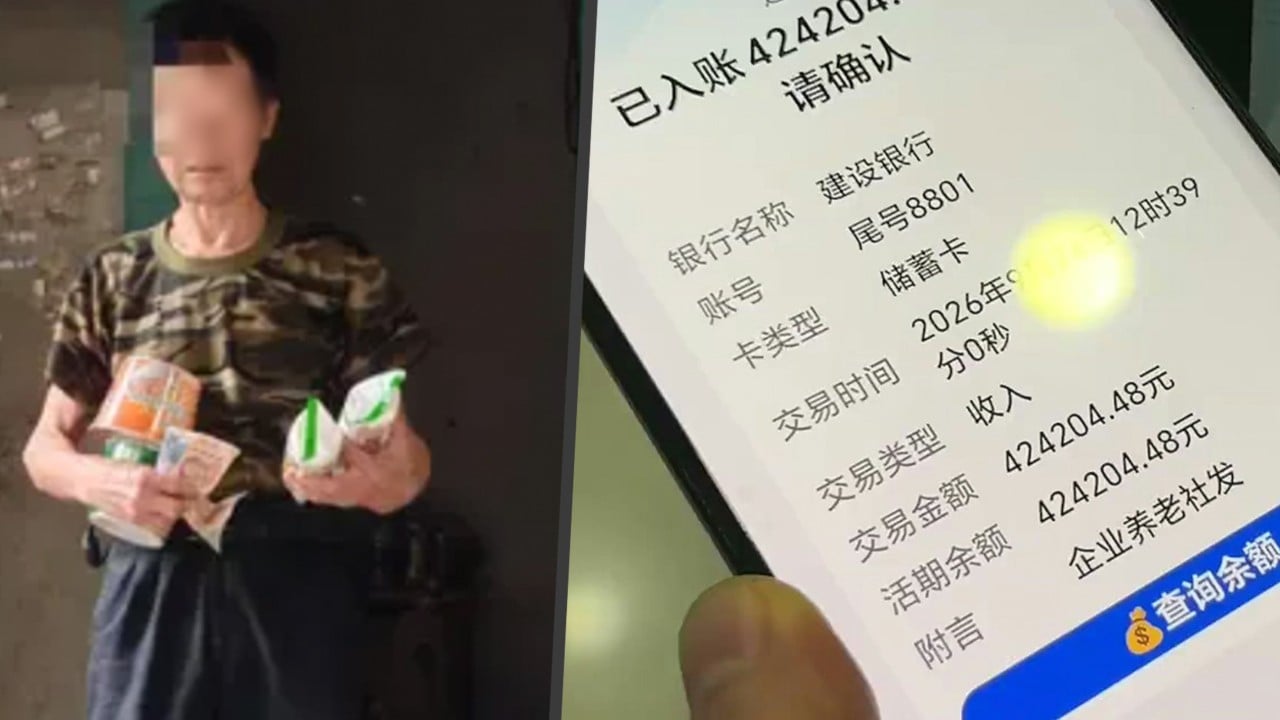
Row by row, document by document, they tallied the numbers. Some accounts had matured quietly in the dark, compounding interest over two decades without human intervention. Others were old bearer bonds that had survived the shifting tides of China's financial system. When the final ledger was closed, the total came to an astonishing sum: 450,000 yuan.
Roughly $63,000 in American currency.
Sixty-three thousand dollars. To a hedge fund manager in Shanghai, it is lunch money. To a tech worker in Shenzhen, it is a fraction of a down payment. But to a man who had spent twenty-one years eating scraps, sleeping in unheated concrete rooms, and counting every single fen to buy a steamed bun, it was an unimaginable kingdom.
It was a fortune built entirely on invisible discipline.
Consider the paradox of Chen’s life. While economists debated inflation rates, stock market corrections, and gross domestic product growth, this illiterate scavenger executed the purest form of long-term value investing in human history. He didn't check the financial news. He didn't panic during market downturns. He simply locked his capital away in the absolute darkest corner of his existence and left it alone for a generation.
When the news broke, local media swarmed his modest neighborhood. Cameras flashed in his startled, rheumy eyes. Microphones were thrust into his face. Reporters wanted to know the secret of his success. They wanted a headline about a financial genius hiding in plain sight. They wanted him to speak of strategy, of foresight, of market acumen.
Chen just blinked at them.
He didn't feel like a genius. He felt tired. He felt cold. When asked what he planned to do with the money, his answers were heartbreakingly modest. He didn't talk about sports cars or luxury apartments. He talked about medical care. He talked about a warm bed where the rain didn't leak through the ceiling. He talked about buying decent food that didn't come from the bottom of a bin.
The story went viral across Chinese social platforms within hours. Millions of people read about the seventy-one-year-old scavenger and reacted with a complex cocktail of shock, amusement, and deep, aching melancholy.
Why did it strike such a profound nerve?
Because Chen represents our deepest collective anxiety about modern life. We live in an era of hyper-visibility, where every dollar is tracked, every transaction is optimized, and every moment of our day is monetized or analyzed. We are constantly told that we are falling behind, that our savings accounts are insufficient, that we are failing to leverage our potential.
Yet here was a man who achieved financial security entirely by accident, through a combination of pathological thrift and sheer, unadulterated endurance. He lived at the absolute bottom of the social hierarchy, yet he possessed a nest egg that would be the envy of many working-class families who spend their lives drowning in consumer debt.
There is a grim irony in the way we value labor. The people who clean our streets, sort our garbage, and carry the heavy physical burdens of civilization are paid the least. They are treated as disposable inputs. Society extracts their energy until their joints give out, and then discards them to the margins. Chen’s hidden fortune does not correct this systemic injustice; it highlights it. It tells us that to survive at the bottom, one must hoard so fiercely, so desperately, that even wealth itself becomes indistinguishable from trash.
As the dust settled and the banking institutions worked to consolidate his scattered accounts into a single, accessible fund, Chen was moved to a managed care facility. For the first time in over two decades, he had a room with a door that locked from the inside, a bed with clean sheets, and meals delivered on a regular schedule.
Yet, according to the nurses who tend to him, he still occasionally reaches into his pockets with trembling fingers, searching for something that isn't there. He still checks beneath his mattress. The habit of decades is not erased by a bank statement. Poverty leaves scars on the mind long after the bank account balance has changed.
We look at numbers like $63,000 and we want them to be a fairy tale. We want the poor man to find his treasure, smile for the cameras, and live happily ever after. But human lives are messier than fairy tales. Money can buy medicine; it cannot buy back twenty-one years of winter rain in your bones. It can secure a warm room; it cannot erase the memory of what it felt like to be invisible.
The streets of Zhejiang are still cold in the early morning. Other men and women still push their rusted carts through the grey dawn, their eyes fixed on the pavement, hunting for aluminum cans and cardboard boxes. They do not know about Chen's fortune. Even if they did, it would change nothing about their day. They still have to eat. They still have to bend their backs.
Somewhere in that sprawling, racing city, a cart squeaks against the curb. A gloved hand reaches into a dumpster. And the world keeps turning, entirely unaware of what might be hiding beneath the rubbish.