Einstein called it spooky.
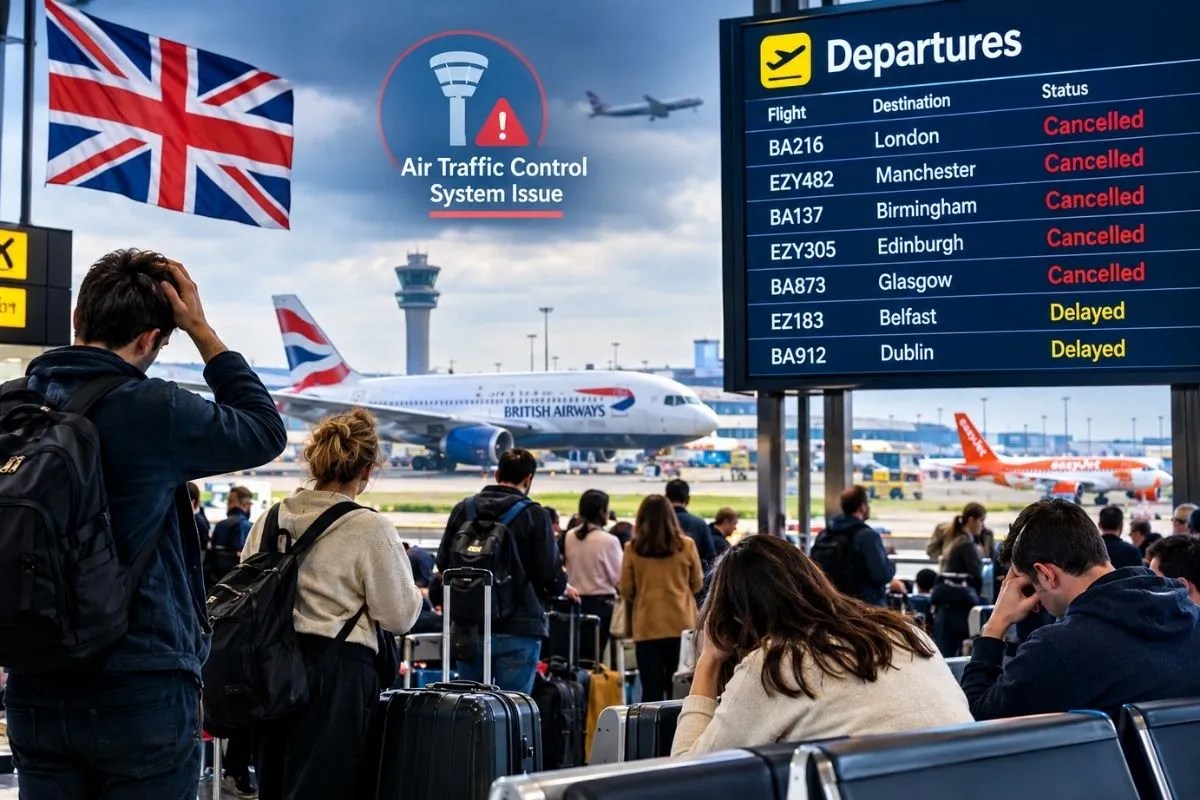
He meant it literally. The idea that two subatomic particles could be permanently linked, so that tickling one instantly changes the other across the universe, felt more like a seance than physics. He spent his later years trying to prove it was a mistake. He died believing the universe kept its secrets local, predictable, and sane. Also making news in this space: Why the UK Air Traffic Control Collapse Exposes a Fragile System.
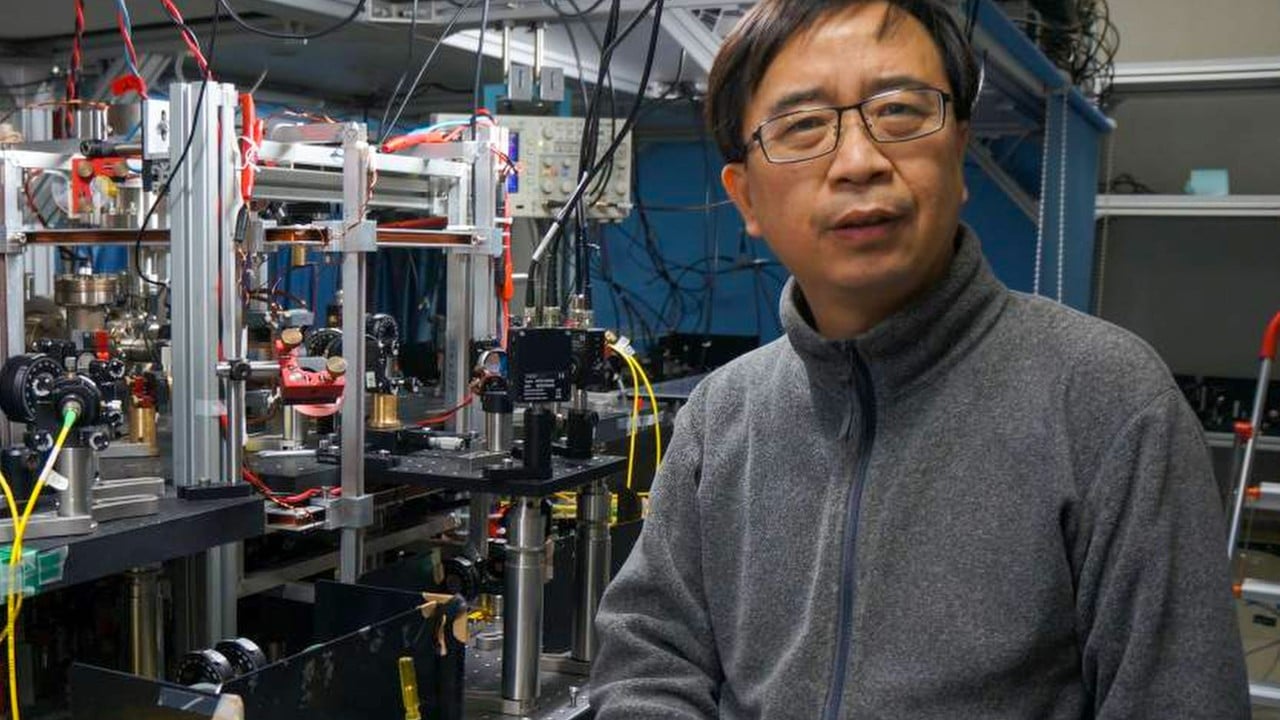
Pan Jianwei disagreed.
To understand why this matters, consider a hypothetical modern bank transfer. Right now, a string of ones and zeros moves from a terminal in Beijing to a server in Paris. It relies on mathematical puzzles to stay hidden. If a malicious actor intercepts that string, they can store it, wait for a fast enough computer to break the math, and read your private life like an open book. Every piece of data we entrust to the air is a ticking time bomb. Additional details regarding the matter are explored by Wired.
Pan looked at Einstein’s ghost and saw a shield.
If you use entangled particles to build a key, the laws of physics protect the secret. If an eavesdropper so much as looks at the key while it travels, the fragile quantum connection shatters. The data corrupts. The alarm sounds instantly. It is a security system guaranteed not by clever human code, but by the fundamental architecture of reality.
For decades, this was just beautiful chalkboard theory. The math worked, but the world is messy. Entangled photons are delicate things. Send them through a glass fiber optic cable, and they absorb into the glass within a few dozen miles. Send them through the open air, and the dust, moisture, and turbulence of our atmosphere swallows them whole. By the early 2000s, physics faced a wall. Quantum communication worked across a laboratory room, or perhaps across a city neighborhood on a very clear night. Beyond that, the signal died.
Pan decided to shoot the photons into the void.
If the atmosphere is too thick, you leave it behind. In 2016, his team launched Micius, a dedicated quantum science satellite, into low Earth orbit. The plan sounded absurd to traditional engineers. A satellite orbiting at hundreds of miles above the planet, moving at thousands of miles per hour, had to beam individual, fragile pairs of entangled light particles down to two separate ground stations separated by a thousand kilometers of wilderness.
Imagine standing on top of a speeding bullet train, holding a laser pointer, and trying to hit a coin blinking on the back of another speeding train miles away.
They hit the coin. Micius successfully beamed the keys down to Earth, establishing the first space-to-ground quantum network. Pan proved that distance could not break the ghost in the machine.
On July 10, 2026, the United Nations Educational, Scientific and Cultural Organization announced Pan Jianwei as a winner of the 3rd Mendeleev International Prize in Basic Sciences. He is the first Chinese scholar to receive the honor. The award recognizes breakthroughs that carry profound socio-economic impacts. It is a nod to a simple truth: the future of global infrastructure will likely be built on the back of Pan’s light beams.
People often ask why nations pour billions into basic science when immediate problems plague the ground. The answer lies in the shift from theoretical concepts to practical reality. Pan’s team did not stop at satellites. They built Zuchongzhi 2.1, a quantum computer using superconducting circuits that processed tasks millions of times faster than existing conventional machines.
The world is entering a quiet race. The math we use to protect our medical records, our state secrets, and our power grids will eventually fail against the brute force of quantum computing. We are building the locks before the thieves finish building the master key.
Pan will walk onto the stage at the UNESCO Headquarters in Paris on July 17 to accept a medal and a share of the prize. The ceremony will be full of diplomatic speeches and polite applause.
But the real work remains invisible, quietly orbiting overhead in the cold silence of space, where a tiny machine continues to fire single points of light through the dark, stitching together a world that cannot be broken.