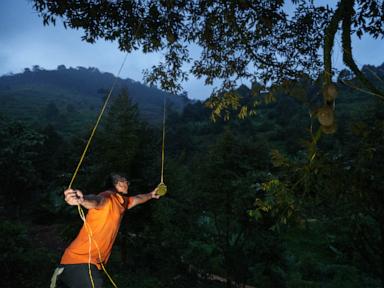
The headlines love a tragedy. Open any major trade publication right now, and you will find the exact same weeping narrative: climate change is coming for the Malaysian durian. Droughts are baking the orchards of Raub, unseasonal downpours are rotting blossoms before they set, and the almighty Chinese market is supposedly slipping through the fingers of sweating, helpless farmers.
It makes for great environmental theater. It is also fundamentally wrong.
I have spent years on the ground in Southeast Asia tracking supply chains, and I am tired of the lazy consensus that farmers are merely passive victims of a warming planet. The standard narrative treats agriculture like a fragile glass figurine waiting to be dropped. Reality is far more brutal and far more interesting.
Malaysian durian growers are not drowning in climate woe. They are weaponizing it. What the mainstream media brands as a crisis is actually a ruthless Darwinian filter that is pricing out amateurs, concentrating capital, and driving up profit margins for operators sharp enough to adapt.
Let us dismantle the panic.
The Flawed Premise of Agricultural Fragility
The core argument driving the panic goes like this: temperature spikes and erratic rainfall disrupt the flowering cycle of the durian tree. Lower yields equal lower revenue. Lower revenue equals the collapse of the industry as China's insatiable appetite for Musang King goes unfed.
This line of thinking assumes two absurd things. First, it assumes durian trees are delicate houseplants that panic at a drop of rain. Second, it assumes that fixed supply in a booming luxury market is a bad thing for the people holding the asset.
Durian is not a subsidized commodity crop like Midwestern corn or European wheat. It is a high-value, niche luxury good. In luxury markets, scarcity is not a bug; it is the entire business model.
When weather patterns stress a durian tree, something fascinating happens to the fruit. Water stress concentrates the sugars. It intensifies the bitter-sweet flavor profile that Chinese consumers pay top dollar to experience. A stressed Musang King does not taste worse; it tastes more expensive.
I have watched operators blow millions trying to engineer sterile, climate-controlled greenhouses for tropical fruit, missing the point entirely. The unique terroir of Pahang or Johor relies on environmental volatility. The erratic weather creates flavor profiles that automated farming can never replicate.
The Economics of Hyper-Concentration
Let us look at what is actually happening on the ground in Raub and Bentong. Small-scale farmers who planted a few trees behind their houses thirty years ago without a drainage plan or capitalization are struggling. Their yields are dropping. They are selling their land to larger conglomerates.
The consensus calls this a tragedy of smallholder displacement.
The market calls this consolidation and efficiency gains.
When institutional money and tech-forward agricultural groups step in, they do not cry about the weather. They install smart irrigation grids, deploy drone monitoring, and optimize soil pH with surgical precision. They treat climate change as a variable to be managed rather than an act of God to be feared.
The mom-and-pop growers who refuse to modernize are getting squeezed out, yes. But the total output value of the Malaysian durian sector is climbing because the product leaving the country is commanding higher tiers of pricing.
China does not want cheap durian. If they wanted volume-driven, cheap fruit, they would rely entirely on Thailand's mass-market Monthong shipments, which flood the ports by the cargo ship. China buys Malaysian durian precisely because it is rare, fresh, tree-ripened, and premium. Every climate disruption that trims total yield acts as an artificial supply restriction, driving spot prices higher for the producers who survive the filter.
The Counter-Intuitive Playbook for Growers
If you talk to agronomists who actually make money instead of writing alarmist op-eds, you find a completely different playbook being executed. The smart money is ignoring weather forecasts and focusing entirely on structural resilience and supply chain dominance.
Here is what is actually working right now:
- Deep Root Architecture: Growers are shifting away from shallow irrigation methods that make trees dependent on daily watering, forcing roots to dig deeper into the subsoil where moisture remains stable despite surface droughts.
- Genetic Selection: Nurseries are aggressively breeding drought-tolerant rootstocks while grafting elite scions like Musang King and Black Thorn onto them, bypassing centuries of slow evolutionary adaptation.
- Cold Chain Dominance: The real bottleneck was never the farm; it was the transit. Producers are investing heavily in nitrogen-flushed, rapid-freeze logistics that allow fresh fruit to hit Shenzhen markets without losing the volatile aromatic compounds that justify a three-figure price tag.
The winners in this market are treating climate pressure as a competitive moat. If erratic weather makes it harder to grow premium durian, then the barrier to entry skyrockets. That protects existing margins for the operators who master the new environmental baseline.
The Downside Nobody Talks About
Every contrarian take has a blind spot, and mine is this: the human cost at the bottom of the ladder is real.
When climate pressures accelerate the corporate takeover of agricultural land, rural communities change. Generational orchard owners who lose their land to debt or low yields become wage laborers on the very farms their grandfathers planted. That is a brutal social shift.
Ignore the bleeding-heart framing about the fruit itself, though. The durian tree will outlast us all, provided it is managed by people who understand that nature is a combat zone, not a garden.
Stop mourning the weather. Start watching the balance sheets. The growers making a killing right now are too busy cashing checks from Shanghai to read the weather reports.