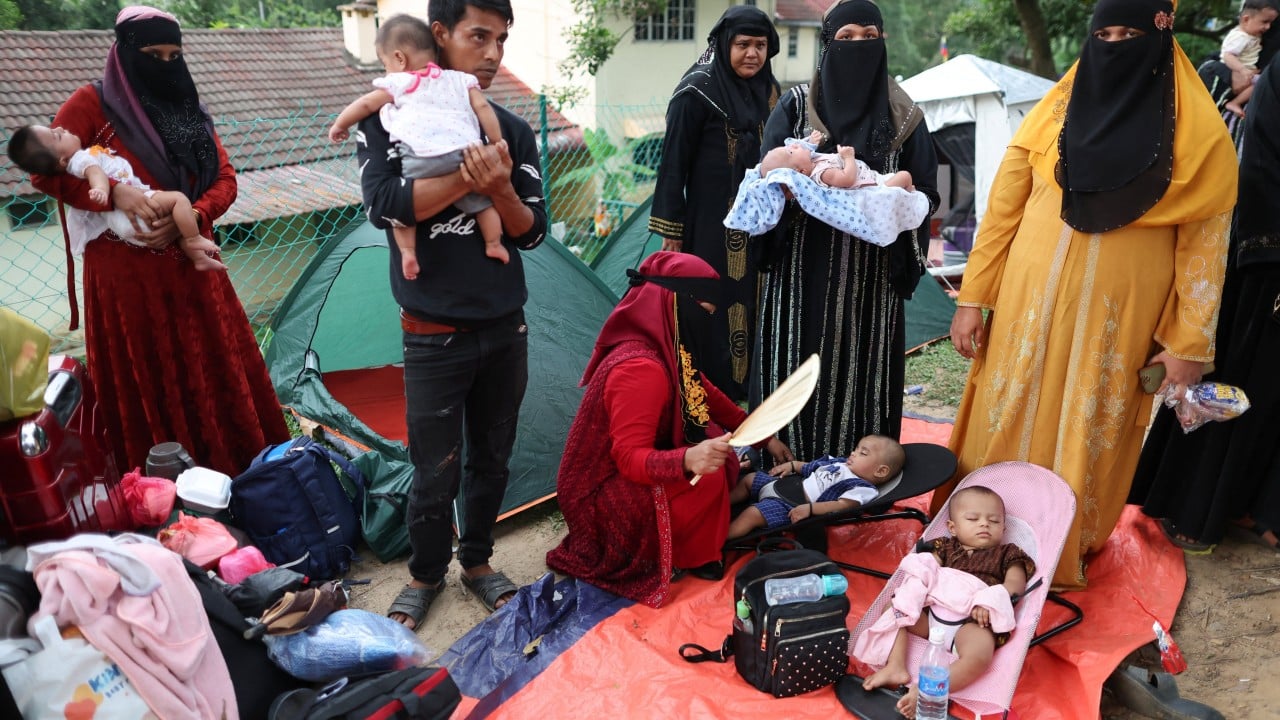
Malaysia is moving toward letting refugees work legally, driven not by sudden humanitarian generosity, but by a severe labor shortage across plantations, construction sites, and manufacturing floors. While employers and economists welcome the potential influx of documented workers, human rights advocates warn that granting work permits without formal legal recognition risks creating a state-sanctioned underclass vulnerable to wage theft, passport confiscation, and arbitrary deportation.
The numbers tell a stark story. Malaysia is not a signatory to the 1951 UN Refugee Convention or its 1967 Protocol. Under current Malaysian immigration law, refugees and asylum seekers hold no distinct legal status; they are classified simply as undocumented migrants. Even those holding cards issued by the UNHCR (United Nations High Commissioner for Refugees) live in a precarious gray zone. Technically, they remain subject to arrest, detention, and deportation for immigration offenses. Yet roughly 180,000 to 200,000 UNHCR-registered refugees—predominantly Rohingya from Myanmar, alongside other ethnic minorities from Myanmar, Afghanistan, Somalia, and Syria—already live inside the country. Many are already working. They wash dishes in Kuala Lumpur, haul bricks on suburban housing developments, and harvest palm oil in rural estates, all entirely off the books.
The Economic Math Behind the Policy Shift
For decades, Putrajaya resisted formalizing refugee labor, arguing that doing so would act as a magnet for further irregular migration across the Andaman Sea and porous northern land borders. That resistance is colliding with economic reality.
Malaysia’s economy relies heavily on low-skilled foreign labor. Following pandemic-era border closures and subsequent freezes on new foreign worker quotas, critical sectors found themselves starved of manpower. Palm oil plantations reported millions of ringgit in unharvested fruit rotting on trees. Semiconductor factories and construction firms complained of delayed contracts. Meanwhile, recruiting migrant workers from traditional source countries like Bangladesh, Indonesia, and Nepal has become notoriously expensive, slow, and tangled in middleman recruitment fees that frequently trigger forced labor red flags from Western customs authorities.
Refugees represent an immediately available workforce already inside Malaysia’s borders. There are no quarantine delays, no airfare costs, and no bilateral labor Memorandums of Understanding to negotiate with foreign governments. From a purely macroeconomic standpoint, allowing refugees to work legally solves two problems at once: it plugs urgent labor gaps for Malaysian businesses and reduces the state's indirect burden by allowing displaced families to achieve self-reliance rather than relying on charity or informal street economies.
The Legal Trap Inside the Proposal
The friction lies in how the government intends to execute this plan. Under Malaysia’s Immigration Act 1959/63, there is no legal category for a refugee. Unless Parliament amends the primary legislation—a politically sensitive move that successive administrations have avoided—any work authorization must be issued through ministerial exemptions or temporary pass mechanisms, such as specialized Visitor’s Passes (Temporary Employment).
This administrative workaround creates a dangerous structural imbalance.
When a worker’s right to remain outside a detention center is tied strictly to an employment contract with a single employer, the power dynamic becomes overwhelmingly lopsided. Consider a hypothetical example of how this plays out on the ground. Suppose a Rohingya refugee is issued a temporary work pass tied to a mid-sized construction subcontractor. Three months into the job, the subcontractor stops paying overtime or deducts arbitrary "levy fees" from his monthly wages. If the worker walks off the job, his permit is voided. Once his permit is voided, he reverts instantly to being an undocumented migrant subject to arrest during an immigration raid. Unlike a regular migrant worker from Indonesia or Nepal, he cannot simply take a flight home if the job turns abusive; returning to Myanmar could mean persecution or death.
Advocates point out that Malaysia has tried variations of this before, and the results were sobering. Between 2017 and 2020, the government ran a pilot project allowing a small cohort of Rohingya refugees to work in the plantation and manufacturing sectors. Fewer than a few hundred people participated. The program stalled because of rigid placement rules, lack of clear protections against exploitation, and the reluctance of employers to navigate unfamiliar bureaucratic hurdles for a small pool of workers.
Why Advocates Are Demanding Structural Safeguards
Civil society groups, labor unions, and legal aid organizations are not opposing the right to work; they have campaigned for it for twenty years. Their alarm stems from the fear that a poorly designed policy will simply formalize existing abuses while giving the government and corporations the veneer of ethical compliance.
To prevent this, advocates are pushing for four concrete guardrails before any large-scale rollout begins:
- Portability of employment. Work permits must belong to the individual, not the employer. Refugees need the legal ability to change jobs if their employer violates labor laws, shuts down, or subjects them to abuse, without losing their right to stay in the country.
- Full coverage under the Employment Act 1955. Refugees must be explicitly guaranteed the same statutory minimum wage, maximum working hours, rest days, overtime rates, and social security protections (such as SOCSO injury coverage) as Malaysian citizens and regular foreign workers.
- Access to formal banking and healthcare. Right now, most refugees cannot open standard bank accounts because they lack a national passport or a Malaysian MyKad. If employers are permitted to pay them in cash, wage theft becomes nearly impossible to audit. Similarly, without access to affordable public healthcare or mandatory employer-funded insurance, a single workplace accident or severe illness can bankrupt a family overnight.
- A firewall between labor complaints and immigration enforcement. If a refugee reports an abusive boss to the Department of Labour, their information must not be shared with the Immigration Department. Without an airtight firewall, labor laws exist only on paper for undocumented or semi-documented populations.
The Supply Chain Pressure Cookers
There is another, less publicized reason why Putrajaya and major Malaysian corporations are suddenly paying closer attention to safeguards: Western trade enforcement.
Over the past five years, the United States Customs and Border Protection (CBP) has issued multiple Withhold Release Orders against major Malaysian glove manufacturers and palm oil producers over indicators of forced labor—specifically debt bondage, retention of identity documents, and abusive living conditions. Those bans cost Malaysian exporters hundreds of millions of dollars in blocked shipments and forced painful, expensive remediation programs.
International buyers in the US and Europe now audit Malaysian supply chains aggressively. If a multinational electronics or apparel brand discovers that a Malaysian supplier is employing refugees under a government scheme that lacks basic labor protections, freedom of movement, or grievance mechanisms, that supplier risks immediate contract termination. Corporate compliance officers do not care whether a worker is labeled a "migrant" or a "refugee" under domestic law; they evaluate against International Labour Organization (ILO) forced labor indicators.
Consequently, the most sophisticated employers in Malaysia actually align with human rights advocates on several points. Major exporters do not want a chaotic, unregulated permit system that exposes them to international sanctions. They want clear, auditable legal documentation, bank-transfer wage payments, and standardized contracts that satisfy foreign compliance auditors.
The Political Tightrope in Putrajaya
Even with economic logic and trade pressure pushing in the same direction, domestic politics remains a volatile obstacle.
Xenophobia and anti-refugee sentiment have flared periodically in Malaysia, particularly during economic downturns or election cycles. Viral misinformation on social media frequently portrays refugees—especially the Rohingya community—as drains on public resources or threats to local livelihoods, despite the fact that refugees receive no state welfare subsidies and are barred from public schools.
Politicians across the spectrum are acutely aware of this sentiment. Framing the policy as a "humanitarian gesture" invites immediate backlash from opposition parties and nationalist groups. Framing it strictly as a "temporary economic measure to fill dirty, dangerous, and difficult jobs that locals refuse" is far safer politically, yet that exact framing encourages policymakers to strip away long-term rights, family unification, and pathways to permanent residency.
There is also the unresolved question of the children. Tens of thousands of refugee children in Malaysia are currently excluded from the national public school system, relying instead on an underfunded patchwork of community-run learning centers. If their parents are formally integrated into the tax-paying workforce, the moral and practical contradiction of barring their children from public education becomes harder to ignore.
What Separates a Lifeline from a Trap
Right now, refugees in Malaysia operate in an underground economy where an employer can withhold three months of pay and threaten to call the police if the worker complains. Bringing that workforce into the light is undeniably necessary. A formal right to work could lift tens of thousands of families out of chronic poverty, reduce their vulnerability to extortion during police roadblocks, and inject hundreds of millions of ringgit in legitimate economic activity and tax revenue into the Malaysian economy.
The outcome depends entirely on the fine print of the ministerial order. If the policy grants refugees a plastic card that lets them clock into a factory while keeping them tethered to a single boss, barred from bank accounts, and one dispute away from an immigration detention depot, Malaysia will not have solved its refugee crisis or its labor compliance problem—it will simply have codified them.