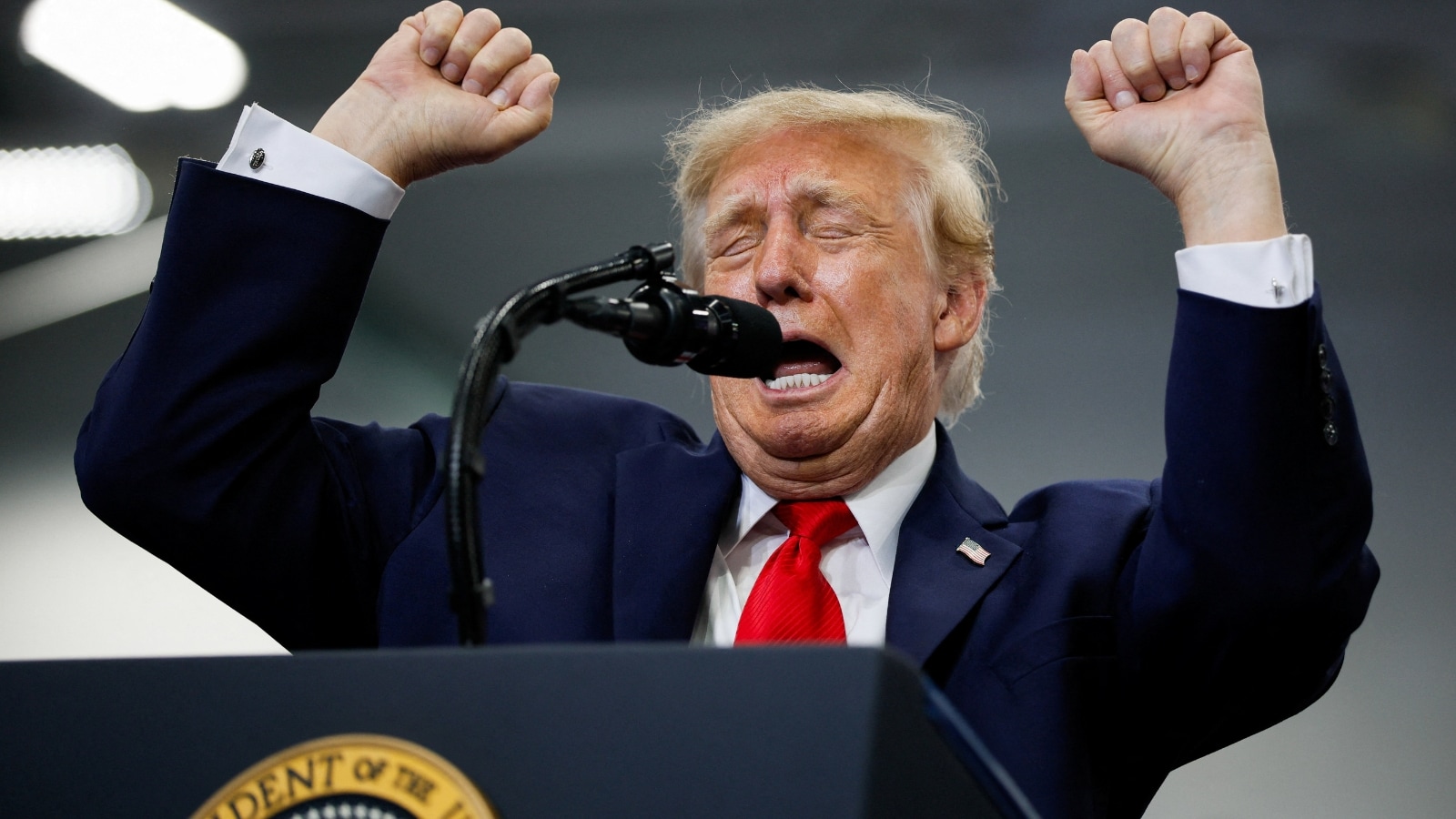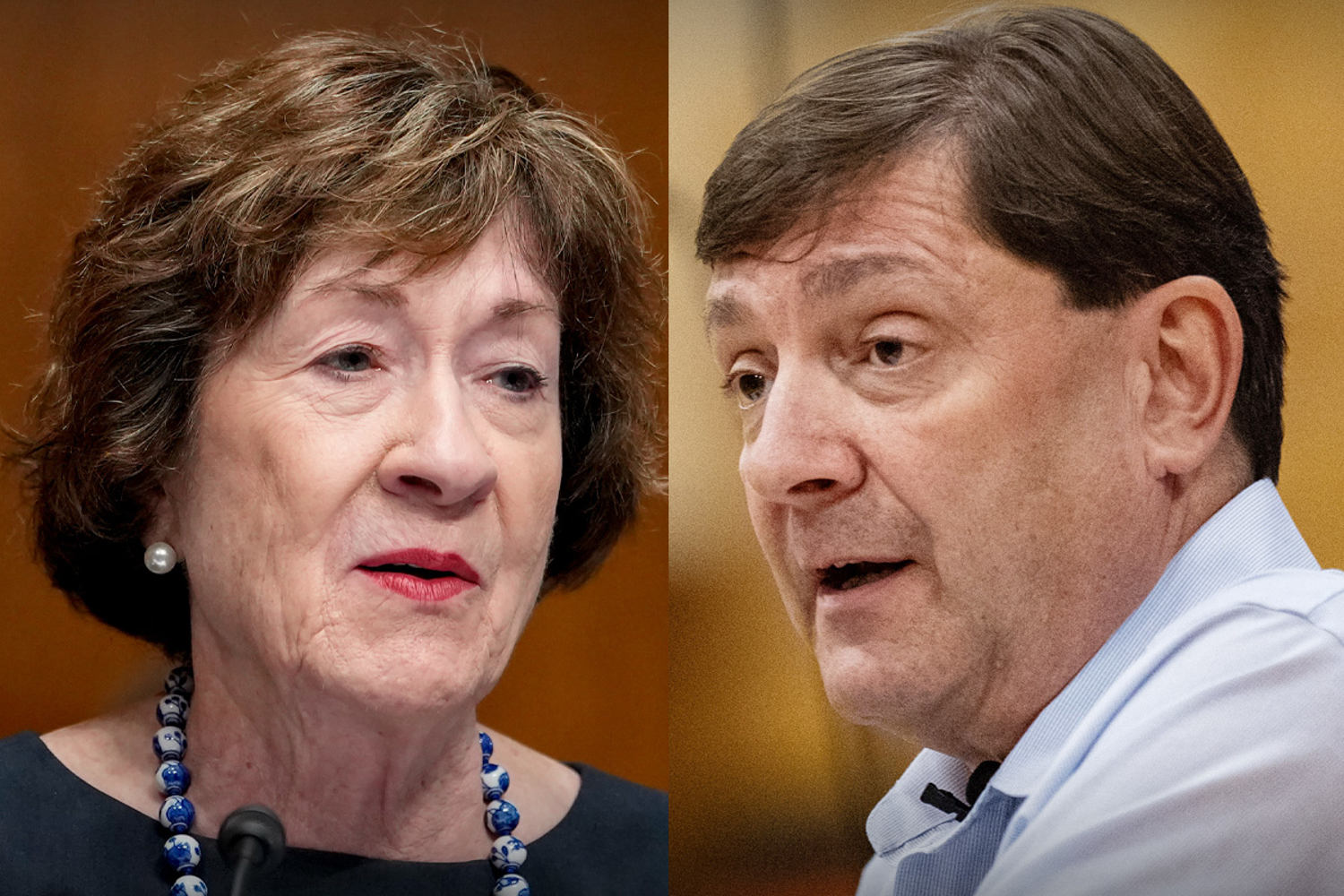
Final debates in competitive Senate races rarely change minds through policy nuance alone; instead, they function as stress tests where challengers force swing voters to treat an incumbent as a proxy for an unpopular national executive. In the 2026 Maine U.S. Senate contest, the closing debates between five-term Republican incumbent Susan Collins and Democratic challenger Troy Jackson exposed a structural vulnerability that conventional debate coverage treats as mere personality or "tension". Rather than viewing the clashes as isolated theatrical moments, analysts must evaluate them through three core mechanisms: nationalization pressure, credibility discounting, and resource asymmetry.
By mapping how standard debate reporting frames these clashes and replacing descriptive shorthand with formal political economy mechanics, we can see why Collins's decades-old ticket-splitting model strained under the weight of President Donald Trump's national brand. More importantly, examining the November 3, 2026 outcome—in which Jackson defeated Collins with 53.07% of the vote to Collins's 46.87%—demonstrates what happens when debate framing aligns with pre-existing fiscal, trade, and turnout dynamics.
Deconstructing Conventional Debate Coverage
Standard campaign journalism covering late-stage debates typically relies on an episodic narrative arc. A reporter identifies a central figure hovering over the stage—here, Donald Trump—catalogs sharp exchanges between the incumbent and challenger, notes policy friction points such as tariffs or war powers, and ends on a suspenseful question about voter impact. That structure is useful for rapid news consumption, yet it leaves three analytical blind spots.
First, episodic coverage treats nationalization as a mood rather than an incentive structure. Saying a president "looms" over a race describes atmosphere, not the strategic calculus by which a challenger ties a Senate vote to executive actions that voters experience in daily prices and cross-border commerce. Second, standard recaps rarely model credibility discounting. When an incumbent who has built a brand on institutional independence criticizes a party leader during an election month, voters weigh both the substance of the critique and the timing of the pivot. Third, debate summaries often separate on-stage rhetoric from off-stage fundraising and organizational throughput, even though debate clips serve as fuel for digital persuasion and donor mobilization in the final weeks.
To elevate the analysis from chronicle to diagnosis, we must separate known facts from educated hypotheses throughout the inquiry. Known facts include the candidates' debate arguments on executive war powers and trade tariffs, campaign finance filings showing Jackson raising more than $20 million between July and September 2026 compared to Collins's $5.2 million in that window, and the final November 3, 2026 election result. Educated hypotheses include specific causal weights assigned to individual debate exchanges versus structural headwinds such as cost-of-living frustration and cross-border trade friction.
The Three Pillars of Senate Debate Leverage
In a statewide contest where a challenger seeks to unseat a long-serving incumbent, debate leverage depends on three operational pillars: proxy attribution, salience capture, and contrast clarity.
Proxy Attribution
Proxy attribution occurs when a challenger links the incumbent's legislative record or institutional posture directly to the executive branch's most contested actions. In Maine—a state Trump never won in presidential contests—any linkage between Collins and Trump carries built-in friction for a Republican Senate candidate. Jackson's core strategic move across the debate series was asserting that whenever Trump needed Collins, she delivered, framing her occasional breaks from the administration as insufficient to offset alignment on key priorities.
From a game-theoretic perspective, this forces the incumbent into a two-front defense. Collins had to maintain enough standing with her party's base to avoid primary-style defection while persuading moderate and independent Mainers that she remained an independent check. That dual optimization problem becomes acute in a final debate because every concession to independence risks looking tactical, while every defense of executive policy risks alienating swing voters.
Salience Capture
Debates do not merely answer voter questions; they compete to set which issue dominates the final two to three weeks of media coverage. When Collins pointed to efforts removing specific Canadian trade items—such as pulp, concrete, and road salt—from tariffs, she attempted to shift salience toward targeted constituent relief and legislative troubleshooting. Jackson countered by dismissing the practical sufficiency of those carve-outs, famously quipping that residents cannot eat road salt.
That exchange illustrates salience capture in action. Collins sought to narrow the frame to incremental policy mitigation, whereas Jackson sought to broaden the frame to macroeconomic and pocketbook burden. Whichever frame anchors local news clips and social feeds determines how voters interpret subsequent economic data.
Contrast Clarity
Effective debate execution requires sharp role differentiation. Collins leaned on her three-decade tenure, seniority, and willingness to oppose certain administration moves, including criticizing measures related to war with Iran as poorly thought out and damaging to global energy markets. Jackson, a former state Senate president and logger, leaned on a populist, working-class biography and a critique of institutional alignment.
Contrast clarity fails when an incumbent's defense sounds overly procedural while the challenger's critique maps cleanly onto everyday frustrations like affordability and trade disruption. Even when a voter respects an incumbent's seniority, high salience on cost-of-living pressures can make seniority look like status-quo preservation rather than problem-solving.
The Cost Function of Late-Stage Incumbent Pivots
Why do late-stage distance-creating arguments from a seasoned senator often face steep headwinds? We can model the incumbent's Reputation Adjustment Cost as a function of three variables:
- Historical baseline alignment ($B$): How frequently voters perceive the incumbent as having backed or enabled the executive's broader agenda over time.
- Timing proximity to election day ($T$): How close the critique occurs to ballot casting, which governs whether voters view the stance as principled conviction or electoral self-preservation.
- Policy materiality ($M$): Whether the break occurs on a high-consequence vote or policy dispute that alters tangible outcomes, rather than a symbolic or marginal disagreement.
When $B$ is perceived as high and $T$ is compressed into the final month of a campaign, voters apply a discount factor to rhetorical distance unless $M$ is unmistakably high. Arguing that one is "not exactly" a president's favorite senator or pointing to narrow tariff exemptions faces higher discounting than a decisive legislative rupture.
A common analytical error is assuming that voters evaluate a senator's record on a cumulative ledger where one good vote cancels out ten frustrating ones. In practice, electorate decision-making often follows loss aversion and recency weighting: acute grievances over energy prices, cross-border tariffs, or federal enforcement carry disproportionate weight compared to abstract institutional norms. As an educated hypothesis, Maine voters weighing affordability and trade friction in autumn 2026 likely discounted incremental carve-outs more heavily than long-standing reputation metrics.
Cause-and-Effect Chains Conventional Recaps Miss
When we trace the causal chain from debate arguments to electoral mechanics, four linkages stand out that surface-level debate summaries routinely overlook.
First Link: Trade Friction to Local Supply Chains
Tariffs involving a direct border neighbor like Canada are not abstract macroeconomic debates in northern and eastern New England; they touch construction inputs, forest products, and winter maintenance materials. When a candidate highlights exemptions for items such as pulp, concrete, and road salt, the underlying mechanism is an attempt to neutralize supply-chain anger. Yet if voters view the broader tariff regime as driving up costs across the board, narrow exemptions can inadvertently spotlight the existence of the broader trade conflict rather than resolving it.
Second Link: Foreign Conflict Rhetoric to Energy Price Anxiety
Debate exchanges over executive war powers involving Iran connect foreign policy directly to domestic household budgets through global energy markets. In states with substantial heating and commuting costs, energy market volatility acts as a tax multiplier. Even when both candidates express skepticism toward aspects of presidential action, the challenger gains an structural advantage if they can argue the incumbent allowed executive overreach to reach that point.
Third Link: Fundraising Asymmetry to Turnout and Persuasion Velocity
Debate performance rarely operates in a vacuum; it interacts with campaign capital. According to campaign finance reporting highlighted in autumn 2026, Jackson raised over $20 million between July and September compared to Collins's $5.2 million during the same period. That nearly four-to-one third-quarter fundraising gap gave the challenger substantial capacity to sustain paid media, field organizing, and rapid digital amplification of sharp debate moments right as early and mail voting accelerated.
Fourth Link: Ranked-Choice Voting and Coalition Consolidation
Maine conducts statewide general elections using ranked-choice voting. Unlike a simple plurality contest where fragmented third-party or protest votes can bail out a plurality leader, ranked-choice mechanics reward the candidate who can build majority-level consolidation across progressive, moderate, and persuadable voters. When national dissatisfaction rises—reflected in a 65.7% turnout rate, up 10.1 percentage points—coalition breadth becomes decisive.
How Voters Process Conflicting Narratives in Tight Races
People following high-stakes Senate debates typically want to know three practical things without wading through partisan spin: how much a final debate actually shifts undecideds, why a long-tenured moderate can suddenly look vulnerable, and what signals matter more than soundbites in the closing stretch.
Debate Impact on Persuasion vs. Mobilization
Final debates seldom convert hardened partisans, and even among persuadable voters, a single exchange rarely flips a deeply held worldview on its own. Instead, debates act as confirmation and salience amplifiers. Undecided or cross-pressured voters use final debates to test whether the challenger sounds credible enough to govern and whether the incumbent's defense matches lived reality. High-energy clashes also mobilize base volunteers and donors during the exact window when door-knocking, mail ballot chasing, and ad buys peak.
Why Tenure Can Turn Into a Liability
Long tenure creates two assets—institutional seniority and familiarity—alongside one major liability: ownership of the status quo. When voters feel squeezed by affordability or frustrated by national politics, a long-serving incumbent has a harder time claiming to be an outsider agent of change. A challenger with state legislative experience and a non-elite occupational background can frame institutional longevity as detachment, especially when paired with sharp critiques of party loyalty.
Signals That Outweigh Soundbites
Rather than judging a debate solely by who delivered the sharper one-liner, analysts and informed voters should track four concrete indicators:
- Message discipline across formats: Whether the candidate repeats the same core economic or accountability frame across multiple debates and interviews rather than improvising new defenses.
- Issue ownership on cost and trade: Which candidate voters trust more on household affordability and regional economic stability.
- Resource velocity: Late-cycle fundraising and ad spending trends that determine who controls the airwaves and ground game.
- Turnout and early-ballot momentum: Signs of elevated engagement among core constituencies, such as the more than 311,000 mail-in ballots cast ahead of Election Day in Maine.
Tactical Playbook for Campaign Strategists
For strategists managing a Senate campaign under intense nationalization pressure, debate preparation and late-stage execution require disciplined operational steps rather than ad-libbing.
- Audit your proxy exposure before debate prep begins. Map every major executive action, foreign policy flashpoint, and tariff measure that an opponent will link to your record. Prepare concise, pre-tested responses that acknowledge voter pain directly before citing legislative actions.
- Anchor on tangible household metrics, not procedural carve-outs. When defending complex policy or trade work, translate technical wins into clear consumer or worker impacts. Avoid defensive technicalities that sound dismissive of broader economic anxiety.
- Pre-build rapid-response assets around likely debate clips. Identify the top five attack lines your opponent will use in the closing debate and prepare counter-messaging and digital cutdowns in advance so your narrative reaches voters within hours, not days.
- Align debate talking points with paid media and field scripts. Ensure canvassers, mail pieces, and digital ads reinforce the exact same contrast themes highlighted on stage, especially in states utilizing ranked-choice voting where second-choice persuasion matters.
- Pace resources for the post-debate window. Hold sufficient media and organizing capacity for the final two to three weeks after the last debate, when undecided voters finalize choices and mail/early voting reaches peak volume.
Limitations and Analytical Blind Spots
Even rigorous structural frameworks have boundaries, and over-indexing on any single model creates blind spots. First, post-hoc attribution bias can tempt analysts to credit a debate exchange for an election outcome that was already heavily shaped by months of economic sentiment, candidate transitions—such as Jackson replacing Graham Platner after the June primary—and national wave dynamics. Second, survey and media blind spots often undercount late-breaking turnout surges or subtle shifts among independent voters in ranked-choice environments.
Third, no debate strategy is a silver bullet against a strong national tide. A disciplined incumbent with sharp lines can still lose if macroeconomic headwinds, party brand drag, and fundraising deficits converge simultaneously. Conversely, a challenger with strong fundraising and clear themes can still falter if they overreach on divisive rhetoric or fail to consolidate moderate support.
Strategic Play for Future Contests
In competitive Senate races where an unpopular or polarizing president headlines the national environment, challengers should treat final debates as nationalization prosecutors and force the incumbent to defend the broader governing record on pocketbook terms—while incumbents facing strong national headwinds must pair concrete, widely felt economic relief with an unmistakable record of independent action well before the final debate window closes.
Sen. Susan Collins and Troy Jackson face off one last time
This video provides direct footage of the final 2026 Maine U.S. Senate debate between Susan Collins and Troy Jackson, allowing you to observe firsthand how the arguments over Trump, trade, and accountability analyzed above played out on stage.