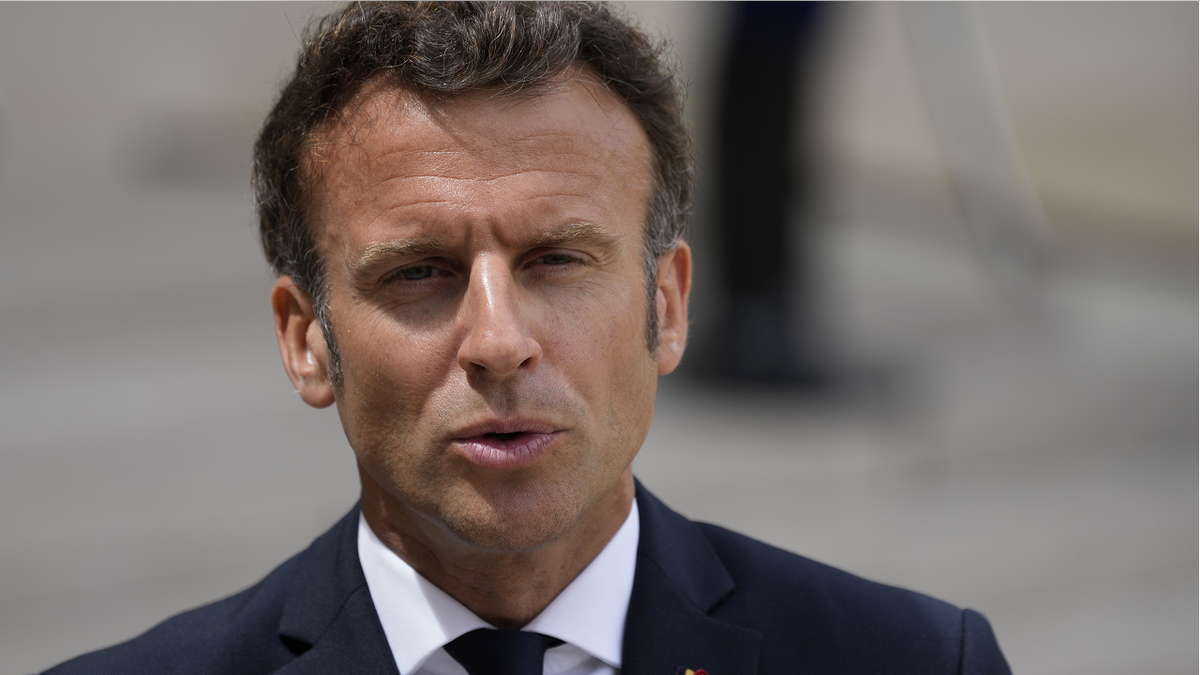
Emmanuel Macron has moved to secure the levers of French monetary policy by nominating his close associate and long-term adviser, Wilfried Galand, to lead the Bank of France. This isn't just a personnel change; it is a calculated hardening of the "Macronist" economic fortress. By placing a trusted lieutenant at the helm of the central bank, the Élysée Palace ensures that the president’s vision of fiscal flexibility and European integration remains insulated from the rising tide of political populism in the French parliament.
The appointment follows a pattern of technocratic consolidation that has defined Macron’s presidency. Galand, whose career has blurred the lines between private banking and high-level state strategy, represents the quintessential "En Marche" operative. He understands the mechanics of the market, but he understands the requirements of the Palace even better. This selection effectively closes the loop on French economic sovereignty, aligning the interests of the national treasury with the executive branch at a time when France’s debt-to-GDP ratio is under intense scrutiny from Brussels.
The Quiet Architecture of Financial Control
Central bank independence is often touted as a holy grail of modern economics. The theory suggests that by separating the people who print the money from the people who spend it, a nation can avoid the inflationary traps of political cycles. However, the reality in France has always been more nuanced. The Bank of France does not operate in a vacuum; it is a critical node in the Eurosystem, and its governor holds a seat on the Governing Council of the European Central Bank (ECB).
By installing Galand, Macron is not merely filling a domestic vacancy. He is placing a loyalist at the table in Frankfurt. This matters because the ECB is currently wrestling with the fallout of persistent inflation and the differing needs of northern and southern European economies. France, burdened by a heavy public spending habit, requires a central bank governor who can advocate for liquidity and stability without triggering a "bond vigilante" revolt.
Galand’s background in strategic advisory suggests he will be less of a hawkish inflation-fighter and more of a pragmatic mediator. He knows how to speak the language of the markets while executing the will of the state. This duality is essential for a presidency that has often struggled to balance its pro-business rhetoric with the crushing reality of France’s social welfare obligations.
Challenging the Myth of Independence
Critics are already pointing to the "revolving door" between the Élysée and the nation’s top financial institutions. The concern is that the Bank of France is becoming a mere extension of the Ministry of Finance. If the governor owes his career to the president, can he truly be expected to raise interest rates or tighten credit if it hurts the president’s polling numbers?
Historical precedent in France shows that the relationship between the central bank and the executive is often one of "coordinated tension." Under previous administrations, the governor occasionally acted as a foil to the government’s more extravagant spending plans. With Galand, that tension is likely to disappear, replaced by a seamless alignment of goals. This could be seen as a strength during a crisis, allowing for rapid, unified action. But in a stable economy, it risks creating a feedback loop where the state’s fiscal appetite is never checked by monetary restraint.
The institutional memory of the Bank of France is being rewritten. For decades, it was a bastion of conservative, almost monastic, financial caution. Now, it is being integrated into a more dynamic, aggressive, and politically sensitive apparatus.
The European Chessboard
We must look at the ECB. The French governor is one of the most influential voices in European monetary policy, often acting as the primary counterweight to the German Bundesbank. Traditionally, the Germans favor strict inflation targets and fiscal discipline, while the French lean toward growth and "European sovereignty"—a euphemism for collective debt and industrial subsidies.
Galand’s appointment signals that France will not be backing down from its push for a more interventionist ECB. He will likely support the "Transmission Protection Instrument" (TPI) and other mechanisms that allow the ECB to buy the bonds of highly indebted nations like France and Italy to prevent their borrowing costs from spiraling. To the markets, this is a signal of stability. To the purists, it is a dangerous blurring of the line between monetary policy and state bailouts.
The appointment also reflects a shift in the type of expertise valued at the top of the financial hierarchy. We are seeing fewer career academics and more political strategists in these roles. The complexity of modern finance requires a governor who can navigate the dark arts of political negotiation just as well as they can read a balance sheet.
The Debt Dilemma
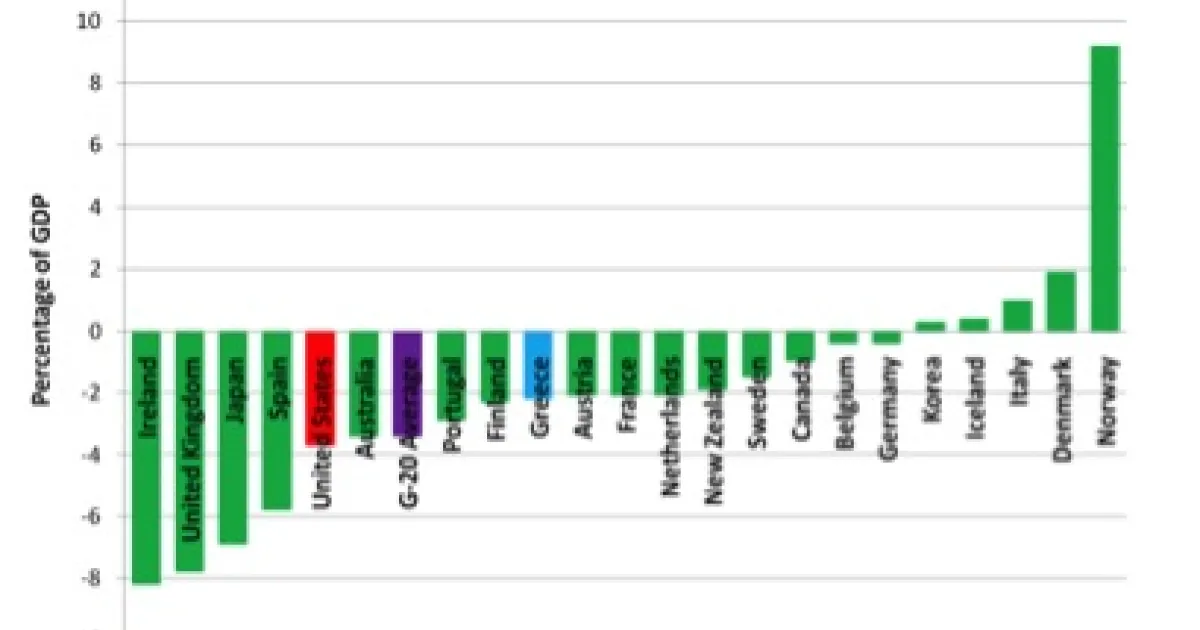
France’s fiscal position is increasingly precarious. The country has consistently missed deficit targets, and the European Commission has placed it under a "deficit procedure." In this environment, the Bank of France serves as a vital signal to international investors. If the governor is perceived as a puppet of the presidency, the "France risk" premium on government bonds could rise.
- Public Debt: Currently hovering around 110% of GDP.
- Deficit Targets: Repeatedly breached, leading to friction with the EU.
- Market Sentiment: Investors are wary of the political paralysis in the French National Assembly.
Galand will have to prove his autonomy almost immediately. His first few speeches will be picked apart for any sign that he is prioritizing Macron’s political survival over the long-term health of the euro. If he appears too eager to accommodate the government's spending plans, he may inadvertently trigger the very market volatility he was appointed to prevent.
The Technocratic Elite and the Populist Backlash
There is a broader sociological element at play here. The French public is increasingly skeptical of the "castes" that dominate the nation's institutions. Macron, a former investment banker himself, has often been accused of being the "President of the Rich." Appointing an insider like Galand to the Bank of France feeds into the narrative that the country is run by a narrow circle of elites who move between the halls of power and the boardrooms of the CAC 40.
This perception matters because the Bank of France plays a role in the daily lives of citizens, from regulating consumer credit to managing the files of those in severe debt. If the institution is seen as a political tool, it loses its moral authority. The populists on both the left and the right will use this appointment as ammunition, arguing that the "system" is rigged to protect the interests of the presidency at the expense of the taxpayer.
The Strategy of the Invisible Hand
The most effective governors are those who operate in the shadows, influencing policy through subtle shifts in rhetoric and careful participation in international forums. Galand’s challenge will be to become invisible. He needs to transition from a visible political adviser to a "grey man" of the central banking world.
If he succeeds, he will provide Macron with a stable financial environment in which to navigate the remaining years of his term. He will ensure that the French banking sector remains resilient and that the country's voice remains dominant in European affairs. If he fails, he will be remembered as the man who oversaw the politicization of one of the world's most respected financial institutions.
The mechanisms of the Bank of France are geared toward long-term stability. The institution is designed to outlast any single presidency. However, the modern era of "perma-crisis"—from pandemics to energy shocks—has compressed these timescales. The Bank is now required to be more reactive and more integrated into the state's broader crisis-management strategy.
Institutional Risk and the Galand Era
What happens when the interests of the President and the interests of the Eurozone diverge? This is the ultimate test for any central bank governor. For Galand, the answer is complicated by his history. In a situation where the ECB demands austerity to save the euro, but the French President demands spending to prevent a domestic uprising, where will Galand's loyalty lie?
The structural reality of the Bank of France provides some protection. The governor has a fixed term and cannot be easily removed. This is intended to give them the "spine" to say no to their political masters. But the power of patronage is subtle. It isn't always about a direct order; it’s about a shared worldview. When the governor and the president went to the same schools, worked in the same offices, and share the same social circles, they don't need to give each other orders. They already agree on the outcome.
This alignment is Macron’s greatest asset and the Bank’s greatest potential liability. As the world moves toward more fragmented and volatile financial markets, the need for a truly independent arbiter of value has never been higher. France has chosen a different path: the path of the unified front.
The French financial system is now a closed loop. The presidency, the treasury, and the central bank are now moving in lockstep, guided by a singular vision of French power within a European framework. The "Galando-Macronist" era of finance has begun, and its success or failure will determine the economic fate of the Republic for the next decade. The markets are watching, not for a change in policy, but for a change in tone. Any hint of subservience will be punished by the bond markets, and any hint of rebellion will be punished by the Palace. Galand must now walk a tightrope that has grown thinner than ever.