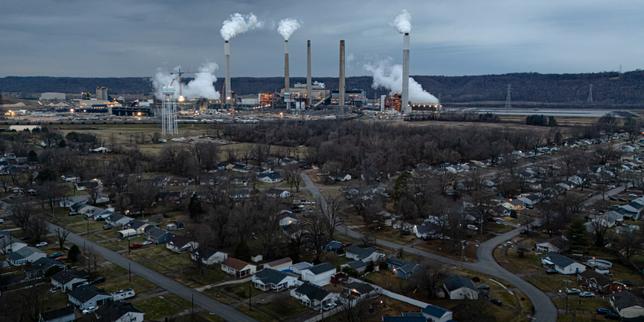
The invocation of the 1950 Defense Production Act (DPA) to allocate $700 million to the United States coal infrastructure represents a fundamental shift in federal energy policy, moving from market-driven regulation to direct state-directed capitalization. This intervention targets three interconnected segments of the energy supply chain: domestic grid capacity, export logistics, and greenfield power generation. To evaluate the true impact of this policy, it is necessary to move past political rhetoric and examine the underlying economic mechanics, structural constraints of the grid, and the operational demands driven by the rapid growth of high-density computing infrastructure.
The $700 million capital allocation is structured into three distinct vectors:
- Direct Asset Preservation ($425 million): Distributed under the DPA across 13 existing coal-fired power plants in 10 states. These funds are designated for capital expenditure upgrades designed to extend the operational lifespan of aging infrastructure that was previously scheduled for decommissioning.
- Supply Chain and Export Optimization ($75 million): Directed toward logistic infrastructure, specifically targeting the completion of the Oakland Bulk and Oversized Terminal in California and the resumption of operations at a critical export facility in Maryland.
- Greenfield and Brownfield Generation ($200 million): Deployed via Department of Energy (DOE) grants to construct two new coal-fired power plants in Alaska and West Virginia—marking the first greenfield coal development in the United States since 2013—alongside the reactivation of an inactive plant in Maryland.
The Cost Function of Grid Reliability and the AI Demand Shock
The economic justification for this intervention relies on a core structural shift: the rapid growth of baseload electricity demand driven by artificial intelligence data centers, electric vehicles, and the reshoring of heavy manufacturing. Over the past decade, the regulatory environment forced a structural contraction in coal's share of the domestic generation mix, dropping from 45% in 2010 to approximately 15% in 2024. This contraction was driven by the superior marginal cost efficiency of natural gas combined-cycle (NGCC) generation and subsidized utility-scale renewables.
However, the rapid deployment of artificial intelligence clusters has altered the grid's risk profile. Data centers demand a flat, non-intermittent load profile with a capacity factor exceeding 99%.
The structural challenge of relying entirely on intermittent assets (such as wind and solar) to meet this demand can be expressed through the total system cost function:
$$C_{system} = C_{generation} + C_{balancing} + C_{transmission}$$
While the levelized cost of energy (LCOE) for wind and solar has fallen below that of fossil fuel generation on a pure dollar-per-megawatt-hour basis, their firm system cost rises non-linearly at high penetration levels. This escalation is driven by the need for extensive battery storage capacity or fast-ramping natural gas peaker plants to balance the grid when generation drops. By utilizing the DPA to mandate that aging coal facilities remain online, the policy attempts to lower $C_{balancing}$ by retaining highly predictable, high-inertia rotating mass assets on the grid.
The Export Transmission Bottleneck and Arbitrage Mechanics
The $75 million allocation for maritime export terminals addresses a major logistical constraint rather than a domestic generation issue. American coal production faces a structural demand mismatch: domestic utilities are slowly transitionally decoupled from coal, while industrializing economies in the Asia-Pacific region maintain a high willingness-to-pay for thermal and metallurgical coal.
Western US coal producers face a severe geographic bottleneck. The inability to secure deep-water port access on the Pacific coast has historically forced producers to rely on long rail routes through Canada or secondary overland paths, adding significant logistics costs that erode the global competitiveness of American supply.
By funding the Oakland Bulk and Oversized Terminal, the administration is attempting to create a direct logistics corridor from high-output basins, such as the Powder River Basin in Wyoming, to Pacific shipping lanes. The economic objective here is commodity arbitrage: reducing internal transport costs to allow domestic extraction companies to capture the price premium between domestic spot prices and international indexes like the Newcastle coal benchmark.
Capital Inefficiencies and Asset Degradation Dynamics
While the policy aims to bolster grid reliability and lower consumer energy costs, a rigorous corporate finance analysis reveals significant capital inefficiencies. Propping up depreciated or economically unviable coal assets introduces several structural risks.
First, the $425 million allocated for asset preservation functions as a capital subsidy for facilities characterized by high operating and maintenance (O&M) costs. Aging coal plants face escalating thermodynamic degradation, meaning they require progressively more fuel input per unit of electricity generated. This reality creates an economic bottleneck:
[Federal Capital Injection ($425M)]
                │
                ▼
   [Lifespan Extension of Aging Plants]
                │
                ▼
   [Escalating High Marginal O&M Costs]
                │
                ▼
   [Higher Fuel Input per MWh (Thermodynamic Degradation)]
                │
                ▼
   [Risk of Subsidizing Above-Market Generation Costs]
Second, the structural life extension of these assets creates a conflict with private utility capital expenditure strategies. Major regulated utilities operate under long-term integrated resource plans (IRPs) optimized for decarbonization tax credits and lower fuel-cost profiles. Mandating the operation of aging coal infrastructure past their planned retirement dates forces utilities to alter asset-depreciation schedules, which can lead to stranded asset risks if federal subsidies fail to cover ongoing long-term operational losses.
Strategic Allocation Review
To assess the viability of this intervention, the initiative must be evaluated against the realities of project finance and infrastructure development timelines.
- The Greenfield Execution Bottleneck: Building the first new domestic coal plants in over a decade faces significant friction. Even with expedited federal permitting—noted by the administration's approval of 76 permits—greenfield thermal generation projects face intense resistance from private capital markets. Modern institutional infrastructure funds operate under strict ESG mandates, meaning these two proposed plants will likely require complete government backstops or highly non-standard financing structures to reach financial close.
- The Domestic Subsidy Mismatch: The claim that this $700 million injection will yield a $50 billion reduction in consumer energy costs depends on highly optimistic assumptions regarding stable coal commodity pricing. If domestic natural gas prices remain low due to high production in the Permian and Appalachian basins, coal-fired power will remain economically uncompetitive on an dispatch-merit order basis, requiring continuous regulatory intervention to force utilities to purchase its more expensive power output.
The strategic play for industrial energy consumers and grid operators requires a dual approach. Regulated utilities should utilize these federal capital injections to fund necessary environmental and structural retrofits on mandated assets, minimizing their immediate balance sheet exposure. Concurrently, data center operators must not treat this temporary preservation of fossil-fuel baseload power as a long-term solution; instead, they should continue structuring direct Power Purchase Agreements (PPAs) for co-located nuclear and next-generation geothermal assets to ensure reliable, long-term power generation that aligns with future regulatory requirements.