Darkness is never empty. If you stare past the streetlights, past the pale smudge of the Milky Way smeared across a clear country sky, you are looking at a grand illusion. It feels quiet. It feels still. But up there, invisible clocks are ticking, ancient collisions are echoing, and an ocean of unseen energy is tearing the universe apart at the seams.
We have spent millennia pretending we are alone in that dark. We mapped the constellations with mythology, turning erratic clusters of burning plasma into bears, hunters, and queens. Then we built glass lenses, polished them with rouge and sweat, and realized the universe was much bigger than our stories.
Now, another glass eye stands ready on Earth.
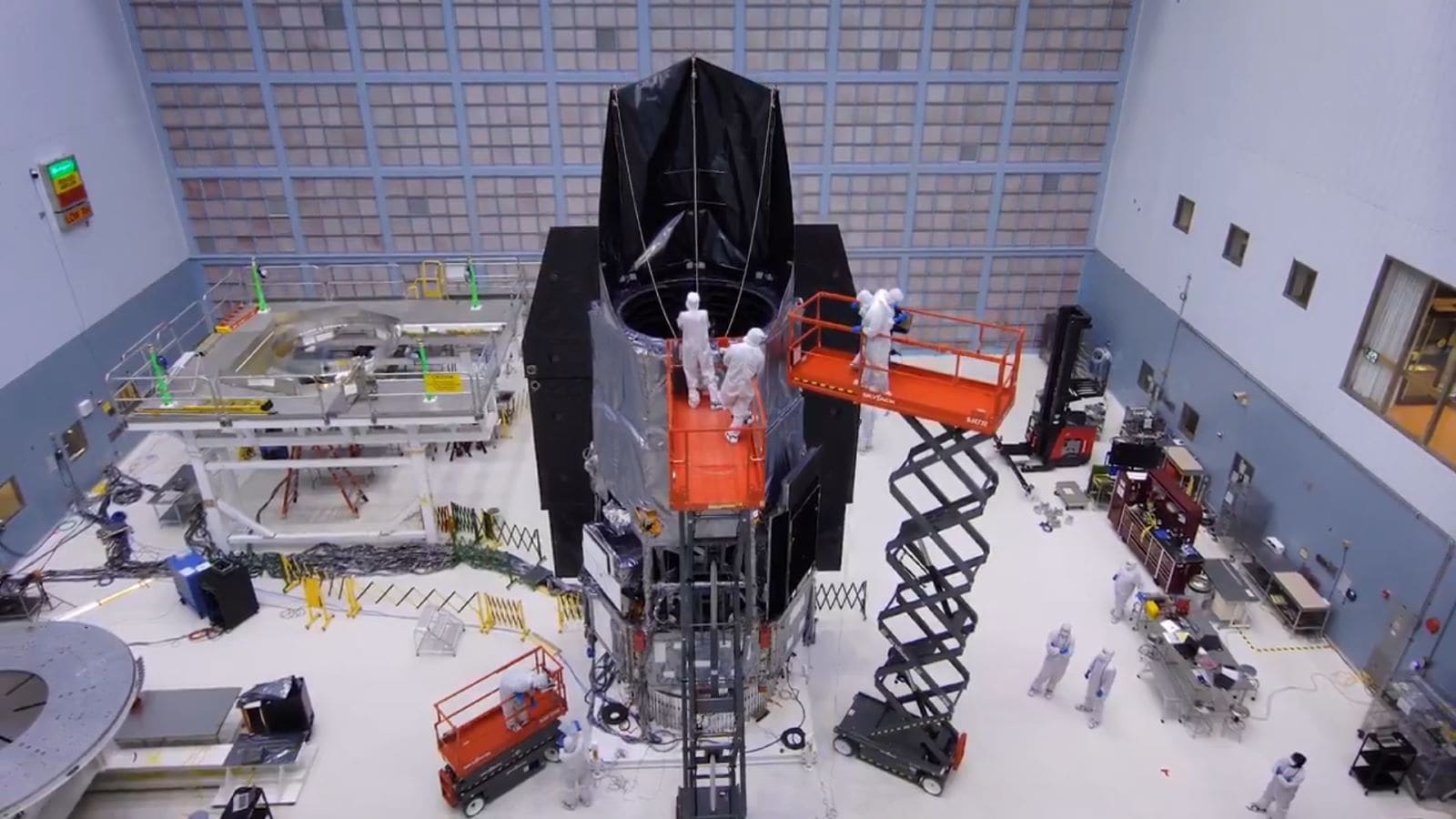
On August 30, the Nancy Grace Roman Space Telescope is set to launch, riding a column of controlled fire into the upper atmosphere. It bears the name of NASA’s first chief astronomer, a woman who fought tooth and nail for the Hubble Space Telescope when skeptics called it a reckless gamble. Roman believed in the power of a wider view. She knew that if you only look through a keyhole, you miss the cathedral.
Consider what happens when you hold a single grain of sand at arm's length against the night sky. Hubble did that in 1995. It stared into a patch of blackness that looked like nothing, holding its breath for ten days. When the light finally developed, it revealed thousands of galaxies, swirling like smoke in a cathedral. It was breathtaking. But it was also like reading an epic novel through a drinking straw.
The Roman telescope changes the geometry of discovery.
It carries a field of view one hundred times larger than Hubble's infrared instrument. Think of standing in front of a sprawling forest. Hubble gives you the bark of a single tree, exquisite and detailed. Roman gives you the entire canopy, the wind moving through the leaves, and the horizon burning in the autumn sun, all at the exact same time.
Why does that matter to you, sitting on a couch, breathing heavy Earth air, worrying about rent, or bills, or tomorrow?
Because we are trying to solve a ghost story.
About twenty-six percent of the universe is dark matter. Another sixty-eight percent is dark energy. Everything else—every star you have ever wished upon, every planet, every ocean, every human being who ever lived, loved, or fought—makes up less than five percent of reality. We are a rounding error in a cosmic ghost town. We know dark energy is real because the universe is expanding faster and faster, pushed apart by a force we can neither touch nor see. It is like watching a car accelerate down a highway with no engine under the hood.
Roman is built to hunt that ghost.
By mapping millions of galaxies across billions of light-years, the telescope will measure how gravity bends light as it travels through the cosmos, a trick physicists call gravitational lensing. Imagine looking through the bottom of a thick glass bottle. The world behind it warps, stretches, and bends. By studying those cosmic distortions, astronomers can weigh the invisible webs of dark matter holding galaxies together.
There is a personal weight to this. Lived experience teaches us humility. When you stand under a truly dark sky, far from the sodium glare of the city, the sheer scale of the void does something to your chest. It tightens. It humbles you. It reminds you that our entire human history is a fleeting spark in an infinite cavern.
We are compelled to look because we are afraid of the dark. And because we are curious.
The mission will also hunt for alien worlds. Not just one or two, but thousands.
For a long time, finding planets outside our solar system required waiting for them to cross in front of their parent stars, causing a tiny, frustrating dip in starlight. It is like trying to spot a firefly crawling across a lighthouse beam from ten miles away. Roman will use a specialized instrument called a coronagraph—a complex system of masks and prisms that physically blocks the blinding glare of distant stars, allowing us to capture direct images of faint planets orbiting them.
Imagine seeing a pale blue or red dot, trapped in the gravitational embrace of a sun fifty light-years away. Imagine knowing that world is out there, turning silently in the dark.
Every great leap in astronomy is a lesson in letting go of our own center. We thought the Earth was the center of the cosmos. We were wrong. We thought our galaxy was the only one. We were wrong. Every time we build a bigger mirror, the universe gets stranger, wilder, and more magnificent than our best poetry could invent.
When the rocket clears the pad on August 30, it will carry more than titanium, gold-coated mirrors, and silicon chips. It will carry our stubborn refusal to stay in the dark. It will carry the legacy of a woman who looked up at the stars and decided she needed to see more of them.
The launch window opens. The countdown ticks down.
Somewhere out there, light that left a dying star before the first human walked upright is traveling through the void right now, racing toward a mirror that hasn't even opened yet.
And when it arrives, we will be watching.