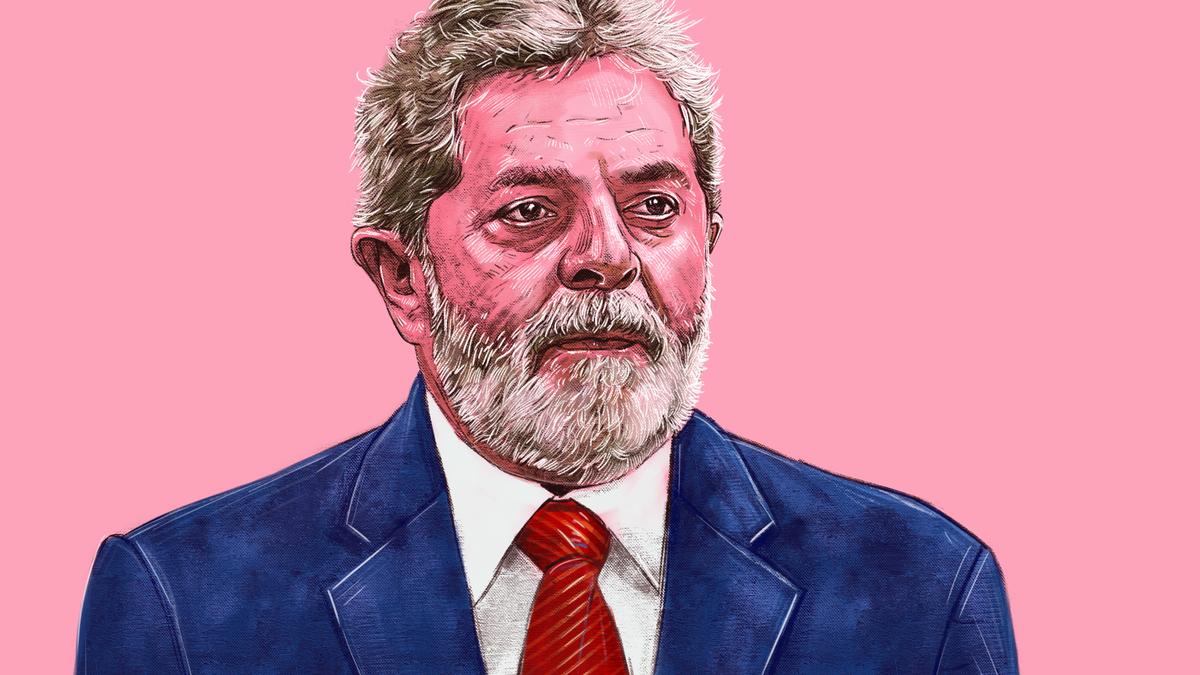
Luiz Inácio Lula da Silva won an unprecedented fourth presidential term in Brazil’s October 25, 2026 runoff, narrowly defeating Senator Flávio Bolsonaro. For decades, standard political profiles have reduced Lula to a tidy caricature: the charismatic former metalworker and "democratic leftist" who lifts millions out of poverty while soothing global markets. That narrative is dangerously outdated. As Lula prepares to take the oath of office again on January 5, 2027, the actual mechanics of his survival reveal a leader trapped between massive social spending commitments, a hostile conservative Congress, and a sovereign debt load that leaves almost zero room for error.
The victory was historic. It was also razor-thin.
To understand how a man who spent 580 days in a Curitiba prison cell dismantled a political dynasty twice, you have to stop looking at ideological labels and start looking at ledger sheets and legislative horse-trading. The story of Lula in late 2026 is not a fairy tale about progressive triumph. It is a hard-nosed study in political survival inside a fractured democracy where the executive branch must buy every single vote it gets.
The Myth of the Pure Ideologue
Western commentators love clean boxes. They want Lula to be either a saint of the Global South or a reckless socialist spendthrift. He is neither.
Throughout his third presidency from 2023 to 2026, Lula operated as a cold-eyed pragmatist who used state credit to pacify both ends of Brazil’s violent class divide. While international headlines focused on his revival of Bolsa Família and anti-hunger initiatives like the Food Acquisition Programme, his administration quietly funneled historic sums of public money into the exact sector that despises his Workers' Party. Under the 2026–2027 Plano Safra, Lula’s government released R$ 525.1 billion in rural credit for industrial agribusiness alongside R$ 85 billion for small family farms.
You do not survive in Brasília by picking fights with the soy barons who control the congressional caucus. You feed them.
This dual-track strategy produced undeniable material results on the ground during his third term:
- Labor Market Tightening: Unemployment dropped to 5.6% by late 2025, the lowest reading in more than a decade, while youth unemployment fell from 19.4% in 2022 to 11.7%.
- Poverty Reduction: Extreme poverty fell from 5.9% to 3.5% between 2022 and 2024, pulling roughly 1.9 million Brazilians out of destitution.
- Tax Restructuring: Starting in January 2026 under Law No. 15,270/2025, the administration paired income tax exemptions for lower earners with a minimum tax on high incomes and withholding taxes on large dividend distributions.
Yet those numbers mask a darker structural reality. According to economic analyses of his third term, Brazil’s wealthiest citizens still captured a record share of national income despite the government’s pro-poor rhetoric. The baseline rose for the bottom, certainly, but the ceiling blew off for the top.
The Fiscal Vise Closing on Brasília
Here is the problem no campaign slogan can fix. Brazil is running out of discretionary cash.
During Lula’s third term, gross public debt climbed by more than 10 percentage points to surpass 82% of GDP under national accounting metrics, while IMF projections put broader gross debt closer to 98% of GDP in 2026. Why did the debt swell even with steady GDP growth and low inflation? Because of mandatory spending and some of the highest real interest rates on the planet.
Mandatory constitutional outlays—pensions, public sector payrolls, and indexed social transfers—now lock up over 92% of Brazil's federal budget, leaving less than 8% adjustable for actual governing.
When the Central Bank of Brazil maintained punishingly high interest rates to defend a strict 3% inflation target, it triggered a chain reaction across the economy. First, the federal government’s interest bill exploded, eating up tax revenues even though Brazil sits on roughly US$370 billion in international reserves and faces zero risk of sovereign default. Second, working-class families got crushed by debt service.
By June 2026, household debt service consumed 28.9% of average family income. For borrowers earning up to two minimum wages—Lula’s core electoral base—debt payments swallowed more than a third of every paycheck. Lula put money into people’s pockets through wage hikes and expanded welfare, and commercial banks immediately vacuumed it back out through triple-digit credit card and overdraft interest rates.
The 2026 Campaign Promises Versus Reality
To beat Flávio Bolsonaro in the October 2026 runoff, Lula leaned hard into populist workplace and welfare pledges. He campaigned on ending the grueling 6x1 work schedule (six days of work for one day off), banning predatory online gambling platforms, and raising the minimum monthly Bolsa Família payout from R$ 600 to R$ 691.
Passing those measures will be brutal. While employers are already bracing for a mandatory 42-hour workweek and two paid weekly rest days taking effect in mid-December 2026, every new social expansion collides directly with the fiscal framework. Raising Bolsa Família alone adds billions in permanent, indexed obligations to a budget deficit hovering near 8.5% of GDP.
Why Congress Holds the Real Keys to the Palácio do Planalto
If you want to know who actually runs Brazil, do not look at the presidential palace. Look at the speakers’ chairs in the Chamber of Deputies and the Senate.
Lula’s fourth term begins under the exact same institutional handicap that paralyzed much of his third: a legislature dominated by the Centrão, a mercenary bloc of center-right and conservative parties that trades votes for pork-barrel budget amendments. Together with hardline Bolsonarista lawmakers, conservative forces hold a commanding majority in Congress.
During the 2023–2026 term, lawmakers repeatedly humiliated the executive branch. They overrode presidential vetoes on environmental deregulation, gutted rules restricting pesticide use, and ignored Supreme Court warnings on constitutional overreach. To pass his tax reform and fiscal rules, Lula had to surrender unprecedented control over federal budget earmarks directly to congressional leaders, inflating the deficit in the process.
This is the unspoken bargain of modern Brazilian democracy. Lula keeps the presidency, the diplomatic stage, and the social ministries. The Centrão keeps the local patronage pipelines that guarantee their own re-election.
| Political Arena | Lula’s Official Mandate (2027–2030) | Institutional Reality in Brasília |
|---|---|---|
| Fiscal Policy | Expand Bolsa Família, Pé-de-Meia, and public infrastructure via PAC. | Over 92% of the budget is locked by law; high interest rates drain tax revenue. |
| Labor & Welfare | Enforce the 42-hour workweek and regulate digital platform workers. | Business lobbies and conservative lawmakers dilute enforcement and seek payroll exemptions. |
| Environment | Curb Amazon deforestation and lead global green energy transition. | The agricultural caucus regularly overrides presidential vetoes on land and pesticide laws. |
| Foreign Policy | Non-aligned multipolarity, BRICS expansion, and deepened ties with China. | Growing friction with Washington and Brussels over trade terms and neutrality on Ukraine. |
The Blind Spots That Nearly Cost Him Everything
A serious assessment of Lula’s record has to confront the areas where his governing model visibly failed.
Public security remains the Achilles' heel of the Brazilian left. While Lula’s administration focused on macroeconomic stabilization and social transfers, organized crime syndicates—specifically the Primeiro Comando da Capital (PCC) and Comando Vermelho—tightened their grip on port infrastructure, urban peripheries, and illegal mining corridors in the Amazon. Brazil’s major Atlantic ports remain primary departure hubs for cocaine shipments bound for Europe. Even with high-profile joint takedowns alongside Europol in September 2026, voters across Brazil’s major cities repeatedly told pollsters that the federal government lacked a coherent strategy to stop daily extortion and gang warfare. Flávio Bolsonaro nearly rode that exact anger back into the presidency.
At the same time, Lula’s foreign policy walked an increasingly narrow tightrope. By elevating ties with Beijing to a strategic partnership and welcoming Chinese state-owned enterprises into Brazil’s energy, mining, and infrastructure sectors, Lula secured vital capital. Yet his refusal to join Western sanctions against Russia, combined with abrasive rhetoric toward traditional Western allies, alienated key trading partners in Europe and North America at the exact moment Brazil needed foreign direct investment to offset domestic fiscal tightening.
The Succession Trap Nobody in the Workers' Party Wants to Admit
Lula turned 81 in October 2026. By the time his fourth term ends in January 2031, he will be 85.
For forty years, the Workers' Party (PT) has been built around a single irreplaceable human being. Every time the party tried to run someone else—Dilma Rousseff’s catastrophic second term, Fernando Haddad’s 2018 loss—the coalition fractured. In 2026, the party had no viable alternative to putting an octogenarian back on the ballot for his seventh presidential run.
While Haddad and Chief of Staff Rui Costa remain prominent figures inside the administration, neither commands Lula’s visceral connection with working-class voters in the Northeast or his uncanny ability to cut backroom deals with conservative governors. Vice President Geraldo Alckmin, a former center-right rival turned loyal institutional anchor, provides stability for financial markets, not a mass electoral base for the left.
Lula did not win in October 2026 because Brazil swung decisively to the left. He won because he remains the only politician in the country capable of assembling a fragile, contradictory alliance stretching from landless rural workers to São Paulo bankers, holding back the far right by a few million votes. When he steps off the stage in 2031, the machine he built stops with him.