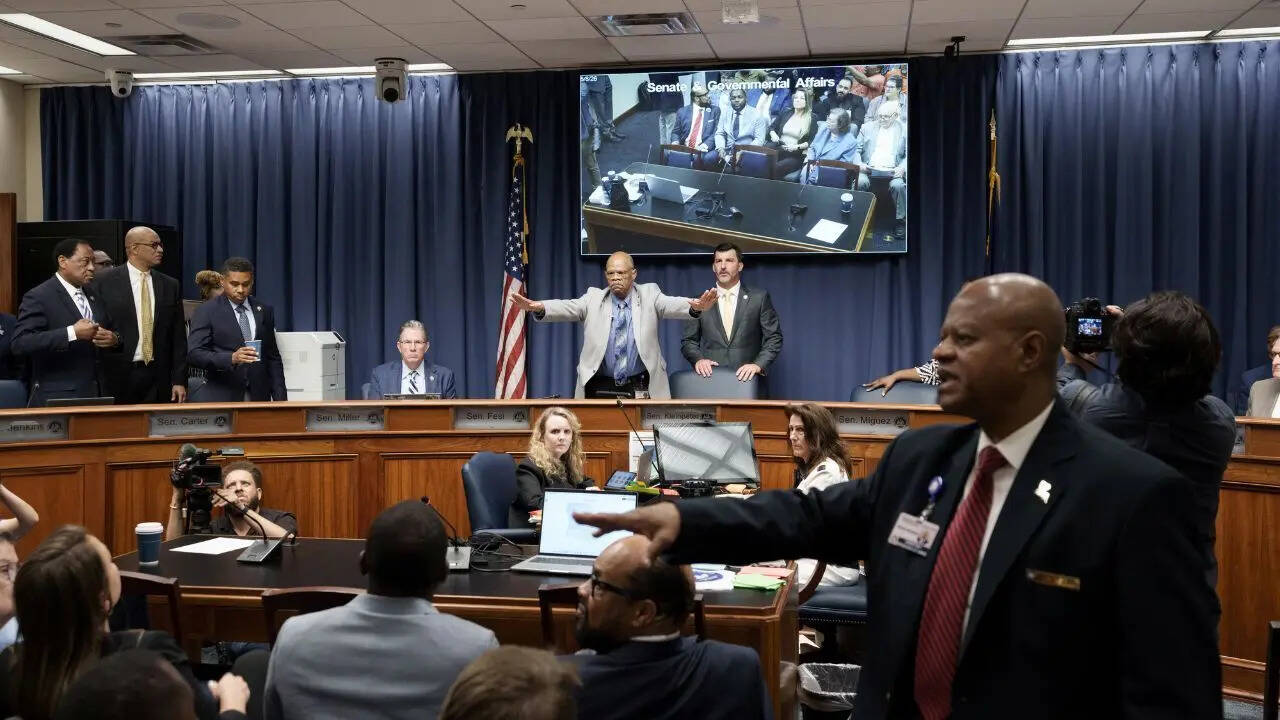
The narrative surrounding Louisiana’s redistricting process has become a predictable script. It is a tale of villains, victims, and the supposedly "erased" voices of the marginalized. If you believe the headlines, the Republican-led effort to redraw House maps is a simple act of democratic sabotage.
They are wrong.
What we are witnessing in Baton Rouge is not the death of democracy. It is the logical conclusion of a system designed to treat race as a permanent, static variable in a game of political math. Most critics are so busy clutching their pearls over "fairness" that they fail to see the actual mechanics at play. The reality is that the quest for "perfect" minority representation often creates the very ghettoization of political influence that activists claim to fight.
The Fallacy of the Packing Strategy
For decades, the standard response to underrepresentation has been the creation of majority-minority districts. The logic seems sound on paper: concentrate a specific demographic so they can elect a representative of their choice.
In practice, this is a strategic trap.
When you "pack" a specific demographic into a single district, you are essentially conceding the rest of the state. You create a safe seat for one party and one demographic, but in doing so, you evaporate any incentive for representatives in the neighboring five districts to care about those voters. You are trading broad, statewide influence for a single, isolated microphone.
I have watched political consultants on both sides of the aisle play this game for years. They love it. Why? Because it makes the map predictable. It makes the fundraising easier. It stabilizes the "incumbency protection plan" that keeps the same faces in Washington for thirty years.
By dismantling or shifting these lines, the current movement in Louisiana is forcing a conversation that the "lazy consensus" wants to avoid: why should any demographic be siloed into a specific geographic corner to have their voices heard?
The Voting Rights Act Is Not A Suicide Pact
The legal battle hinges on Section 2 of the Voting Rights Act (VRA). The argument is that Louisiana’s population—which is roughly one-third Black—deserves a second majority-Black district out of its six total seats.
On the surface, the math checks out. $1/3$ of 6 is 2.
But geography is not a spreadsheet. The VRA was never intended to guarantee proportional representation based on race; it was intended to ensure an equal opportunity to participate. There is a massive, often ignored distinction between those two concepts.
The moment we transition from "equal opportunity" to "guaranteed outcomes based on skin color," we have abandoned the core tenets of a representative republic. We are instead building a system of ethnic quotas. If the courts or the legislature decide that districts must be drawn with a specific racial result in mind, they are engaging in the very racial gerrymandering they claim to oppose.
It is a paradox that the media refuses to touch. To create a "fair" map according to the critics, you must use race as the primary, overriding factor in drawing lines. You must ignore traditional redistricting principles like keeping communities of interest together or maintaining compact shapes.
The Myth of the Monolithic Voter
The most insulting part of the current outcry is the assumption that Black voters—or any voters—are a monolith. The "erasure" narrative assumes that every Black person in Louisiana shares an identical political priority list and can only be represented by one specific party or one specific demographic profile.
This is a patronizing, outdated worldview.
I’ve spent enough time in the trenches of southern politics to know that a Black small business owner in Shreveport has more in common with a white small business owner in the same zip code than they do with a career politician in New Orleans. When we obsess over the racial makeup of a district, we ignore the economic and cultural nuances that actually drive voting behavior.
By challenging the status quo of the majority-Black district, we are actually opening the door for candidates to compete for those votes based on policy, not just identity.
The Efficiency Gap and the Art of the Possible
Critics love to cite the "efficiency gap"—a metric designed to show how many votes are "wasted" in a gerrymandered system. They argue that Republican maps "waste" Democratic votes by spreading them too thin.
Here is what they won't tell you: the Democratic strategy of the last twenty years has been to "waste" their own votes by congregating in deep-blue urban centers. You cannot blame a map-maker for the fact that voters choose to live in high-density clusters that make traditional "fairness" metrics nearly impossible to achieve without drawing maps that look like a Rorschach test.
Look at the previous iterations of Louisiana's districts. To get two majority-Black districts, you have to draw lines that snake across the state, connecting disparate communities that have nothing in common except a census box. Is that "fair"? Or is it a surgical intervention designed to manufacture a result that the organic population distribution doesn't naturally provide?
The Trust Gap in Redistricting
I will be the first to admit the downside of the contrarian view: it requires a level of trust in the legislative process that most people simply don't have.
Yes, the people drawing the maps have an agenda. They want to win. They want their party to hold the majority. This is not a secret. It is the nature of the beast. But pretending that the "other side" is acting out of pure, altruistic devotion to "democracy" is a fairy tale.
Every single person in that room in Baton Rouge is looking at a screen filled with data. They know exactly how many Republican-leaning households are on every street corner. To suggest that only one side is "playing politics" is the height of intellectual dishonesty.
The difference is that the current GOP strategy is at least grounded in the reality of power. They are maximizing their position. That is what parties do. The "reformers" are simply upset that they aren't the ones holding the pen this time around.
Stop Asking For Fairness And Start Asking For Competition
The premise of the "erasure" argument is flawed because it assumes that the goal of redistricting should be "fairness."
"Fairness" is a subjective, emotional term that has no place in constitutional law. The goal should be competition.
Safe districts—whether they are majority-Black or majority-white—are the enemy of progress. When a seat is "safe," the representative has zero incentive to talk to anyone outside of their base. They become more extreme. They become less effective. They become part of the very "gridlock" that the public claims to hate.
If we truly wanted to fix Louisiana's representation, we would stop trying to create protected racial enclaves. We would draw districts that are competitive, forcing candidates to actually earn the votes of people who don't look like them or think like them.
But neither party wants that. It’s too risky.
The High Cost of the Status Quo
The irony is that by fighting so hard to preserve the "majority-Black" seat, activists are essentially arguing for their own marginalization. They are fighting for a seat at a table where they have already been outvoted 5-to-1.
Imagine a scenario where those same voters were distributed across four or five districts. Suddenly, every Republican running for office in Louisiana would have to actually speak to the concerns of the Black community to win. They couldn't afford to ignore them.
But under the current "protected" model, those voters are safely tucked away in a corner, and their influence on the rest of the state's delegation is zero.
The Louisiana Republicans aren't erasing a demographic; they are disrupting a failed strategy of self-segregation that has been masquerading as "representation" for decades.
The Reality Check
The courts will likely weigh in, and the lines might shift an inch here or there. But the fundamental truth remains: the outrage isn't about civil rights. It’s about seat counts.
If the Democratic party believed they could win those same voters in a differently shaped district, they wouldn't be complaining about "erasure." They are complaining because their path to power is being narrowed.
Politics is a game of leverage. If you allow yourself to be defined by a single metric—be it race, geography, or religion—you lose your leverage. You become a predictable data point on a map.
The current movement in Louisiana is a brutal reminder that the map is the territory. If you want to change the outcome, you have to stop playing by the rules of a game that was designed to keep you in your place.
Stop crying about the lines. Start looking at the scoreboard.