Celebrating a championship victory shouldn't cost you an eye. That’s the reality for Isaac Castellanos, who just won an $11.8 million federal jury verdict against the City of Los Angeles.
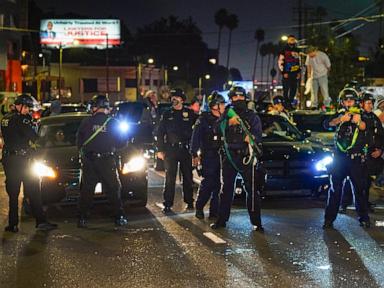
The incident happened back in October 2020. The Dodgers had just clinched the World Series, and hundreds of fans flooded the streets near what was then Staples Center. It was supposed to be a night of joy. Instead, it turned into a nightmare of "less-lethal" weapons and life-altering injuries. Expanding on this idea, you can also read: The Invisible Weight of Seven Thousand Centrifuges.
You’ve probably seen the videos of these celebrations. They're chaotic, loud, and sometimes messy. But the legal standard for using force isn't "because things got messy." It’s "reasonable necessity." A federal jury just decided that blinding a 22-year-old student who wasn't doing anything wrong definitely doesn't meet that bar.
What happened that night in downtown LA
Castellanos was a Cal State Long Beach student at the time. He was also a competitive gamer, someone whose livelihood and passion literally depended on his vision. When he went to celebrate the Dodgers’ first title in 32 years, he wasn't looking for a fight. Analysts at The Guardian have also weighed in on this matter.
According to his lawsuit, he was trying to leave the area as tensions rose. He testified that he never heard a dispersal order. He didn't see a clear exit path. Then, out of nowhere, he saw a muzzle flash and felt an explosion of pain.
An LAPD officer had fired a 37mm kinetic impact projectile—basically a hard foam or rubber baton—directly into the crowd. It hit Castellanos in his right eye. The damage was catastrophic.
Doctors eventually determined the vision loss was permanent. He lost his depth perception. His esports career? Over. The mental toll was just as heavy, leading to PTSD and depression that fractured his personal life.
The failure of less lethal tactics
The term "less-lethal" is a bit of a marketing trick. These weapons are still weapons. When you fire a 37mm projectile into a dense crowd, you aren't "controlling" it; you’re gambling with people's lives.
During the six-day trial, the city's defense tried to argue that the officers followed protocol. They claimed the rounds were aimed at the ground to "skip" into the crowd. They argued that because some people were throwing bottles, the entire crowd was a threat.
The jury didn't buy it.
The evidence showed that Castellanos wasn't a threat. He wasn't throwing anything. He was a bystander caught in a line of fire that shouldn't have existed. His lawyer, Pedram Esfandiary, pointed out a critical detail: the officers fired from a distance that far exceeded the recommended range for those weapons. When you fire these things from too far away, they lose accuracy and become even more unpredictable.
The jury found that Officers Cody MacArthur and Jesse Pineda acted with negligence and used excessive force. They didn't just break department policy; they violated constitutional rights.
Why this verdict is a massive outlier
If $11.8 million sounds like a lot, that's because it is. Most police misconduct settlements in LA hover in the low millions or even six figures. Since 2020, Los Angeles has paid out more than $19 million for crowd control incidents alone. Castellanos’ verdict accounts for more than half of that total.
Here’s why the number is so high:
- Permanent Disability: Blinding a young person in their prime is an expensive mistake for a city.
- Loss of Career: His esports trajectory was cut short.
- Lack of Warning: The jury was convinced that no dispersal order was given before the shooting started.
This isn't just about one guy. It’s a message to the LAPD. For years, civil rights groups have argued that firing projectiles into crowds is a recipe for disaster. This verdict puts a very specific price tag on that disaster.
The pattern of expensive mistakes
This isn't an isolated incident. The summer of 2020 was a brutal year for LAPD's budget and reputation. Between the George Floyd protests and the Dodgers celebration, the city has been hemorrhaging cash to settle lawsuits.
Filmmaker A. Jamal Shakir Jr. was awarded $3.6 million after being shot with a projectile during a protest. A Marine veteran, Iz Sinistra, received $1.25 million. Patricia Hill got $1.5 million.
When you add them all up, you see a department that struggles to distinguish between "unruly crowds" and "violent threats." Using projectiles as a first resort instead of a last resort is costing taxpayers tens of millions of dollars. Honestly, it's a wonder the policy hasn't been completely scrapped yet.
What this means for you
If you're ever in a situation where a peaceful gathering turns into a police action, you need to know your rights. But more importantly, you need to know how the system works.
The city will likely appeal this verdict. They always do. They want to drag this out as long as possible to lower the payout. But for now, the message stands. If an officer fires a "less-lethal" round without warning and blinds a peaceful citizen, the city is on the hook.
If you find yourself in a crowd that’s being dispersed:
- Record everything: Video evidence was crucial in the Castellanos case.
- Listen for orders: If you hear a dispersal order, leave immediately through the designated path.
- Document injuries: If you're hit, get medical attention and photographs of the injury site immediately.
- Seek specialized counsel: Civil rights litigation against a city like LA is a marathon. You need a lawyer who has done this before.
The $11.8 million won’t give Isaac Castellanos his sight back. It won’t fix his depth perception or restart his gaming career. But it might finally make the city realize that their "less-lethal" tactics are a liability they can no longer afford.