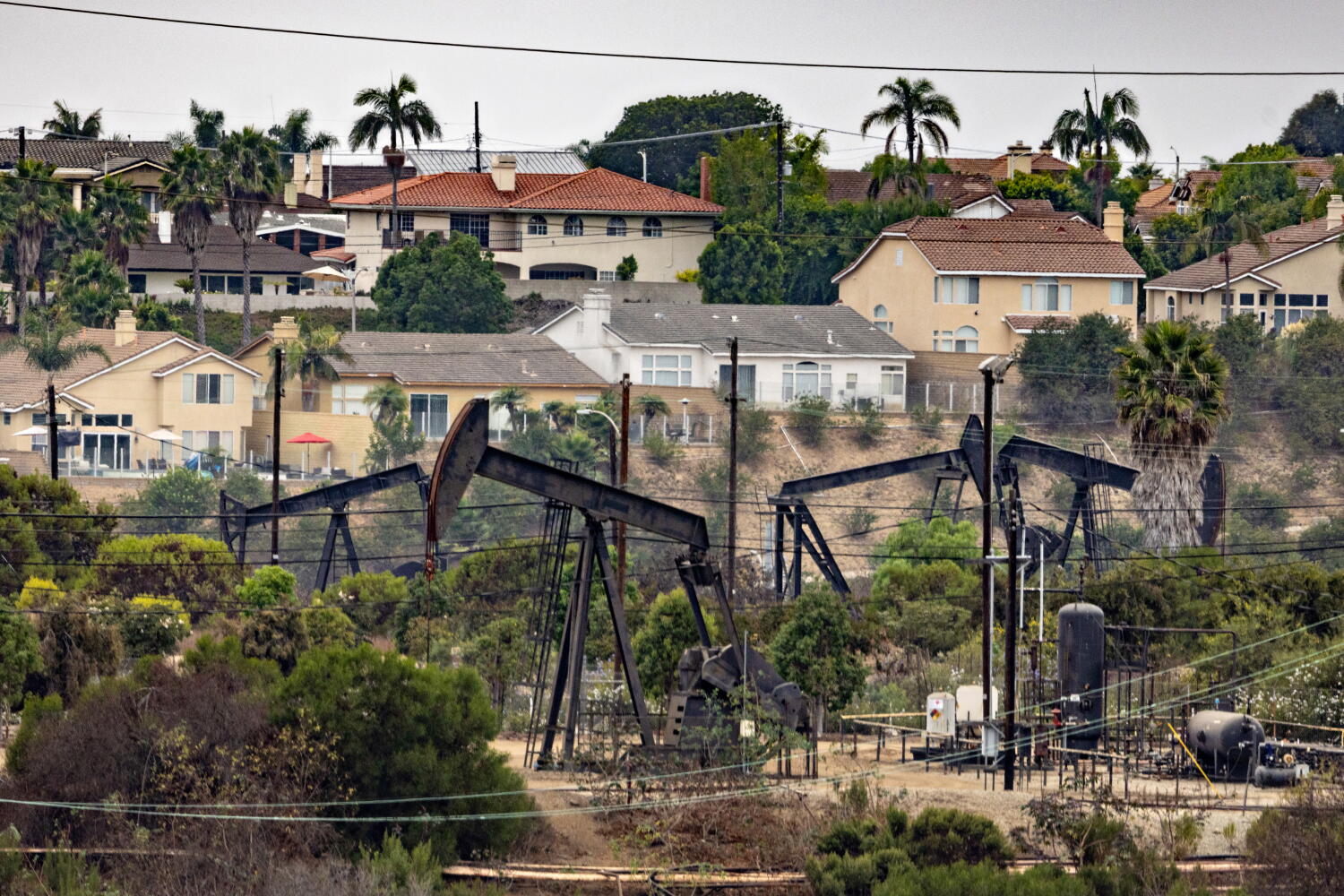
The Los Angeles City Council has officially voted to ban new oil and gas drilling and phase out existing wells across the city within 20 years. The historic ordinance, championed by environmental justice advocates after decades of organizing, immediately halts new extraction permits and forces operators of roughly 5,000 active and idle wells to wind down operations without amortizing their investments over a longer timeline. While public health groups celebrate the decision as a long-overdue victory for low-income neighborhoods living beside active pumpjacks, the fossil fuel industry has already launched aggressive legal challenges arguing the move constitutes an unconstitutional taking of private property.
Los Angeles is not just a sprawling metropolis of freeways and film studios. It sits atop one of the richest urban oil fields in the world.
For more than a century, derricks and pumpjacks have operated silently behind faux-Mediterranean walls, inside nondescript office buildings, and mere feet away from elementary schools and apartment complexes. When Edward Doheny struck oil near downtown in 1892, he triggered a boom that shaped the city’s physical and economic footprint. At its peak in the early twentieth century, the Los Angeles Basin produced nearly a quarter of the world's crude oil. The city grew around the wells, creating a bizarre zoning reality where heavy industrial extraction exists directly adjacent to dense residential neighborhoods.
The Anatomy of an Urban Extraction Ban
To understand what the city actually passed, you have to look past the celebratory press releases and read the municipal code. The ordinance operates on two distinct tracks. First, it establishes an immediate prohibition on new oil and gas extraction wells, effectively freezing the physical expansion of the industry within city limits. Existing wells are barred from deepening their bores or drilling new directional lines into adjacent pockets of crude.
Second, and far more contentious, is the amortization schedule. Under standard land-use law, when a municipality changes zoning rules to make an existing business non-conforming, it must give the property owner a reasonable period to recoup their capital investment before shutting them down. City officials settled on a 20-year phase-out period, supported by an economic study commissioned by the city that claimed most Los Angeles oil operators have already recovered their initial capital costs.
The math behind that assumption is where the real battle lies.
Oil extraction in mature urban fields is not a simple matter of turning on a tap and watching money flow. Fields like the Wilmington Oil Field or the Inglewood Oil Field—which straddles the city and county lines—are heavily depleted. Extracting the remaining heavy crude requires expensive secondary and tertiary recovery methods, including water flooding and steam injection. Operators argue they continually pour millions of dollars into maintenance, environmental compliance, and enhanced recovery infrastructure just to keep production viable. Shutting them down in two decades, they contend, strands assets that still hold decades of recoverable reserves.
The Public Health Reality Behind the Concrete Walls
Environmental advocates did not win this vote on abstract climate arguments. They won it on localized toxicology.
For decades, residents in neighborhoods like Wilmington, South Los Angeles, and Baldwin Hills have reported chronic respiratory illnesses, nosebleeds, migraines, and elevated asthma rates. Unlike refineries, which are massive and obvious, urban drill sites are often hidden in plain sight. In Beverly Hills, a soundproofed tower disguised as an office building operates right next to a high school. In working-class South LA, facilities like the AllenCo Energy site operated for years behind concrete walls, emitting noxious fumes that sickened hundreds of residents before federal regulators finally intervened and forced a temporary closure.
Epidemiological studies conducted by researchers at institutions like the University of Southern California have consistently linked proximity to active oil wells with reduced lung function and adverse birth outcomes. Volatile organic compounds (VOCs), benzene, hydrogen sulfide, and particulate matter do not respect property lines. When an extraction site sits fifty feet from a bedroom window, standard regulatory buffer zones fail entirely.
State lawmakers attempted to address this through Senate Bill 1137, which mandated a 3,200-foot health protection zone between new oil wells and sensitive receptors like schools, homes, and hospitals. However, the oil industry successfully gathered enough signatures to place a referendum on the ballot, temporarily suspending the state law and leaving local municipalities to fight the battle trench by trench. Los Angeles decided not to wait for Sacramento.
The Takings Clause and the Coming Courtroom Siege
Passing an ordinance in City Hall is easy compared to defending it in federal court. Within weeks of the council's vote, major operators and industry trade groups filed lawsuits seeking to overturn the ban, setting up a high-stakes constitutional clash over the Fifth Amendment's Takings Clause.
The legal argument is straightforward. The Fifth Amendment prohibits the government from taking private property for public use without just compensation. When the government physically seizes land to build a highway, the compensation requirement is obvious. When a regulation strips a property of all economically viable use, the courts treat it as a regulatory taking, which carries the exact same requirement to pay up.
In Los Angeles, oil companies own or lease mineral rights—subsurface property interests that are legally distinct from the surface land above them. If the city forbids them from extracting the oil they legally own, the companies argue the city has effectively confiscated their property.
The Nuisance Exception
The city’s defense rests heavily on what legal scholars call the nuisance exception. Under long-standing Supreme Court precedent, a government does not have to pay compensation when it restricts property uses that constitute a public nuisance or threaten public health and safety. You cannot demand taxpayer money because the city passed a law prohibiting you from dumping toxic waste into a local river.
City attorneys will argue that urban oil drilling, given modern scientific understanding of its health impacts, is an inherent public nuisance in densely populated areas. If a judge agrees, the industry walks away with nothing. If a judge rejects the nuisance defense and rules the ban is an unconstitutional taking, the financial fallout for Los Angeles could be catastrophic.
Estimates of the potential liability vary wildly depending on who is doing the math, ranging from several hundred million dollars to well over a billion. For a city already grappling with massive budget deficits, homeless services funding, and crumbling infrastructure, a billion-dollar legal judgment would trigger immediate municipal austerity.
The Orphan Well Trap Nobody Wants to Fund
While politicians and lawyers argue over mineral rights and amortization timelines, a massive physical liability sits quietly beneath the streets. Plugging and abandoning an oil well is expensive, technical work.
When an operator shuts down a well permanently, they cannot simply lock the gate and walk away. They must pull the tubing, pump cement plugs deep into the wellbore to isolate freshwater aquifers from oil-bearing zones, cut the casing below ground level, and remediate contaminated soil. Depending on the depth and condition of the well, properly decommissioning a single urban site can cost anywhere from $100,000 to over $1 million.
Here is the trap the city just walked into.
By putting a hard expiration date on oil production, the city has destroyed the long-term asset value of these fields. Oil companies rely on future revenue to fund current decommissioning obligations. If an operator knows their revenue stream hits zero in 20 years—and they cannot sell the field to another buyer because drilling is banned—the financial incentive to maintain compliance evaporates.
Smaller, undercapitalized operators are already walking a financial tightrope. As the phase-out deadline approaches, many of these companies will likely declare bankruptcy, liquidate whatever cash remains, and abandon their wells. When an operator goes bust without adequate bonding, the well becomes an orphan well, and the cleanup bill falls directly on the state and local taxpayers.
California regulators have repeatedly warned that existing surety bonds held by oil companies cover only a fraction of the actual decommissioning costs. In Los Angeles, where wells sit beneath dense commercial real estate and residential neighborhoods, an improperly plugged orphan well is not just an environmental eyesore. It is a ticking methane leak waiting to happen.
The Geopolitical Hypocrisy of Supply and Demand
There is an uncomfortable economic reality hovering over the celebration in City Hall. Banning oil production in Los Angeles does not reduce global or even local oil demand by a single barrel.
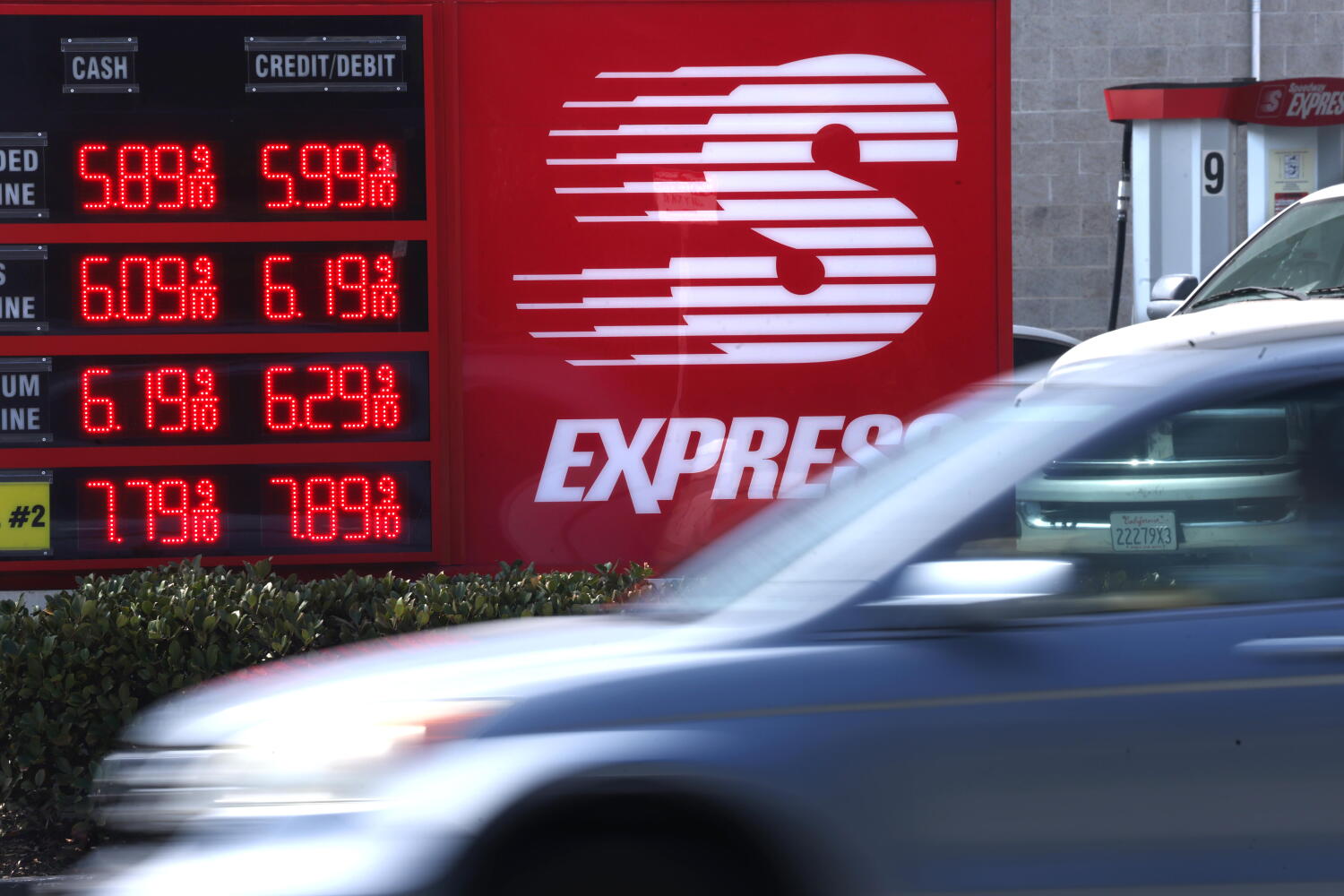
California is an energy island. Because no crude oil pipelines cross the Sierra Nevada mountains into the state, California relies entirely on in-state production and marine tankers to feed its refineries. Los Angeles drivers still consume millions of gallons of gasoline every day, and Los Angeles International Airport remains one of the busiest aviation fuel hubs on the planet.
Over the past three decades, California's in-state oil production has steadily declined due to natural depletion and tightening regulations. Yet statewide consumption has remained stubbornly high. To bridge the gap, California has dramatically increased its reliance on foreign imports. Today, the majority of the crude refined in California arrives on massive tankers from Saudi Arabia, Iraq, Ecuador, and Brazil.
When Los Angeles shuts down local production without simultaneously slashing local demand, it simply outsources the environmental burden of extraction. The crude still gets pumped out of the ground. Instead of coming from a tightly regulated facility in Wilmington monitored by the South Coast Air Quality Management District, it comes from the Amazon basin or the Persian Gulf, where environmental oversight is weak or nonexistent, before being burned in heavy bunker-fuel tankers crossing the Pacific Ocean to dock at the Port of Los Angeles.
Environmental justice advocates argue, rightly, that local communities should not be forced to bear the toxic burden of global energy markets. A child in South Los Angeles should not suffer permanent lung damage so a commuter in Orange County can save three cents at the pump. That moral calculation is entirely sound. Yet from a macro-climate perspective, celebrating a local production ban while failing to curb regional consumption is simply shifting pollution from one zip code to another.
What Happens to the Workers and the Land
The transition away from urban extraction also carries immediate human and spatial consequences that city planners have largely left unresolved. While the oil industry represents a tiny fraction of the broader Los Angeles economy, the jobs it provides are overwhelmingly high-paying, unionized positions held by working-class residents—many of them from the exact same communities of color that live near the drill sites.
A seasoned oilfield operator or roughneck in Wilmington can earn well over $100,000 a year without a college degree. Proposals for a "just transition" often suggest retraining these workers for jobs in solar installation or environmental remediation. In practice, residential solar installation is largely non-unionized and pays significantly less than unionized oil work. Cleaning up the old oil fields will create temporary remediation jobs, certainly, but once the cement is poured and the soil is hauled away, those paychecks stop.
Then there is the question of the land itself.
Once the wells are plugged and the surface equipment is removed, hundreds of acres of prime urban real estate will suddenly become available in one of the most expensive housing markets in North America. Developers are already eyeing these parcels. However, turning an active oil field into housing or parks is extraordinarily difficult. Years of historical spills, leaking pipes, and drilling mud leave behind heavy metals and hydrocarbons that require exhaustive soil vapor mitigation before a single residential foundation can be poured. Without strict municipal oversight, these newly freed parcels risk sitting vacant behind chain-link fences for decades as brownfields, trading one neighborhood blight for another.
Los Angeles has set a bold precedent, proving that grassroots organizing can eventually overpower one of the wealthiest lobbying forces in American politics. The pumpjacks are officially on borrowed time, and the long, slow dismantling of a century-old industrial empire has begun. Now comes the hard part—paying for the cleanup, surviving the courtroom blitz, and proving that a city built on oil can actually afford to bury it.